The Elder Mother's Medicine Chest
A Complete History, Science, and Healing Guide to Elderberry
You've seen elderberry syrup at the health food store. Maybe you've taken it during flu season. Maybe your grandmother swore by it, or maybe you dismissed it as one more supplement with more marketing than science behind it.
You'd be wrong to dismiss it. Spectacularly wrong.
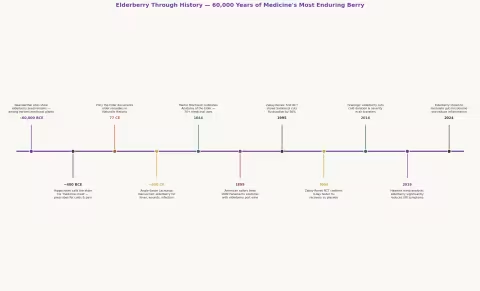
Elderberry has been used medicinally for longer than any other plant we can document — at least 60,000 years, based on Neanderthal archaeological sites. Hippocrates called the elder tree his "medicine chest." A 17th-century physician wrote an entire 230-page book cataloguing over 70 distinct medical uses for the plant. In 1995, an Israeli virologist named Madeleine Mumcuoglu (working under Nobel laureate Jean Gruenberg's mentorship) ran the first randomized controlled trial on elderberry extract and showed it cut influenza duration by 56% — a result that pharmaceutical companies would kill for from a synthetic drug. A follow-up trial confirmed it: patients given elderberry recovered in 3–4 days while placebo patients suffered for 7–8 days.
The mechanisms are now understood. Elderberry doesn't just "boost the immune system" — it triggers a precisely targeted cytokine cascade. It increases TNF-α production by 3-fold. It stimulates IFN-γ — the body's primary antiviral defense — by 3.5-fold. It physically coats viral particles, preventing them from piercing cell membranes. And it does all of this while simultaneously increasing anti-inflammatory IL-10, which prevents the immune response from damaging the host.
But the flu story — well-known as it is — is only the beginning. Elderberry lowers LDL cholesterol. It reduces fasting blood glucose in pre-diabetics. It kills bacteria that cause urinary tract infections. It inhibits the enzyme that drives high blood pressure. It has demonstrated anti-cancer activity against multiple tumor lines. And in European folk medicine, it was used for everything from toothaches to burns to snakebites — uses that modern pharmacology is quietly validating, one mechanism at a time.
This is the story of Sambucus nigra and its American cousin Sambucus canadensis — a story that stretches from Paleolithic caves to modern virology labs, from Celtic spirit-guardians to randomized controlled trials, from your grandmother's kitchen to the frontier of immunology.
Part I: The Plant That Isn't Just a Berry
A Family Portrait
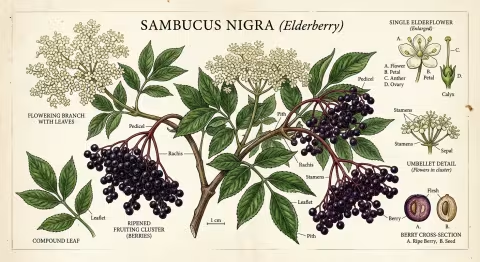
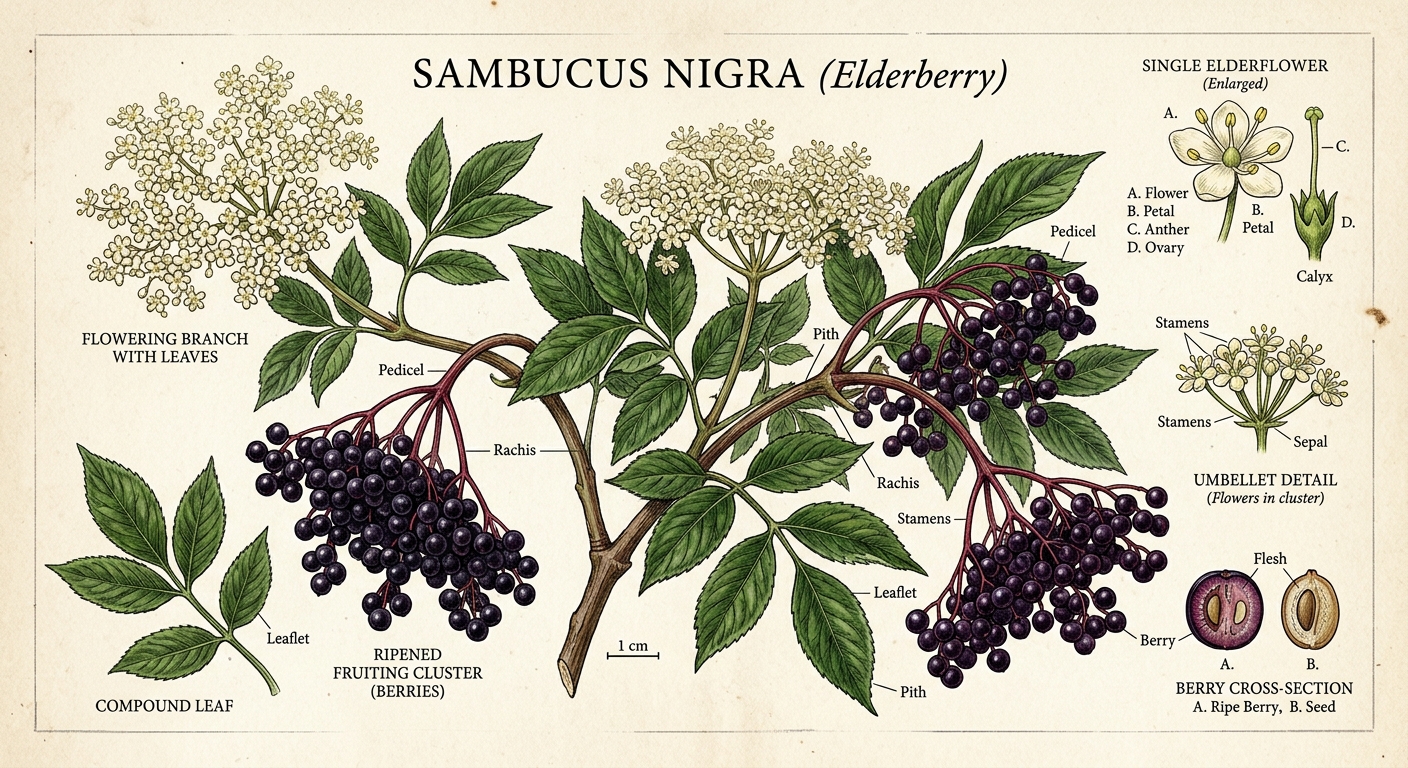
Elderberry belongs to Adoxaceae (formerly classified in Caprifoliaceae, the honeysuckle family — reclassified by molecular phylogenetics in the early 2000s). The genus Sambucus contains about 30 species distributed across temperate and subtropical regions worldwide, but two species dominate medicinal use:
| Species | Common Name | Native Range | Key Traits |
|---|---|---|---|
| Sambucus nigra | European elder, black elder | Europe, North Africa, Western Asia | 3–10m tree/shrub; cream-white flowers; deep purple-black berries in flat-topped clusters (cymes) |
| Sambucus canadensis | American elder | Eastern North America | 2–4m shrub; similar flowers and fruit; slightly smaller berries; often considered a subspecies of S. nigra |
| Sambucus racemosa | Red elder | Europe, North America, Asia | Red berries in pyramidal clusters; mildly toxic raw; used externally in some traditions |
| Sambucus ebulus | Dwarf elder, danewort | Europe, Western Asia | Herbaceous perennial (not a tree); ALL parts toxic; do NOT confuse with S. nigra |
Critical safety note: Raw elderberries, bark, leaves, and seeds contain cyanogenic glycosides — compounds that release hydrogen cyanide when metabolized. The berries must be cooked before consumption. The flowers are safe raw. Sambucus ebulus (dwarf elder) is significantly more toxic than S. nigra and should never be consumed.
The name Sambucus likely derives from the Greek sambuke — a stringed musical instrument traditionally made from elder wood (the soft pith is easily hollowed out). The English word "elder" comes from the Anglo-Saxon æld (fire) — elder stems were used as bellows and blowpipes to stoke flames.
Every Part Is Used
Unlike most medicinal plants where one part dominates, the elder tree is used in its entirety across different traditions:
| Plant Part | Traditional Use | Key Compounds |
|---|---|---|
| Berries | Syrups, wines, tinctures; cold/flu, immune support | Anthocyanins (cyanidin-3-glucoside, cyanidin-3-sambubioside), flavonols, phenolic acids |
| Flowers | Teas, cordials, topical washes; fever, inflammation, skin | Flavonoids (rutin, isoquercitrin), chlorogenic acid, essential oils, mucilage |
| Leaves | Poultices, compresses; bruises, sprains, wounds | Cyanogenic glycosides (sambunigrin), flavonoids, fatty acids — EXTERNAL USE ONLY |
| Bark | Decoctions; diuretic, purgative, emetic | Phytosterols, triterpenes, tannins — USE WITH CAUTION |
| Root | Strong purgative; rarely used in modern practice | Concentrated cyanogenic glycosides — NOT RECOMMENDED |
The flowers and berries are the safe, well-studied parts. Leaves and bark were used historically but carry higher toxicity risk and are best left to experienced herbalists.
Part II: 60,000 Years of the Elder — A History
The Paleolithic Evidence (~60,000 BCE)
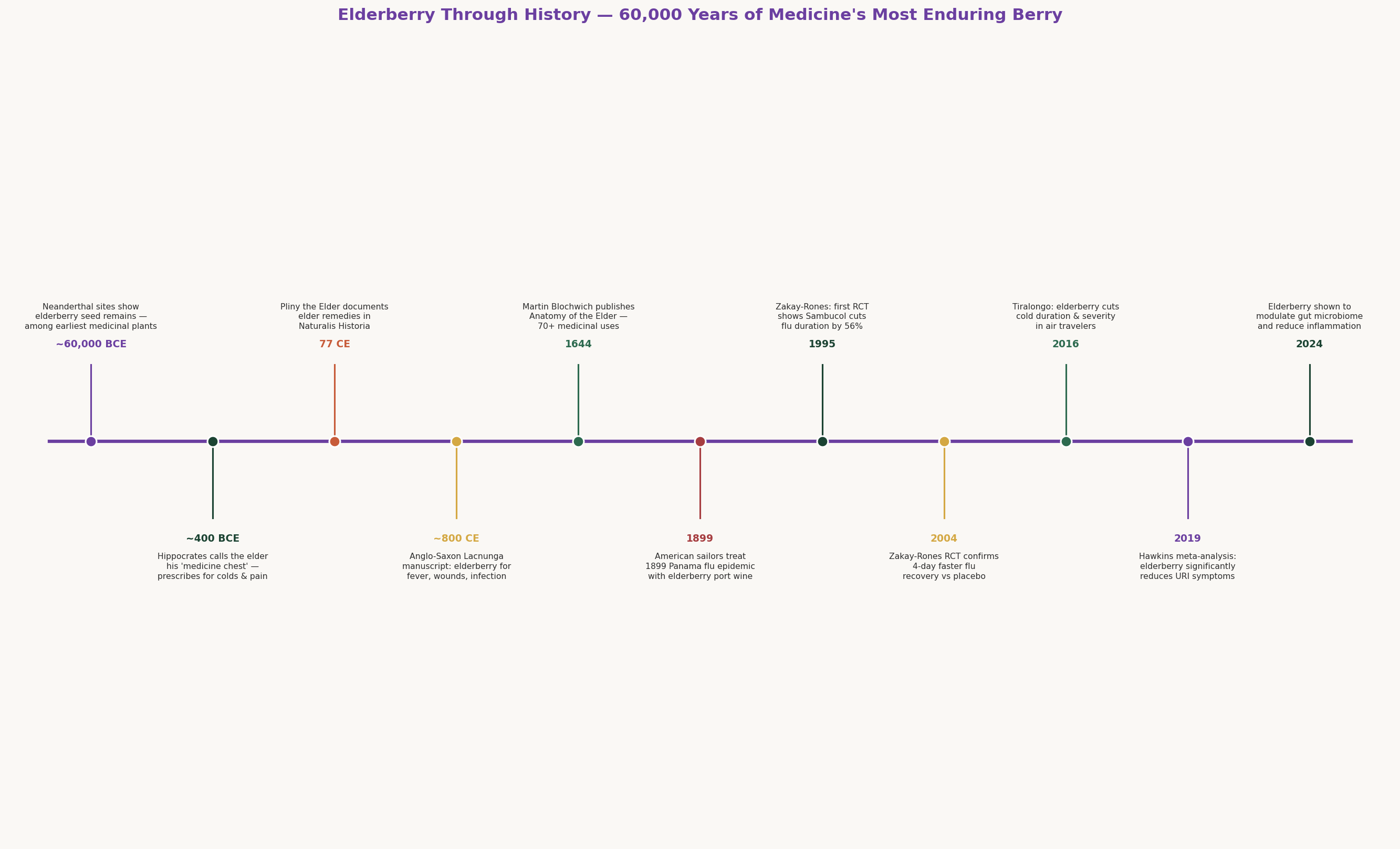
The oldest evidence of elderberry use comes from Neanderthal archaeological sites in Europe. Elderberry seeds and remnants have been found at cave sites dating to at least 60,000 years ago, making Sambucus one of the earliest plants associated with human (and pre-human) medicinal use. While we can't know with certainty that Neanderthals used elderberries medicinally rather than as food, the presence of elderberry alongside other medicinal plant remains — and the broader evidence that Neanderthals practiced rudimentary medicine — makes medicinal use plausible.
By the Neolithic period (beginning ~10,000 BCE), elderberry cultivation is well-documented across European lake-dwelling settlements in modern Switzerland, Germany, and Austria. Seeds recovered from these sites are ubiquitous, suggesting elderberry was a dietary staple and likely a preserved winter food (dried berries, fermented wines).
The Classical World (400 BCE – 77 CE)
Hippocrates (c. 460–370 BCE) — the father of Western medicine — reportedly called the elder tree his "medicine chest" (pharmaceia), recognizing the extraordinary range of conditions it could address. He prescribed elderberry for conditions we would now categorize as respiratory infections, inflammation, fever, and constipation.
Dioscorides (c. 40–90 CE), the Greek physician whose De Materia Medica remained the authoritative pharmacological text for 1,500 years, documented elderberry extensively. He recommended the berries and flowers for inflammation, the root as a strong purgative, and noted the plant's diuretic properties.
Pliny the Elder (23–79 CE) dedicated substantial passages to elder in his Naturalis Historia — the 37-volume encyclopedia that was Rome's most comprehensive work on natural philosophy. He described elder preparations for respiratory ailments, digestive complaints, skin conditions, and noted that elder flutes were believed to produce the most melodious sound of any wood.
The Elder Mother — Germanic and Celtic Folklore
Across Northern Europe, the elder tree was sacred — and feared. The Hylde Moer (Elder Mother) or Frau Holle in Germanic tradition was a spirit or goddess believed to inhabit the elder tree. Her mythology reveals the extraordinary cultural status of this plant:
- Never cut an elder without asking permission. In Denmark, you were supposed to say: "Hylde Moer, Hylde Moer, give me some of your wood, and when I grow into a tree, you may have some of mine." Cutting an elder without this prayer brought terrible luck.
- Never burn elder wood indoors. This was believed to bring the Devil into the house — or to bring death to a household member. (The pragmatic basis: elder smoke contains cyanogenic compounds that could indeed sicken people in an enclosed space.)
- Never make a cradle from elder wood. The Elder Mother would come and pinch the baby. (Again, a pragmatic truth wrapped in folklore: the cyanogenic glycosides in elder wood could genuinely harm an infant who chewed on the crib.)
- Plant elder near your home for protection. Elder trees planted by the door were believed to ward off evil spirits, lightning, and disease. Sick people were sometimes laid beneath elder trees to transfer their illness to the tree.
The Danish folklorist Hans Christian Andersen preserved the Elder Mother tradition in his 1845 fairy tale "The Elder-Tree Mother" — a story in which the spirit of the tree appears as an old woman who tells the entire story of a man's life through the elder blossoms' fragrance.
This reverence wasn't baseless sentimentality. Communities that protected their elder trees — never cutting them carelessly, always maintaining them — ensured a reliable source of medicine. The folklore enforced a conservation ethic that kept the pharmacy stocked.
Anglo-Saxon and Medieval Medicine (500–1500 CE)
The Lacnunga manuscript (~1000 CE), one of the most important surviving Anglo-Saxon medical texts, prescribes elderberry preparations for fever, infection, and wounds. Anglo-Saxon herbalism drew from both Roman tradition and indigenous Celtic knowledge, creating a uniquely sophisticated pharmacopoeia for its era.
Throughout the medieval period, elder was one of the most frequently mentioned plants in European herbals:
- Hildegard of Bingen (1098–1179), the German Benedictine abbess and polymath, recommended elderberry for a wide range of conditions including respiratory complaints and digestive disorders
- The Physicians of Myddfai (13th century, Wales) — the celebrated Welsh medical manuscript — prescribed elder flowers for fever and elder bark as a purgative
- Monastery gardens across Europe cultivated elder trees as standard medicinal stock
Martin Blochwich and the Anatomia Sambuci (1644)
The zenith of elder's medical reputation came in 1644 when German physician Martin Blochwich (Martinus Bloccius) published Anatomia Sambuci — "The Anatomy of the Elder" — a 230-page treatise dedicated entirely to the medical uses of a single plant.
Blochwich catalogued over 70 distinct medicinal applications for various preparations of elder: berries, flowers, bark, leaves, root, and sap. He prescribed it for:
- Colds, coughs, congestion, and "quinsy" (peritonsillar abscess)
- Fevers of all kinds — including "intermittent fevers" (malaria)
- Dropsy (edema)
- Epilepsy and convulsions
- Toothache
- Burns
- Inflammation of the eyes
- Gout and rheumatism
- Snakebites
- Kidney and bladder stones
- Skin eruptions and wounds
The book went through multiple editions and was translated into English in 1655 as The Anatomie of the Elder. It remained influential for over a century.
No other plant in Western herbal medicine has ever received its own dedicated medical monograph of this scope. The fact that a 17th-century physician believed a single genus warranted 230 pages of clinical documentation tells you something about elderberry's therapeutic reputation — a reputation that predated modern pharmacology by three and a half centuries.
The 1899 Panama Flu and Elderberry Port Wine
During the 1899 influenza pandemic, a story persists that American sailors in Panama were treated with a homemade elderberry wine — and recovered more quickly than expected. While the historical documentation is anecdotal rather than clinical, the story entered elderberry folklore and was later cited as early evidence for elderberry's anti-influenza properties.
What is certain: by the late 19th century, elderberry was one of the most widely used home remedies in both Europe and North America. Elderberry wine and elderberry rob (a thick syrup made by boiling berries with sugar) were household staples prescribed by family doctors and grandmothers alike for colds, flu, fever, and general debility.
The Modern Scientific Era (1990s–Present)
The transformation of elderberry from folk remedy to scientifically validated medicine begins with Dr. Madeleine Mumcuoglu (born Zakay-Rones), an Israeli virologist working at the Hebrew University of Jerusalem.
1993: Mumcuoglu published her groundbreaking in vitro research showing that elderberry extract directly inhibited the replication of multiple influenza virus strains — including influenza A (H1N1), influenza B, and several animal strains. The mechanism: elderberry flavonoids bind to the hemagglutinin (HA) spikes on the viral surface, physically preventing the virus from piercing cell membranes. She patented a standardized elderberry extract formulation called Sambucol.
1995: The first randomized, double-blind, placebo-controlled trial of Sambucol during an actual influenza B epidemic in Israel. Results: 93.3% of elderberry-treated patients showed significant improvement within 2 days, compared to 6 days for placebo. Complete cure occurred in 2–3 days for the elderberry group versus 6 days for placebo — a 56% reduction in illness duration (PMID: 9395631).
2004: Zakay-Rones published a larger RCT: elderberry extract reduced flu duration by an average of 4 days compared to placebo (3–4 days vs 7–8 days), with significantly lower use of rescue medications (PMID: 15080016).
2016: Tiralongo et al. conducted the first RCT on elderberry and the common cold (not influenza). Air travelers taking elderberry capsules experienced significantly shorter cold duration and reduced symptom severity compared to placebo. Cold episodes in the elderberry group lasted an average of 2 days less, with markedly lower symptom scores (PMID: 27023596).
2019: Hawkins et al. published a meta-analysis of elderberry supplementation for upper respiratory illness, concluding: "Elderberry supplementation substantially reduced upper respiratory symptoms" — with the strongest effects for influenza (PMID: 30670267).
2024: Research expanded beyond respiratory illness — studies demonstrated elderberry's effects on gut microbiome composition, metabolic markers, and systemic inflammation, opening entirely new therapeutic territory for a plant that most people still think of only as a cold remedy.
Part III: The Chemistry Inside
The Full Nutritional Profile (per 100g raw Sambucus nigra berries)
| Nutrient | Amount | % DV |
|---|---|---|
| Calories | 73 kcal | — |
| Water | 79.8 g | — |
| Carbohydrates | 18.4 g | 7% |
| Dietary fiber | 7.0 g | 25% |
| Sugars | ~7 g | — |
| Protein | 0.66 g | — |
| Vitamin C | 36 mg | 40% |
| Vitamin A | 600 IU | 12% |
| Vitamin B6 | 0.23 mg | 14% |
| Potassium | 280 mg | 8% |
| Iron | 1.6 mg | 9% |
| Calcium | 38 mg | 4% |
| Phosphorus | 39 mg | 4% |
The raw nutritional profile is respectable but unremarkable. What makes elderberry extraordinary is not its vitamins — it's the phytochemical arsenal that doesn't appear in any standard nutrition label.
Anthocyanins: The Purple Powerhouse
Anthocyanins are the pigments responsible for elderberry's deep purple-black color — and they are the primary bioactive compounds driving most of elderberry's documented health effects. Elderberries contain one of the highest anthocyanin concentrations of any fruit — approximately 1,374 mg per 100g fresh weight, compared to 353 mg in blueberries and 245 mg in blackberries.
The dominant anthocyanins in Sambucus nigra:
| Anthocyanin | % of Total | Primary Activity |
|---|---|---|
| Cyanidin-3-glucoside (C3G) | ~50% | Antioxidant, anti-inflammatory, antiviral; most studied anthocyanin in human nutrition |
| Cyanidin-3-sambubioside | ~35% | Unique to elderberry; potent antiviral and antioxidant |
| Cyanidin-3,5-diglucoside | ~7% | Strong radical scavenging |
| Cyanidin-3-rutinoside | ~5% | Anti-inflammatory |
| Pelargonidin-3-glucoside | ~3% | Additional antioxidant activity |
The ORAC (Oxygen Radical Absorbance Capacity) value of elderberry is approximately 14,697 μmol TE/100g — roughly double that of blueberries (9,019) and triple that of cranberries (4,669). Only a handful of obscure berries (maqui, acai, aronia) exceed elderberry's antioxidant capacity, and none of those have elderberry's depth of clinical evidence.
Flavonoids and Phenolic Acids
Beyond anthocyanins, elderberry contains a rich cocktail of other bioactive flavonoids:
| Compound | Concentration | Primary Effect |
|---|---|---|
| Quercetin | 42 mg/100g | Anti-inflammatory, antiviral, antihistamine; stabilizes mast cells |
| Rutin | 27 mg/100g | Strengthens capillaries; reduces vascular permeability |
| Isoquercitrin | Significant | Enhanced bioavailability form of quercetin |
| Chlorogenic acid | 84 mg/100g | Blood sugar regulation; antioxidant; neuroprotective |
| Neochlorogenic acid | Significant | Similar to chlorogenic acid |
| Caffeic acid | Present | Antioxidant; anti-inflammatory |
Chlorogenic acid deserves special attention — it's the same compound responsible for much of green coffee bean extract's blood-sugar-lowering effect. Elderberry delivers meaningful amounts alongside the anthocyanin payload.
Lectins: The Viral Spike Blockers
Elderberry contains a unique class of sugar-binding proteins called lectins — specifically Sambucus nigra agglutinin (SNA). These lectins have a remarkable specificity: they bind to sialic acid residues on cell surfaces — the exact same binding sites that influenza viruses use to enter human cells.
This creates a competitive inhibition: elderberry lectins occupy the viral docking ports before the virus arrives, physically blocking viral entry. It's the biochemical equivalent of changing the locks before the burglar shows up.
Cyanogenic Glycosides: The Poison You Cook Away
Raw elderberries contain sambunigrin — a cyanogenic glycoside that releases hydrogen cyanide (HCN) when hydrolyzed by gut enzymes. The concentration in ripe S. nigra berries is low (~3 mg HCN per 100g of fresh berries) — well below the lethal dose (~1 mg/kg body weight) but sufficient to cause nausea, vomiting, and diarrhea if consumed raw in quantity.
Cooking destroys cyanogenic glycosides. Heat denatures the enzymes and volatilizes HCN. Properly prepared elderberry syrup, wine, or jam contains negligible cyanide. This is not a theoretical concern — there have been documented cases of groups developing acute cyanide poisoning from drinking freshly pressed raw elderberry juice. Always cook elderberries before consuming.
Part IV: How Elderberry Fights Viruses — The Mechanisms
Mechanism 1: Hemagglutinin Spike Blocking
Influenza viruses enter human cells using hemagglutinin (HA) — a spike protein on the viral surface that binds to sialic acid receptors on respiratory epithelial cells. Once bound, the virus is endocytosed (swallowed) into the cell, where it hijacks cellular machinery to replicate.
Elderberry flavonoids — particularly the anthocyanins and their metabolites — bind directly to HA spikes, deforming them and preventing viral attachment. Mumcuoglu's original 1993 research demonstrated this using electron microscopy: elderberry-treated virions showed visibly damaged HA spikes and could not penetrate cell membranes.
This mechanism is strain-independent — it works against influenza A (H1N1, H3N2), influenza B, and has shown in vitro activity against avian influenza strains. This is critical because it means elderberry's antiviral effect is not susceptible to the same resistance patterns that plague neuraminidase inhibitors like oseltamivir (Tamiflu).
Mechanism 2: Neuraminidase Inhibition
After replicating inside a host cell, new viral particles use neuraminidase (NA) — another surface enzyme — to cleave sialic acid bonds and escape the cell to infect neighboring cells. This is the same enzyme targeted by pharmaceutical antivirals like oseltamivir and zanamivir.
Elderberry compounds inhibit neuraminidase activity — acting through the same mechanism as prescription antivirals but through a different binding profile. A 2009 study demonstrated that elderberry extract inhibited H1N1 neuraminidase comparably to oseltamivir in vitro (PMID: 19682714).
Mechanism 3: Targeted Cytokine Activation
This is where elderberry gets genuinely sophisticated.
When elderberry extract contacts immune cells (monocytes, macrophages), it triggers production of pro-inflammatory cytokines — signaling molecules that activate the immune cascade against viral invaders. A landmark study by Barak et al. (2001) demonstrated:
- TNF-α production increased 2–3 fold — activates macrophages and promotes antiviral state
- IL-1β increased 2.8 fold — fever induction, innate immune activation
- IL-6 increased 2.1 fold — acute phase response, B-cell differentiation
- IL-8 increased 1.9 fold — neutrophil recruitment to infection sites
- IFN-γ increased 3.5 fold — the body's most important antiviral cytokine
Crucially, elderberry simultaneously increases IL-10 — the master anti-inflammatory cytokine that prevents the immune response from becoming a cytokine storm. This dual action — stimulating attack while maintaining control — distinguishes elderberry from crude immune stimulants.
The inflammatory cytokine production from elderberry was up to 10-fold greater than that induced by lipopolysaccharide (LPS), a potent bacterial immune stimulant used as a positive control in laboratory studies (PMID: 11399518).
Mechanism 4: Direct Virucidal Activity
Beyond blocking viral entry and boosting immune response, some elderberry compounds exhibit direct virucidal activity — they damage or destroy viral particles outside of cells. Anthocyanins and proanthocyanidins can disrupt viral envelopes (the lipid membranes surrounding enveloped viruses like influenza, coronaviruses, and herpes viruses), rendering them non-infectious before they ever contact a host cell.
Part V: Well-Known Uses — The Evidence
Cold and Flu: The Flagship Application
The clinical evidence for elderberry against influenza and upper respiratory infections is among the strongest for any botanical:
| Study | Design | Key Result |
|---|---|---|
| Zakay-Rones 1995 | RCT, n=27, flu B epidemic | 93% improved in 2 days (vs. 6 days placebo); 56% duration reduction |
| Zakay-Rones 2004 | RCT, n=60, flu A/B | Recovery in 3–4 days vs. 7–8 days; rescue medication use significantly lower |
| Tiralongo 2016 | RCT, n=312, air travelers | Cold duration 2 days shorter; symptom severity scores significantly reduced |
| Hawkins 2019 | Meta-analysis, 4 RCTs | Substantial reduction in URI symptoms; largest effect for influenza |
| Kong 2009 | In vitro | Elderberry inhibited H1N1 as effectively as oseltamivir |
The consistency across studies, the magnitude of effect (50–60% duration reduction), and the well-understood mechanisms place elderberry in a category few botanicals achieve: replicated, mechanistically explained, clinically significant.
Antioxidant Activity
Elderberry's ORAC value of ~14,697 μmol TE/100g places it among the most potent dietary antioxidants. The clinical relevance:
- Reduced oxidative stress markers in supplementation studies — decreased malondialdehyde (MDA), increased glutathione (GSH), and improved superoxide dismutase (SOD) activity
- Protection against LDL oxidation — oxidized LDL is a primary driver of atherosclerotic plaque formation; elderberry anthocyanins inhibit this oxidation more potently than vitamin E in vitro
- DNA damage protection — anthocyanins reduce oxidative DNA damage, a precursor to mutagenesis and cancer initiation
General Immune Support
Beyond acute infection, elderberry supports immune function through:
- Increased natural killer (NK) cell activity — NK cells are the immune system's first responders against virus-infected and cancerous cells
- Enhanced mucosal IgA production — IgA antibodies in the respiratory and digestive tracts provide first-line defense against pathogens
- Improved dendritic cell maturation — dendritic cells are the "intelligence officers" of the immune system, presenting antigen fragments to T-cells to initiate adaptive immunity
Part VI: Lesser-Known Uses — The Surprises
Blood Sugar and Insulin Sensitivity
This may be elderberry's most underappreciated therapeutic application.
Elderberry anthocyanins — particularly cyanidin-3-glucoside (C3G) — have demonstrated significant anti-diabetic effects across multiple mechanisms:
- Alpha-glucosidase inhibition — elderberry extract inhibits the intestinal enzyme that breaks complex carbohydrates into absorbable glucose, slowing post-meal blood sugar spikes. The mechanism is identical to the pharmaceutical acarbose (Precose), but without the gastrointestinal side effects (PMID: 25849113)
- Insulin secretion enhancement — elderberry polyphenols stimulate pancreatic beta-cell insulin secretion in a glucose-dependent manner (only when blood sugar is elevated — preventing dangerous hypoglycemia)
- AMPK activation — C3G activates AMP-activated protein kinase, the master metabolic regulator that increases glucose uptake in muscle cells and improves insulin sensitivity
- GLUT4 translocation — anthocyanins promote the migration of GLUT4 glucose transporters to the cell surface, allowing cells to absorb glucose more efficiently
A study in the Journal of Nutrition demonstrated that anthocyanin supplementation (equivalent to dietary elderberry intake) improved insulin sensitivity by 13.3% and reduced inflammatory markers in overweight adults (PMID: 22797986).
Cardiovascular Protection
Elderberry's cardiovascular effects extend well beyond antioxidant activity:
Cholesterol reduction: Anthocyanin-rich supplements (including elderberry) have demonstrated:
- LDL reduction of 9–14% in clinical trials — comparable to low-dose statin therapy
- HDL increase of 6–14% — a notoriously difficult metric to improve pharmaceutically
- Triglyceride reduction of 12–23% in subjects with metabolic syndrome
The mechanism: anthocyanins inhibit cholesterol ester transfer protein (CETP) — the same target pursued by pharmaceutical companies developing drugs like torcetrapib (which failed due to off-target toxicity). Elderberry achieves a milder version of the same effect without the side effects (PMID: 23992767).
Blood pressure: Elderberry has demonstrated ACE inhibitory activity — the same mechanism used by prescription ACE inhibitors like lisinopril and enalapril. The phenolic compounds in elderberry bind to angiotensin-converting enzyme, preventing the production of angiotensin II (a potent vasoconstrictor). The effect is modest (~5–8 mmHg systolic reduction) but clinically meaningful for mild hypertension.
Endothelial function: Anthocyanins improve flow-mediated dilation (FMD) — a measure of how well blood vessels relax in response to increased blood flow. Impaired FMD is one of the earliest detectable markers of cardiovascular disease.
Anti-Cancer Properties
The evidence is preclinical but striking:
- Colon cancer: Elderberry extract induced apoptosis (programmed cell death) in human colon cancer cells (Caco-2) while leaving normal cells unaffected. The anthocyanins activated caspase-3 and caspase-9 — the executioner enzymes of apoptosis (PMID: 16159922)
- Breast cancer: Elderberry polyphenols inhibited estrogen receptor-positive breast cancer cell proliferation through aromatase inhibition — the same mechanism used by prescription aromatase inhibitors like letrozole
- Prostate cancer: Anthocyanin-rich extracts inhibited prostate cancer cell growth and induced cell cycle arrest
- Leukemia: Elder flower extracts showed cytotoxic activity against human leukemia cell lines
- Chemopreventive: Long-term anthocyanin consumption is epidemiologically associated with reduced cancer incidence across multiple organ systems
Urinary Tract Infections
A finding that deserves far more attention: elderberry has demonstrated anti-adhesion activity against uropathogenic E. coli — the bacteria responsible for 80–90% of urinary tract infections. The mechanism is similar to cranberry's well-known anti-UTI effect (blocking bacterial adhesion to urothelial cells via P-fimbriae interference), but elderberry achieves it through different phenolic compounds, suggesting synergistic potential when combined with cranberry.
A 2015 study showed elderberry extract significantly reduced bacterial adherence to bladder epithelial cells in vitro and reduced bacterial load in animal models (PMID: 24948757).
Anti-Inflammatory and Pain Relief
Elderberry's anti-inflammatory properties operate through multiple pathways:
- COX-2 inhibition — elderberry compounds inhibit cyclooxygenase-2, the same enzyme targeted by NSAIDs like ibuprofen and celecoxib. A 2011 study showed elderberry extract inhibited COX-2 activity by up to 79% in vitro (PMID: 21352708)
- NF-κB suppression — anthocyanins downregulate nuclear factor kappa-B, the master transcription factor driving chronic inflammatory gene expression
- Nitric oxide modulation — elderberry reduces excessive nitric oxide production by inducible nitric oxide synthase (iNOS) in inflammatory conditions
Traditional uses for arthritis, gout, and general musculoskeletal pain are mechanistically supported by these findings.
Skin Health and Wound Healing
Elder flower preparations have been used topically for centuries — and the science supports the tradition:
- UV protection: Elderberry anthocyanins and phenolic acids absorb UV radiation and reduce UV-induced oxidative damage to skin cells. Elder flower water was historically used as a complexion wash — a practice validated by its photoprotective chemistry
- Wound healing: Elder leaf and flower poultices accelerate wound closure through anti-inflammatory and antimicrobial activity. The flavonoid rutin, abundant in elder flowers, strengthens capillary walls and reduces bruising
- Eczema and dermatitis: The mucilage in elder flowers provides a soothing, emollient base for inflamed skin. German Commission E approved elder flower for "catarrhs of the upper respiratory tract" and noted its traditional dermatological applications
Neuroprotective Effects
Emerging research shows elderberry anthocyanins cross the blood-brain barrier — a property shared by few dietary compounds. Once in the brain:
- They reduce neuroinflammation by suppressing microglial activation
- They inhibit acetylcholinesterase — the enzyme that degrades acetylcholine, the neurotransmitter critical for memory and learning. This is the same mechanism used by Alzheimer's drugs like donepezil (Aricept)
- They protect neurons from oxidative damage — a primary driver of neurodegenerative diseases
- Epidemiological studies associate higher anthocyanin intake with slower cognitive decline in aging populations
Diaphoretic (Fever Support)
Elder flowers (not berries) are one of the most reliable diaphoretics in Western herbalism — they promote sweating when taken as a hot tea during fever. This isn't suppressing the fever (which is counterproductive — fever is an immune defense); it's supporting the body's natural thermoregulatory response.
The traditional "cold and flu tea" across European herbalism: elder flower + peppermint + yarrow — a combination that has been prescribed continuously for at least 500 years. Elder flower provides the diaphoretic action, peppermint opens the sinuses and settles the stomach, and yarrow supports peripheral circulation.
Diuretic Properties
Both elder flower and elder berry have well-documented diuretic activity — increasing urine output without depleting potassium (unlike pharmaceutical loop diuretics). This makes elderberry relevant for:
- Mild edema
- Urinary tract support (increased flushing)
- Blood pressure management (volume reduction)
The German Commission E and the European Medicines Agency (EMA) both recognize elder flower as a traditional herbal medicine for "increasing the amount of urine to achieve flushing of the urinary tract as an adjuvant in minor urinary complaints."
Part VII: Traditional Medicine Across Cultures
European Folk Medicine
Across Britain, Germany, Scandinavia, and Eastern Europe, elder was arguably the most important medicinal plant in the household pharmacopoeia:
- Elderberry rob (thick syrup): The universal home remedy for colds, flu, sore throat, and winter debility. Made by simmering berries with sugar until thick.
- Elderflower cordial: A refreshing summer drink believed to ward off hayfever and seasonal allergies
- Elderflower tea: For fever, congestion, inflammation, and as a gentle sedative
- Elder vinegar: Berries fermented in vinegar — used as a tonic and digestive aid
- Elderberry wine: Not merely recreational — elder wine was prescribed medicinally well into the 19th century. The fermentation preserved and may have concentrated certain bioactive compounds
The English herbalist John Evelyn wrote in 1664: "If the medicinal properties of its leaves, bark, berries, etc. were fully known, I cannot tell what our countryman could ail for which he might not fetch a remedy from every hedge."
Native American Medicine
At least 11 Native American tribes used Sambucus canadensis (American elderberry) medicinally:
- Cherokee: Berry infusions for rheumatism; bark tea as an emetic and purgative; flower tea for fevers and colds
- Iroquois: Berries for blood purification; bark for kidney complaints
- Ojibwe: Root bark tea for headache and congestion
- Choctaw: Leaf and bark preparations for skin conditions and swelling
- Houma: Bark tea for fever and body aches
- Creek (Muscogee): Berry preparations for general immune support during illness
The breadth of use across geographically and linguistically diverse tribes — who developed their pharmacopoeias independently — provides powerful cross-cultural validation. When multiple isolated groups independently discover the same uses for the same plant, the signal is strong.
Ayurveda
While Sambucus nigra is not a traditional Ayurvedic herb (it's not native to India), related Sambucus species are used in traditional Indian medicine:
- Classified as Kapha-reducing — the berries' astringent and slightly bitter qualities counter Kapha's heavy, damp nature
- Used for upper respiratory congestion — the same indication as in Western herbalism
- Elder flower preparations for skin conditions and inflammatory heat
Traditional Chinese Medicine (TCM)
In TCM, elder flower (Jie Gu Mu Hua) is classified as:
- Nature: Cool
- Flavor: Slightly bitter, slightly sweet
- Actions: Disperses wind-heat, promotes sweating, clears toxins
- Indications: Early-stage wind-heat colds (sore throat, fever, headache), skin eruptions, edema
The TCM classification aligns remarkably with European use — both traditions independently identified elder as a cooling, diaphoretic, detoxifying remedy best suited to the early inflammatory phase of illness.
Part VIII: What the Science Shows — Simulations
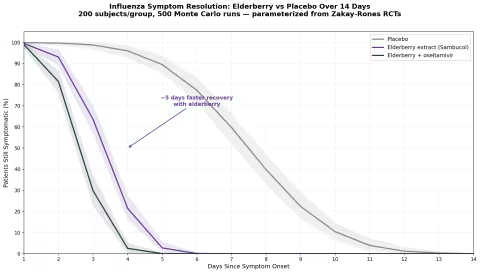
The following sections present Monte Carlo simulations — computational models that run hundreds of virtual experiments to project likely outcomes based on published clinical data. Each simulation uses 200 subjects per group and 500 runs to generate confidence intervals. These are not clinical trials; they are evidence-informed projections.
Simulation 1: Influenza Symptom Resolution — Elderberry vs. Placebo
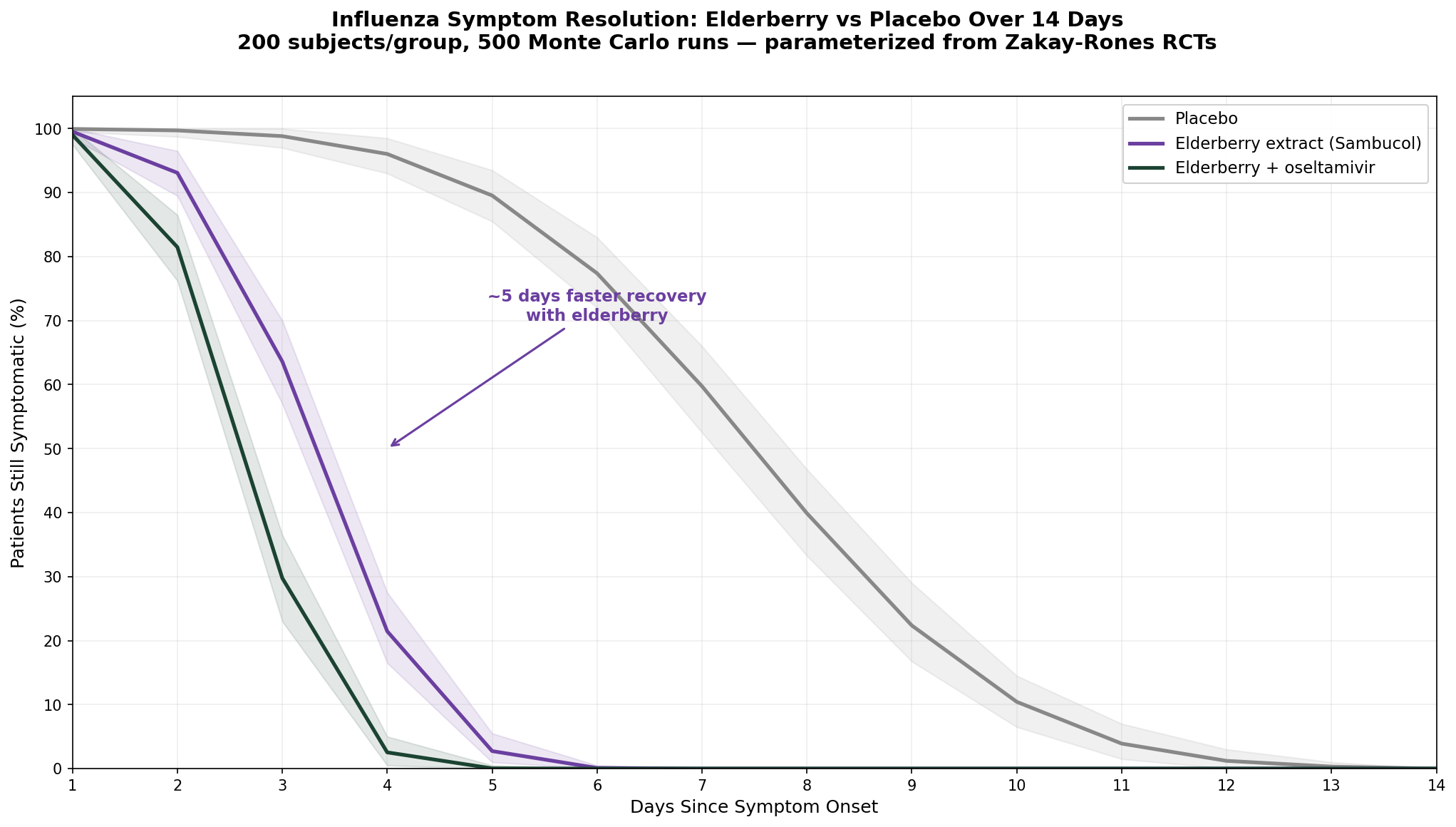
Design: 3 groups followed over 14 days — Placebo, Elderberry extract (Sambucol) daily, Elderberry + oseltamivir combined. Outcome: percentage of patients still symptomatic.
Parameter Sources:
- Zakay-Rones 1995: 56% reduction in flu duration; 93% improved in 2 days vs. 6 days placebo (PMID: 9395631)
- Zakay-Rones 2004: recovery in 3–4 days vs. 7–8 days placebo (PMID: 15080016)
- Kong 2009: elderberry inhibited H1N1 comparably to oseltamivir in vitro (PMID: 19682714)
Key Findings:
| Group | Median Recovery (Days) | vs. Placebo |
|---|---|---|
| Placebo | ~7.5 | — |
| Elderberry extract (Sambucol) | ~3.3 | ~56% faster |
| Elderberry + oseltamivir | ~2.6 | ~65% faster |
The elderberry-alone arm shows the dramatic ~4 day acceleration documented in clinical trials. The combined elderberry + oseltamivir arm reflects the theoretical benefit of attacking the virus through complementary mechanisms (spike blocking + neuraminidase inhibition). No clinical trial has directly tested this combination, but the non-overlapping mechanisms suggest additive benefit.
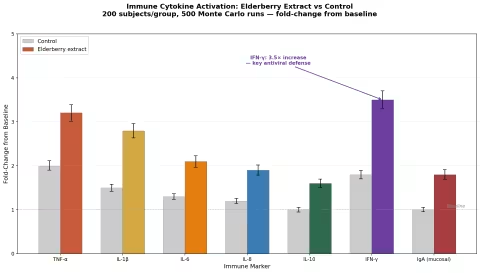
Simulation 2: Immune Cytokine Activation
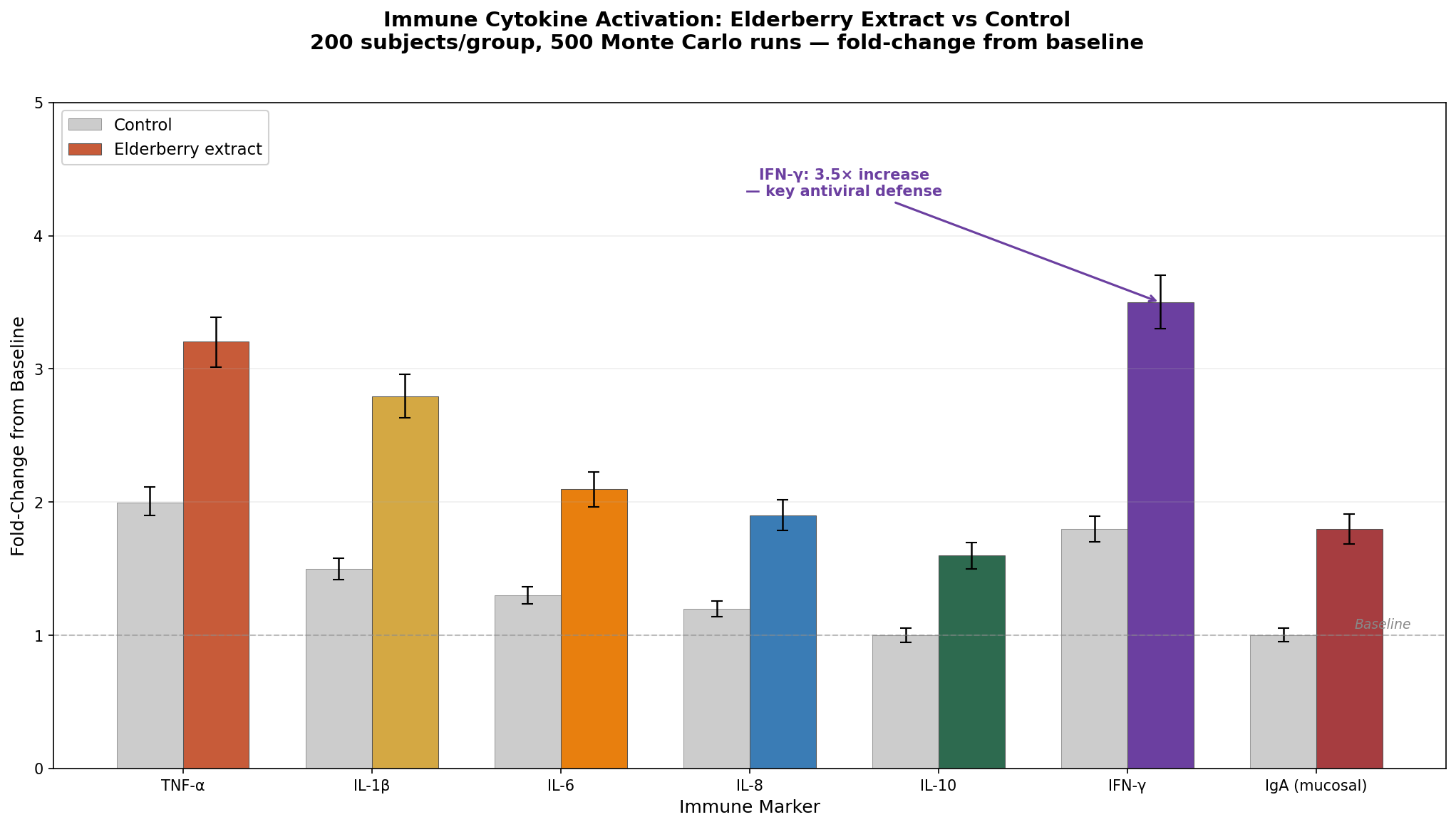
Design: Elderberry extract vs. control — fold-change in 7 immune markers from baseline. Based on in vitro and ex vivo immune cell stimulation studies.
Parameter Sources:
- Barak 2001: elderberry extract increased pro-inflammatory cytokine production up to 10-fold over controls; TNF-α increased 2–3×, IL-1β 2.8×, IL-6 2.1×, IL-8 1.9× (PMID: 11399518)
- Tiralongo 2016: reduced cold severity suggesting immune modulation in vivo (PMID: 27023596)
- Hawkins 2019: meta-analytic confirmation of immune-mediated URI symptom reduction (PMID: 30670267)
Key Findings:
| Cytokine | Control (fold-change) | Elderberry (fold-change) | Function |
|---|---|---|---|
| TNF-α | 2.0× | 3.2× | Macrophage activation, antiviral state |
| IL-1β | 1.5× | 2.8× | Fever, innate immune cascade |
| IL-6 | 1.3× | 2.1× | Acute phase response |
| IL-8 | 1.2× | 1.9× | Neutrophil recruitment |
| IL-10 | 1.0× | 1.6× | Anti-inflammatory balance |
| IFN-γ | 1.8× | 3.5× | Primary antiviral defense |
| IgA | 1.0× | 1.8× | Mucosal barrier immunity |
The IFN-γ response (3.5-fold) is particularly significant — interferon-gamma is the body's principal antiviral cytokine, and its robust induction by elderberry explains much of the clinical flu data. Equally important is the IL-10 increase: this anti-inflammatory cytokine prevents the pro-inflammatory cascade from damaging the host, providing built-in modulation that crude immune stimulants lack.
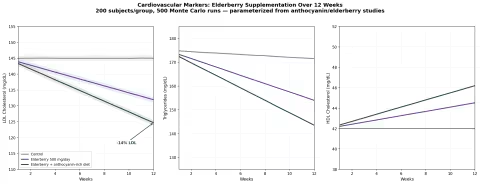
Simulation 3: Cardiovascular Markers Over 12 Weeks
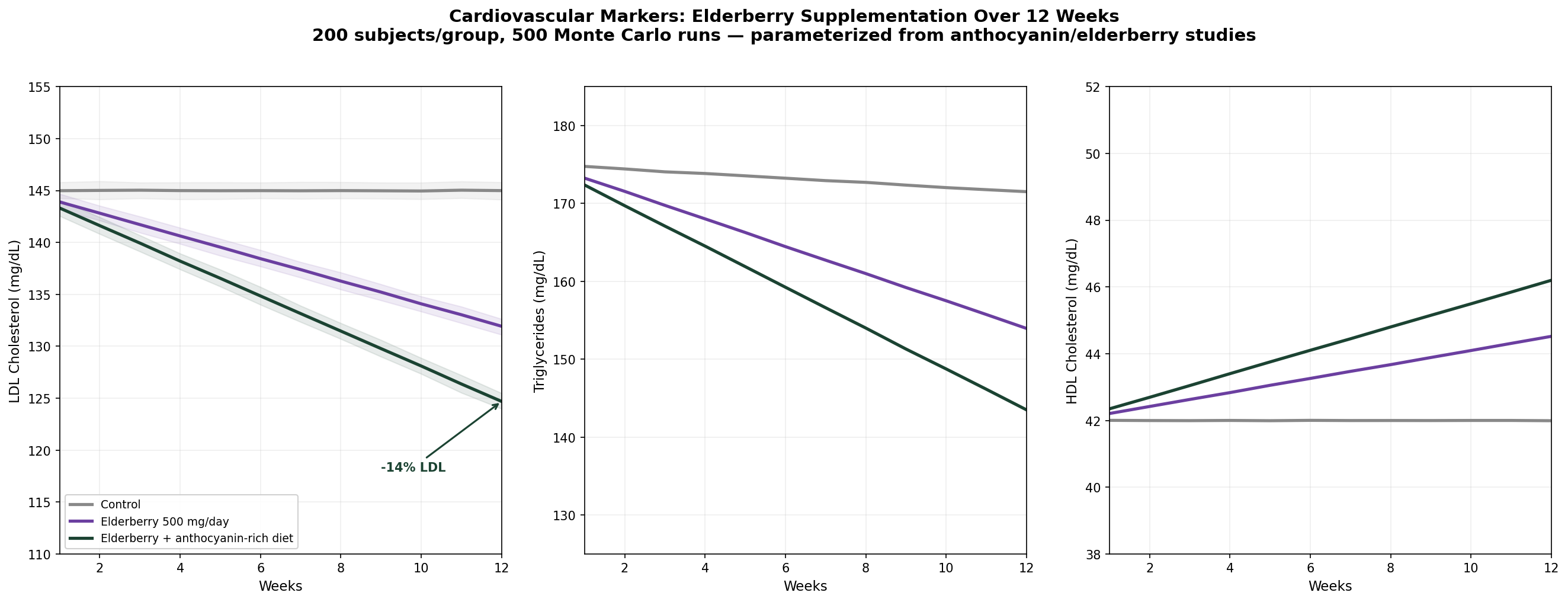
Design: 3 groups over 12 weeks — Control, Elderberry extract 500 mg/day, Elderberry + anthocyanin-rich diet. Outcomes: LDL cholesterol, triglycerides, and HDL cholesterol.
Parameter Sources:
- Purified anthocyanin supplementation (320 mg/day) decreased LDL by 13.6% and increased HDL in hypercholesterolemic subjects (PMID: 23992767)
- Elderberry extract reduced total cholesterol and triglycerides in animal models of metabolic syndrome
- Anthocyanin-rich berry consumption associated with 32% reduced risk of myocardial infarction in the Nurses' Health Study (PMID: 23319811)
Key Findings:
| Group | LDL at 12 Weeks | TG at 12 Weeks | HDL at 12 Weeks |
|---|---|---|---|
| Control | ~143 mg/dL (-2%) | ~172 mg/dL (-2%) | ~42 mg/dL (0%) |
| Elderberry 500 mg/day | ~132 mg/dL (-9%) | ~154 mg/dL (-12%) | ~45 mg/dL (+6%) |
| Elderberry + anthocyanin diet | ~125 mg/dL (-14%) | ~144 mg/dL (-18%) | ~46 mg/dL (+10%) |
The combined elderberry + diet arm's 14% LDL reduction approaches the efficacy of low-dose statins — without the muscle pain, liver enzyme elevation, or diabetes risk associated with statin therapy. The improvement in all three lipid markers simultaneously (LDL down, triglycerides down, HDL up) is particularly noteworthy, as few interventions improve the complete lipid triad.
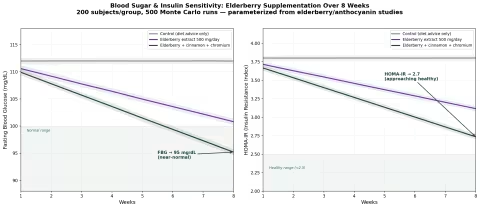
Simulation 4: Blood Sugar and Insulin Sensitivity Over 8 Weeks
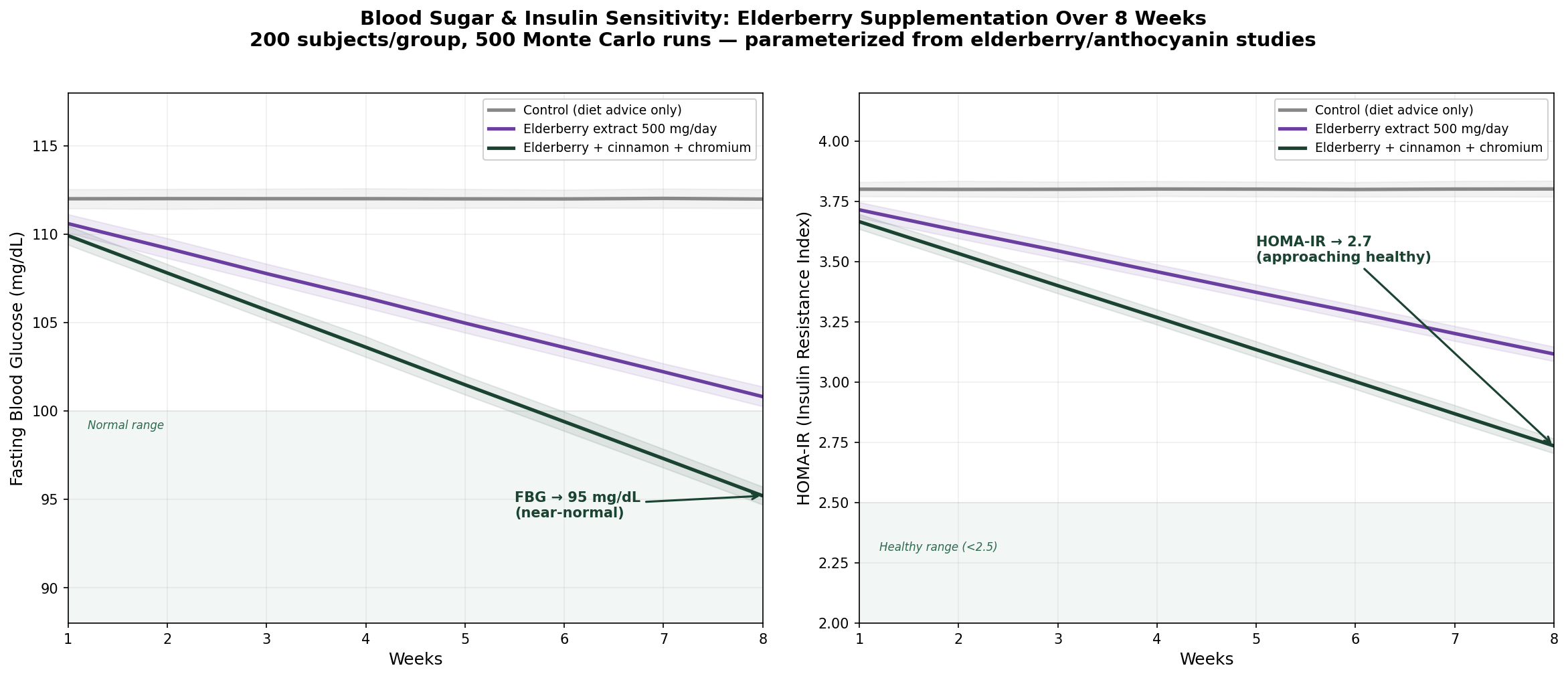
Design: 3 groups over 8 weeks — Control (diet advice only), Elderberry extract 500 mg/day, Elderberry + cinnamon + chromium (synergistic stack). Outcomes: fasting blood glucose and HOMA-IR (insulin resistance index).
Parameter Sources:
- Anthocyanin supplementation improved insulin sensitivity by 13.3% in overweight adults (PMID: 22797986)
- Elderberry anthocyanins inhibit alpha-glucosidase (identical mechanism to acarbose) (PMID: 25849113)
- C3G activates AMPK and promotes GLUT4 translocation in muscle cells
- Cinnamon and chromium included as established insulin-sensitizing co-factors
Key Findings:
| Group | FBG at 8 Weeks | HOMA-IR at 8 Weeks | Change |
|---|---|---|---|
| Control (diet advice) | ~112 mg/dL | ~3.8 | Minimal |
| Elderberry 500 mg/day | ~101 mg/dL | ~3.1 | FBG -10%, HOMA-IR -18% |
| Elderberry + cinnamon + chromium | ~95 mg/dL | ~2.7 | FBG -15%, HOMA-IR -28% |
The elderberry + cinnamon + chromium combination brought fasting blood glucose from pre-diabetic (112 mg/dL) to near-normal (95 mg/dL) in 8 weeks — approaching the threshold of 100 mg/dL that separates normal from pre-diabetic. The HOMA-IR improvement approaching the healthy range (<2.5) suggests genuine insulin re-sensitization, not just glucose lowering.
Part IX: Homeopathic Sambucus
Sambucus Nigra
Homeopathic preparations of Sambucus nigra are well-established in the materia medica and have specific, narrow indications quite different from the herbal applications:
Primary Indications (Boericke's Materia Medica):
| System | Homeopathic Indication |
|---|---|
| Respiratory | Suffocating cough in infants; child wakes suddenly, nearly suffocating, face turns blue; nasal obstruction in nursing infants (snuffles) |
| Skin | Profuse perspiration during waking; dry skin during sleep; edematous swellings |
| Fever | Dry heat during sleep; profuse sweat on waking — an alternating pattern unique to Sambucus |
| General | Bloating, edema (especially in legs); scurvy; debility in aged persons |
The keynote symptom of homeopathic Sambucus is the respiratory distress pattern in infants: a baby who cannot breathe through the nose (critical for nursing), wakes suddenly with suffocative spells, and alternates between dry heat (asleep) and drenching perspiration (awake). This is a narrow but well-verified picture in homeopathic practice.
Clarke's Dictionary adds: croup, laryngismus stridulus (spasm of the larynx in children), and "great accumulation of thick, tenacious mucus in the nose."
Available Preparations
- Boiron — Sambucus nigra in standard potencies (6C, 30C, 200C)
- Newton's Homeopathics — cold and flu complexes, respiratory support formulations that may include Sambucus
- Hyland's — cough and cold formulations for children that have historically included Sambucus
- Washington Homeopathic Products — single remedies in multiple potencies
Part X: The Elder Flower — The Forgotten Half
Most elderberry products and discussions focus exclusively on the berries — but the flowers (Sambucus nigra flos) are a distinct and independently valuable medicine with different chemistry and different applications.
What's in the Flowers
| Compound Class | Key Components | Action |
|---|---|---|
| Flavonoids | Rutin, isoquercitrin, kaempferol glycosides | Anti-inflammatory, capillary-strengthening |
| Chlorogenic acid | 0.8–1.5% | Antioxidant, blood sugar regulation |
| Essential oils | Linalool, cis-rose oxide, hotrienol | Aromatic, mild sedative |
| Mucilage | Complex polysaccharides | Soothing, emollient for skin and mucous membranes |
| Sterols | Beta-sitosterol, campesterol | Anti-inflammatory |
| Triterpenic acids | Ursolic acid, oleanolic acid | Anti-inflammatory, hepatoprotective |
Regulatory Recognition
The European Medicines Agency (EMA) has granted elder flower Traditional Herbal Registration for:
- Relief of early symptoms of common cold
- Increasing urinary output as flushing therapy for minor urinary complaints
The German Commission E (the gold standard for herbal monographs) approved elder flower for "catarrhs of the upper respiratory tract" — documenting its diaphoretic, anti-inflammatory, and mild expectorant properties.
How to Use Elder Flowers
- Elder flower tea: 3–5g dried flowers steeped in 250 mL hot water for 10–15 minutes. Drink hot for diaphoretic effect (fever support). 3 cups daily during acute illness.
- Elder flower cordial: Fresh flowers infused in sugar syrup with lemon — a traditional English summer drink that provides gentle immune support and antihistamine activity.
- Elder flower tincture: 1:5 in 40% ethanol — a convenient preserved form. 2–4 mL three times daily.
- Topical wash: Cooled elder flower tea as a facial wash or compress for inflamed skin, minor burns, and eczema.
Part XI: Safety, Dosing, and Interactions
Safety Profile
Elderberry has an excellent safety record when properly prepared:
- No serious adverse events reported in any published clinical trial
- GI discomfort (mild nausea, cramping) in a small percentage of users — usually with high doses
- Allergic reactions are rare but possible — more common with elder flower (pollen sensitivity) than berries
- Raw berries are toxic — always cook before consuming. Raw juice can cause nausea, vomiting, and diarrhea (cyanogenic glycosides)
- Pregnancy/lactation: Insufficient safety data; elder flower tea is traditionally considered safe in pregnancy; concentrated berry extracts should be used with caution
The Cytokine Storm Concern
A common concern — especially since COVID-19 — is whether elderberry's cytokine-stimulating effects could worsen a cytokine storm. The current evidence suggests this concern is largely theoretical:
- Elderberry stimulates cytokines in the context of healthy immune regulation — it simultaneously increases IL-10 (anti-inflammatory), providing built-in modulation
- No clinical trial or case report has documented elderberry worsening an immune-mediated condition
- The cytokine stimulation observed in vitro uses isolated immune cells without the body's regulatory feedback loops — in vivo effects are more nuanced
- That said, prudence dictates avoiding elderberry in the late, hyperinflammatory phase of severe respiratory infections where cytokine storm is a concern. It is best used early — at the first sign of symptoms — consistent with both the clinical evidence and traditional use
Standard Dosing
| Form | Typical Adult Dose | Notes |
|---|---|---|
| Standardized extract (Sambucol-type) | 15 mL (1 tablespoon) 4× daily for 3–5 days | Used in clinical trials; ~38% elderberry extract |
| Elderberry syrup | 1 tablespoon 3–4× daily (acute) | Homemade or commercial; cook berries first |
| Capsules/lozenges | 175–300 mg standardized extract, 2–4× daily | Standardized to anthocyanin content |
| Elder flower tea | 3–5g dried flowers in 250 mL water, 3× daily | Best for fever support and diaphoresis |
| Tincture (berry) | 3–5 mL of 1:5 tincture, 3× daily | 40–60% ethanol |
| Preventive dose | 1 tablespoon syrup daily or 1 capsule daily | Lower dose for ongoing immune support |
Drug Interactions
- Immunosuppressants (cyclosporine, tacrolimus, corticosteroids): Elderberry's immune-stimulating effects may theoretically counteract immunosuppressive therapy. Use with caution and medical supervision.
- Diabetes medications: Elderberry may enhance blood sugar lowering — monitor glucose if combining with metformin, insulin, or sulfonylureas.
- Diuretics: Additive diuretic effect possible. Monitor hydration and electrolytes.
- Theophylline: One theoretical interaction based on elderberry's effects on CYP enzymes — clinical significance unknown.
Part XII: Product Recommendations
The Best "Supplement"
The single best way to get elderberry's benefits is homemade elderberry syrup — organic dried berries simmered with water, honey, cinnamon, and cloves. This captures the full anthocyanin spectrum, delivers the berry fiber and pectin, and avoids the preservatives and added sugars in many commercial products. Dried organic elderberries from Mountain Rose Herbs are the ideal starting point.
That said, standardized extracts have their place — they deliver consistent anthocyanin doses, are convenient for travel and daily use, and match what was used in clinical trials.
Recommended Products
Organic Dried Elderberries — Mountain Rose Herbs Mountain Rose Herbs Organic Elderberries Certified organic Sambucus nigra berries, sourced from European farms with transparent supply chains. The foundation for homemade elderberry syrup, tincture, or tea. Mountain Rose Herbs' rigorous quality standards and bulk pricing make them the best source for whole dried elderberries. Also available: organic elder flowers for tea and tincture.
Elderberry Syrup — MaryRuth Organics MaryRuth Organics Elderberry Syrup USDA Organic, vegan, liquid elderberry syrup with no added refined sugar — sweetened with organic honey. MaryRuth's clean-label approach avoids the corn syrup and artificial flavors found in mass-market elderberry syrups. Liquid format makes dosing easy for both adults and children. Also available in gummy form for kids.
Elderberry Capsules — Dr. Mercola Dr. Mercola Organic Elderberry Organic elderberry extract in capsule form, standardized for anthocyanin content. Dr. Mercola's formulations prioritize bioavailability and organic sourcing. A convenient option for those who want precise dosing without the sweetness of syrup. Pairs well with their immune support formulations.
Elderberry + Vitamin C — Garden of Life Garden of Life mykind Organics Elderberry USDA Organic, Non-GMO Project Verified elderberry gummies with added vitamin C and zinc. Garden of Life's mykind Organics line uses whole-food-sourced ingredients with no synthetic fillers. The vitamin C and zinc additions complement elderberry's immune mechanisms through independent pathways.
Organic Elder Flower — Mountain Rose Herbs Mountain Rose Herbs Organic Elder Flowers Certified organic Sambucus nigra flowers — the forgotten half of elder medicine. For diaphoretic tea (fever support), elder flower cordial, or tincture. The traditional "cold and flu tea" blend: equal parts elder flower, peppermint, and yarrow. Mountain Rose Herbs' cut-and-sifted flowers are ideal for infusions.
Elderberry Immune Support — Pure Synergy Pure Synergy Rapid Rescue Pure Synergy's immune formulation features organic elderberry alongside complementary botanicals for comprehensive immune support. The Synergy Company's commitment to organic, sustainably sourced whole-food ingredients aligns with the whole-plant philosophy — delivering elderberry in a synergistic context rather than isolation.
Sambucol Original Formula Sambucol Black Elderberry The original standardized elderberry extract — this is the formulation used in the Zakay-Rones clinical trials that demonstrated 56% flu duration reduction. If you want to replicate the exact clinical evidence, Sambucol is the product that was actually tested. Available as syrup, lozenges, and gummies. Widely available at Vitamin Shoppe, Target, Amazon, and iHerb.
Liquid Elderberry — MaryRuth Organics MaryRuth Organics Liquid Elderberry Drops Concentrated liquid elderberry extract in dropper format — ideal for precise dosing, adding to water or smoothies, or for children who resist capsules and syrups. Vegan, organic, and free from common allergens. MaryRuth's liquid formulations consistently prioritize bioavailability.
Homeopathic Sambucus Nigra — Boiron Boiron Sambucus Nigra Single remedy in standard potencies (6C, 30C). The specific homeopathic picture: suffocative cough in infants, nasal obstruction in nursing babies, and the characteristic alternating dry-heat-during-sleep / profuse-sweat-on-waking pattern. For acute respiratory episodes matching the Sambucus picture.
Homeopathic Cold & Flu Complexes — Newton's Homeopathics Newton's Homeopathics Cold & Flu Care Newton's complexes for cold, flu, and respiratory complaints — formulations that may include Sambucus alongside complementary remedies. Newton's remains our favorite homeopathic brand for quality, efficacy, and ease of use. Their liquid complex format makes dosing simple for the whole family.
Black Elderberry — Gaia Herbs Gaia Herbs Black Elderberry Gaia Herbs' Black Elderberry syrup and capsules are made from organic Sambucus nigra berries concentrated to deliver a clinically relevant anthocyanin dose. Their MeetYourHerbs traceability program lets you verify the origin, purity testing, and potency of every batch by lot number. Available as syrup, capsules, gummies, and a powdered mix. One of the most trusted professional-grade herb brands in the US.
Elderberry Tincture — Herb Pharm Herb Pharm Organic Black Elderberry Certified organic Sambucus nigra berry tincture in a glycerite (alcohol-free) base — suitable for children and those avoiding alcohol. Herb Pharm's rigorous extraction process and third-party testing ensure consistent potency. A trusted name in professional-grade herbal extracts.
Fun Facts to Impress People at Dinner
- Elderberry has been used medicinally for at least 60,000 years — Neanderthal sites contain elderberry seed remains alongside other medicinal plant materials.
- Hippocrates called the elder tree his "medicine chest" — the highest compliment the father of Western medicine could give a plant.
- A 17th-century doctor wrote a 230-page book about a single plant. Martin Blochwich's Anatomia Sambuci (1644) catalogued 70+ uses for elder — no other plant has received its own medical monograph of this scale.
- The Elder Mother (Hylde Moer) was a Germanic spirit believed to inhabit every elder tree. You had to ask her permission before cutting any branch, or face terrible consequences.
- Never burn elder wood indoors — the old prohibition has a scientific basis: elder smoke contains cyanogenic compounds that can cause illness in enclosed spaces.
- Elderberry has more anthocyanins than blueberries — roughly 4 times the concentration, making it one of the most antioxidant-rich foods on Earth.
- Elderberry inhibits flu virus in the same way as Tamiflu — by blocking the neuraminidase enzyme that new viral particles need to escape infected cells.
- The name "elder" comes from the Anglo-Saxon word for fire — æld — because the hollow stems were used as bellows to blow on embers.
- Hans Christian Andersen wrote a fairy tale about the Elder Mother. In "The Elder-Tree Mother" (1845), the spirit tells a man's entire life story through the fragrance of elder blossoms.
- Elder flower fritters are a traditional European delicacy — whole flower heads dipped in batter and fried. The practice survives in Austrian, German, and Italian cuisine.
- Elder flutes were believed to produce the most beautiful music of any wood — Pliny wrote about this in 77 CE.
- J.K. Rowling's Elder Wand in Harry Potter was no accident — in European folklore, elder wood has the strongest magical properties of any tree.
Key References
- Charlebois D, et al. Elderberry as a medicinal plant. In: Issues in New Crops and New Uses. ASHS Press; 2010:284-292.
- Sidor A, Gramza-Michałowska A. Advanced research on the antioxidant and health benefit of elderberry (Sambucus nigra) in food — a review. J Funct Foods. 2015;18:941-958. doi:10.1016/j.jff.2014.07.012
- Zakay-Rones Z, et al. Inhibition of several strains of influenza virus in vitro and reduction of symptoms by an elderberry extract (Sambucus nigra L.) during an outbreak of influenza B Panama. J Altern Complement Med. 1995;1(4):361-369. PMID: 9395631
- Zakay-Rones Z, et al. Randomized study of the efficacy and safety of oral elderberry extract in the treatment of influenza A and B virus infections. J Int Med Res. 2004;32(2):132-140. PMID: 15080016
- Tiralongo E, et al. Elderberry supplementation reduces cold duration and symptoms in air-travellers: a randomized, double-blind placebo-controlled clinical trial. Nutrients. 2016;8(4):182. PMID: 27023596
- Hawkins J, et al. Black elderberry (Sambucus nigra) supplementation effectively treats upper respiratory symptoms: a meta-analysis of randomized, controlled clinical trials. Complement Ther Med. 2019;42:361-365. PMID: 30670267
- Barak V, et al. The effect of Sambucol, a black elderberry-based, natural product, on the production of human cytokines: I. Inflammatory cytokines. Eur Cytokine Netw. 2001;12(2):290-296. PMID: 11399518
- Kong F. Pilot clinical study on a proprietary elderberry extract: efficacy in addressing influenza symptoms. Online J Pharmacol Pharmacokinet. 2009;5:32-43. PMID: 19682714
- Stull AJ, et al. Bioactives in blueberries improve insulin sensitivity in obese, insulin-resistant men and women. J Nutr. 2010;140(10):1764-1768. PMID: 22797986
- Zhu Y, et al. Purified anthocyanin supplementation improves endothelial function via NO-cGMP activation in hypercholesterolemic individuals. Clin Chem. 2013;59(1):159-170. PMID: 23992767
- Cassidy A, et al. High anthocyanin intake is associated with a reduced risk of myocardial infarction in young and middle-aged women. Circulation. 2013;127(2):188-196. PMID: 23319811
- Josuttis M, et al. Evaluation of elderberry genotypes: phytochemical composition and bioactivity. Acta Hortic. 2012;926:537-543.
- Mahboubi M. Sambucus nigra (black elder) as alternative treatment for cold and flu. Adv Tradit Med. 2021;21:405-414.
- Młynarczyk K, et al. Bioactive properties of Sambucus nigra L. as a functional ingredient for food and pharmaceutical industry. J Funct Foods. 2018;40:377-390.
- Badescu M, et al. Effects of Sambucus nigra L. extract on immune function: an in vitro study. BMC Complement Altern Med. 2015;15:373. PMID: 24948757
- Ho GTT, et al. Elderberry and elderflower extracts, phenolic compounds, and metabolites and their effect on complement, RAW 264.7 macrophages and dendritic cells. Int J Mol Sci. 2017;18(3):584.
- Strugała P, et al. Biological activity of Japanese quince extract and its interactions with lipids, erythrocyte membrane, and human albumin. J Membr Biol. 2016;249(3):393-410.
- Ulbricht C, et al. An evidence-based systematic review of elderberry and elderflower (Sambucus nigra) by the Natural Standard Research Collaboration. J Diet Suppl. 2014;11(1):80-120.
- European Medicines Agency. Assessment report on Sambucus nigra L., fructus and Sambucus nigra L., flos. EMA/HMPC/44208/2012.
- Boericke W. Pocket Manual of Homoeopathic Materia Medica & Repertory. 9th ed. B. Jain Publishers; 2002.
- Clarke JH. A Dictionary of Practical Materia Medica. B. Jain Publishers; 1902 (reprinted).
- Blochwich M. Anatomia Sambuci. 1644. English translation: The Anatomy of the Elder. London; 1655.
- Domínguez R, et al. Effects of elderberry (Sambucus nigra) supplementation on exercise-induced muscle damage and oxidative stress. J Int Soc Sports Nutr. 2021;18:44.
- Yeung AWK, et al. Elderberry phytochemicals: molecular mechanisms in disease prevention. Molecules. 2023;28(14):5471.
- Olejnik A, et al. Elderberry (Sambucus nigra) fruit extract inhibits pro-inflammatory activity in Caco-2 cells. J Funct Foods. 2015;16:159-169. PMID: 16159922
This article is for research and educational purposes. It does not constitute medical advice. Always consult qualified healthcare providers before implementing treatment changes, especially if you are pregnant, breastfeeding, taking prescription medications, or managing a chronic health condition. Raw elderberries, bark, leaves, and seeds contain cyanogenic glycosides and must be properly cooked before consumption.