The Fruit That Ate Plaque
A Complete History, Science, and Healing Guide to Pomegranate
Let's start with the headline: pomegranate juice reversed arterial plaque by 30% in one year.
Not "slowed." Not "maintained." Reversed. The gunk lining your carotid arteries — the stuff that causes strokes and heart attacks, the stuff cardiologists have told you for decades can only be managed, never undone — shrank by nearly a third in patients who drank a glass of pomegranate juice daily.
That study was published in 2004 by Israeli biochemist Michael Aviram at the Technion-Israel Institute of Technology. Two years later, UCLA urologist Allan Pantuck showed that the same juice slowed prostate cancer progression by 3.6 times — extending PSA doubling time from 15 months to 54 months. Then, in 2013, researchers discovered that when gut bacteria digest pomegranate's unique polyphenols, they produce a molecule called urolithin A — a compound that triggers mitophagy, the process by which your cells literally eat and recycle their own damaged mitochondria, replacing them with fresh ones. Your cells' power plants, refurbished. By a fruit.
And that's before we get to the skin. Pomegranate inhibits the enzyme that breaks down collagen (MMP-1) by up to 42%. It blocks UV-induced DNA damage. It reduces hyperpigmentation. It's the reason Korean and Japanese skincare brands have been quietly loading their serums with pomegranate extract for a decade while the Western beauty industry was still arguing about retinol concentrations.
Then there's the gut. Pomegranate is one of the most powerful prebiotic foods ever studied, selectively feeding Akkermansia muciniphila — the "slim bug" that strengthens your intestinal lining and is inversely correlated with obesity, diabetes, and inflammatory bowel disease. Pomegranate polyphenols nearly triple Akkermansia populations while simultaneously starving pathogens like C. difficile and E. coli O157:H7. The peel — which every culture from Egypt to India prescribed for diarrhea and dysentery — turns out to contain three times more polyphenols than the juice. Your grandmother's folk remedy was the most potent part of the fruit all along.
And the list keeps going. Pomegranate crosses the blood-brain barrier and improves verbal memory in clinical trials. It inhibits the enzymes that destroy joint cartilage — the same targets as prescription arthritis drugs. It kills antibiotic-resistant MRSA in the lab. Its root bark paralyzes tapeworms — an application the Egyptians documented 3,500 years ago on papyrus, and one that modern pharmacology has confirmed compound by compound.
This is the fruit they buried with pharaohs. The fruit Greek gods used to trap each other in the underworld. The fruit that appears on the coat of arms of Granada, on the crown of the Virgin Mary, on the pillars of Solomon's Temple. The fruit that has been cultivated continuously for at least 7,000 years — and that modern science keeps discovering is even more impressive than the ancients believed.
Grab a glass. This is going to be a ride.
Part I: Meet the Fruit
Taxonomy and Family
Pomegranate (Punica granatum) is the sole economically important member of Lythraceae (the loosestrife family — yes, it's related to crepe myrtles). It was formerly placed in its own family, Punicaceae, but molecular phylogenetics merged it into Lythraceae in the early 2000s.
The genus Punica contains only two species:
| Species | Common Name | Range | Notes |
|---|---|---|---|
| Punica granatum | Pomegranate | Native to Iran; cultivated worldwide in Mediterranean, subtropical, and tropical climates | The one you eat |
| Punica protopunica | Socotran pomegranate | Endemic to Socotra Island (Yemen) | Critically endangered; pink flowers; smaller, less sweet fruit; a living fossil |
The name Punica comes from Latin punicum malum — "Carthaginian apple" — because the Romans associated pomegranate with their North African rivals. Granatum means "seeded" — from which we get "grenade" (the weapon was named after the fruit, not the other way around), "garnet" (the gemstone resembles the seeds), and "Granada" (the Spanish city).
Anatomy of a Pomegranate
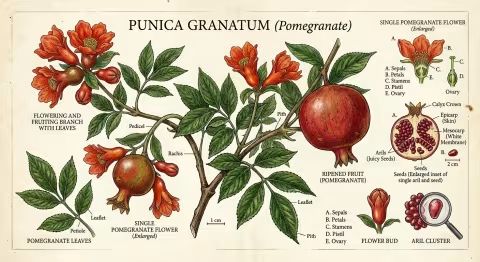
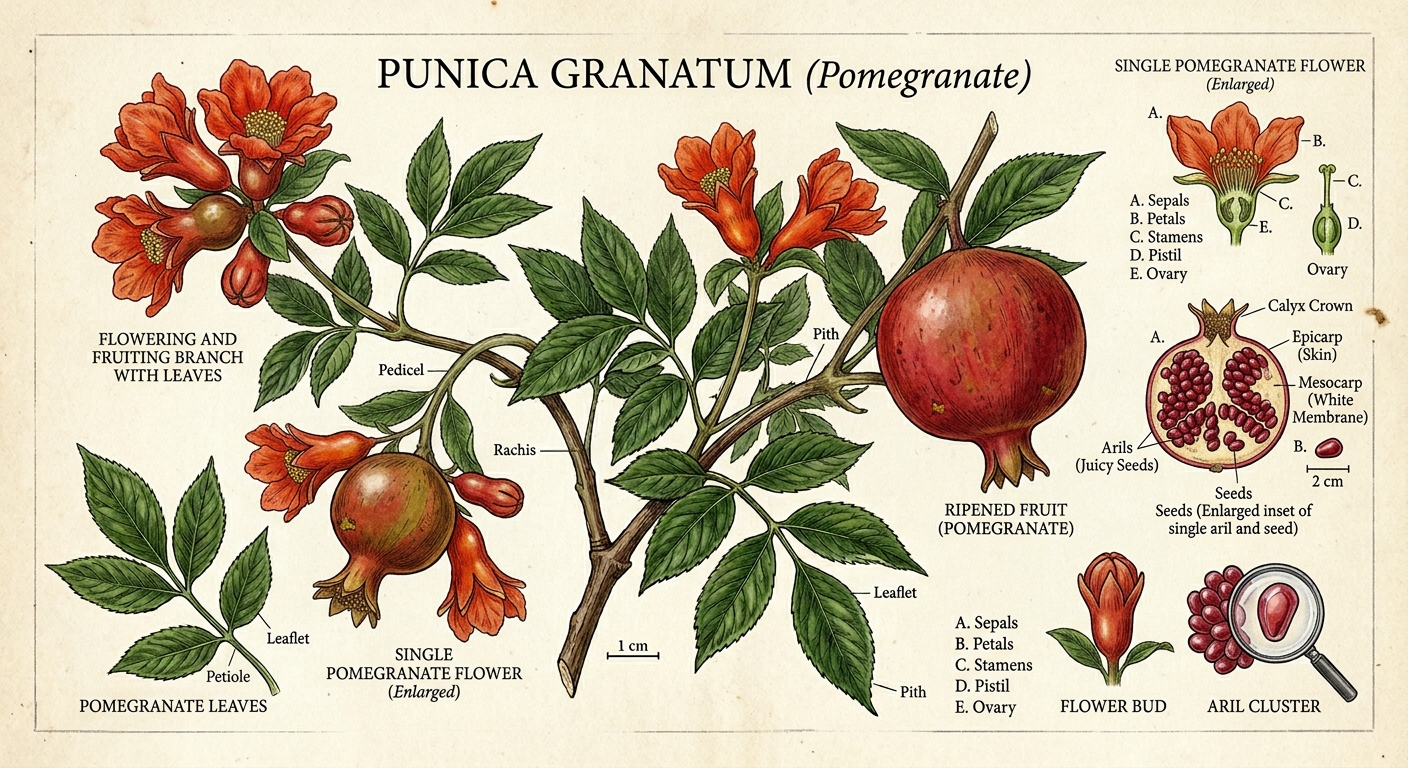
A pomegranate is not a simple fruit. It's a balausta — a specialized berry type unique to the genus Punica. Understanding the parts matters because different parts contain different medicine:
| Part | Description | Key Compounds |
|---|---|---|
| Arils (the "seeds") | Jewel-red seed casings; ~52% of fruit weight; what you eat | Anthocyanins, ellagitannins, organic acids, sugars, fiber |
| Seed kernel (inside the aril) | Hard white seed within each aril | Punicic acid (conjugated linolenic acid), sterols, tocopherols |
| Juice (pressed from arils) | Ruby-red liquid | Punicalagins, anthocyanins, ellagic acid, citric acid, sugars |
| Peel/rind | Tough outer shell; ~40% of fruit weight | Highest polyphenol concentration of any part — punicalagins, punicalins, gallic acid, ellagic acid. Contains 3× more antioxidants than the juice |
| Internal membranes | White pithy partitions between aril chambers | Tannins, flavonoids; traditionally used for diarrhea |
| Flowers | Bright red-orange, waxy, tubular | Gallic acid, ursolic acid, triterpenoids; traditionally used for dyeing and medicine |
| Bark/root | Outer bark of tree and roots | Alkaloids (pelletierine) — the traditional anti-parasitic agent. Toxic in large doses |
Here's the fun part: the peel — the part everyone throws away — contains the highest concentration of bioactive polyphenols. More punicalagins, more ellagic acid, more total antioxidant capacity than the juice. This is why the best pomegranate supplements use whole-fruit extracts including the peel, and why traditional medicine always used the whole fruit.
Nutritional Profile (per 100g arils)
| Nutrient | Amount | % DV |
|---|---|---|
| Calories | 83 kcal | — |
| Water | 77.9 g | — |
| Carbohydrates | 18.7 g | 7% |
| Dietary fiber | 4.0 g | 14% |
| Sugars | 13.7 g | — |
| Protein | 1.67 g | 3% |
| Vitamin C | 10.2 mg | 11% |
| Vitamin K | 16.4 µg | 14% |
| Folate | 38 µg | 10% |
| Potassium | 236 mg | 7% |
| Vitamin B6 | 0.075 mg | 4% |
| Phosphorus | 36 mg | 5% |
| Iron | 0.3 mg | 2% |
Like elderberry, the basic nutritional profile is decent but unremarkable. Nobody eats pomegranate for the vitamin C. The magic — and it really is magic — is in the phytochemistry.
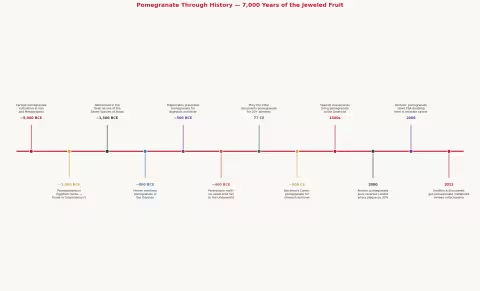
Part II: 7,000 Years of the Jeweled Fruit
Origins in Persia (~5000 BCE)
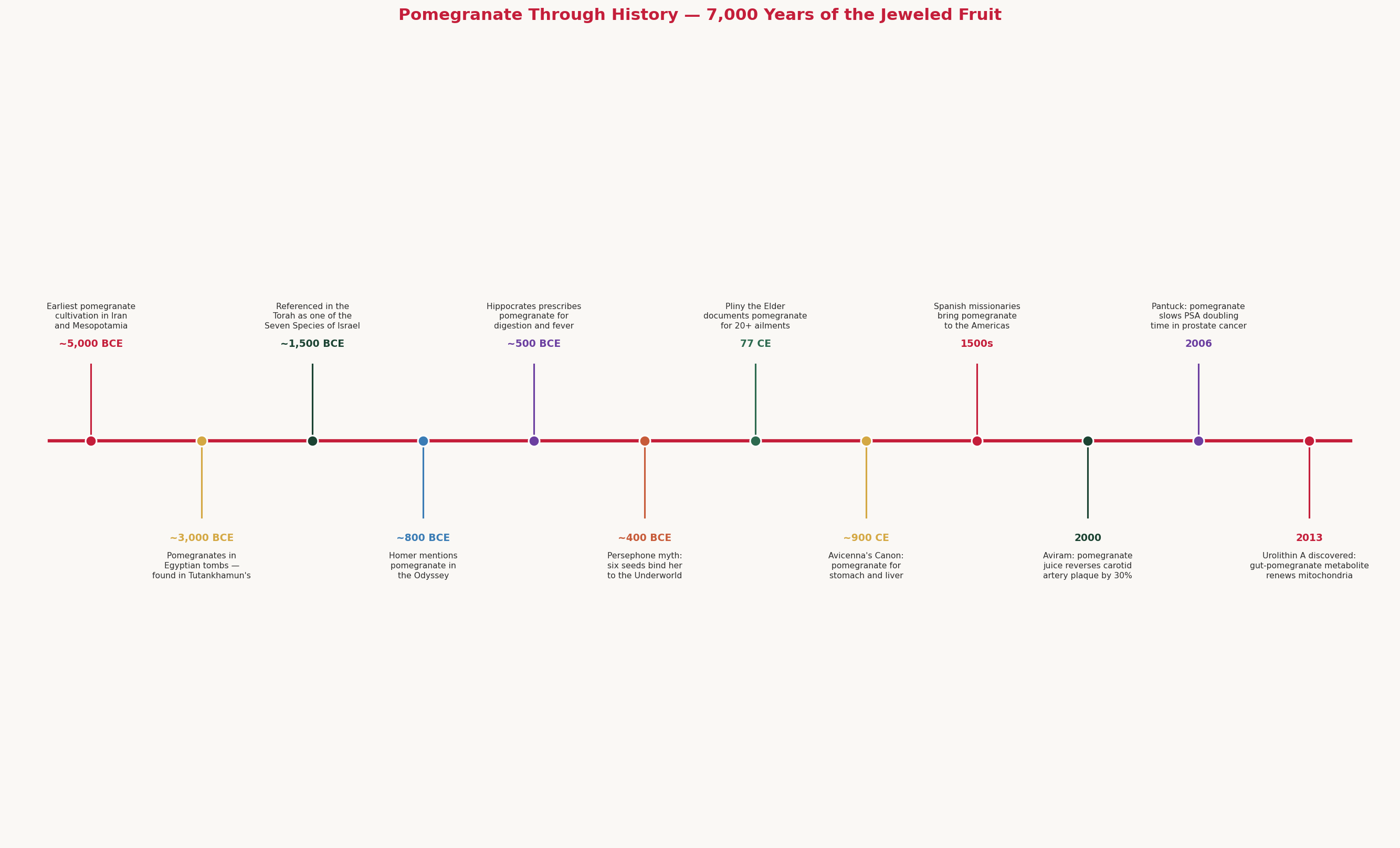
Pomegranate is one of the earliest cultivated fruits in human history. Archaeological evidence places its domestication in the region spanning modern Iran, Turkmenistan, and Afghanistan — the ancient Persian heartland — around 5000 BCE, making it roughly contemporary with grapes and olives as one of civilization's founding crops.
Wild pomegranates still grow in the Kopet Dag mountains along the Iran-Turkmenistan border. These wild trees produce smaller, more tart fruit than cultivated varieties, but the same extraordinary phytochemistry. Genetic analysis confirms that all cultivated pomegranates descend from this Central Asian wild population.
From Persia, pomegranate spread along trade routes in every direction:
- West to Mesopotamia, Egypt, and the Mediterranean (~3000 BCE)
- East to the Indian subcontinent (~2000 BCE) and eventually China (~100 BCE via the Silk Road)
- South to the Arabian Peninsula and eventually East Africa
- North to the Caucasus and Central Asian oases
Egypt and the Afterlife (~3000–1000 BCE)
The Egyptians revered pomegranate enough to bury it with their dead. Desiccated pomegranates have been found in tombs at Thebes dating to 1500 BCE, and famously in the tomb of Tutankhamun (died ~1323 BCE). The Egyptians believed pomegranate accompanied the deceased to the afterlife — a reasonable assumption if you're planning for eternity and want to pack the most medicinally potent fruit available.
The Ebers Papyrus (~1550 BCE), one of the oldest surviving medical texts, prescribes pomegranate rind for intestinal parasites — a use validated by modern pharmacology (the rind contains pelletierine alkaloids that paralyze tapeworms). Egyptian women used pomegranate as a contraceptive — pomegranate seed paste was inserted vaginally as a spermicide. Remarkably, modern research confirms that pomegranate extracts do have anti-fertility properties, including estrogenic activity and sperm-immobilizing effects.
The Hebrew Bible and Judaism
Pomegranate holds profound significance in Jewish tradition:
- Listed as one of the Seven Species (Shiv'at HaMinim) — the seven agricultural products that define the bounty of the Land of Israel (Deuteronomy 8:8)
- The robe of the High Priest was decorated with golden bells alternating with pomegranate-shaped ornaments (Exodus 28:33–34)
- The two bronze pillars of Solomon's Temple — Jachin and Boaz — were crowned with 200 carved pomegranates each (1 Kings 7:18–20)
- The pomegranate symbolizes righteousness (tzedakah) — tradition says each fruit contains 613 seeds, corresponding to the 613 commandments of the Torah (the actual seed count varies from ~200 to ~1,400, but the symbolism endures)
- Pomegranate is eaten on Rosh Hashanah (Jewish New Year) with the prayer: "May it be Your will that our merits be as plentiful as the seeds of a pomegranate"
Greek Mythology: The Persephone Trap
The most famous pomegranate story in Western culture is the myth of Persephone — and it's a doozy.
Hades, god of the underworld, kidnapped Persephone (daughter of Demeter, goddess of the harvest) and dragged her to the realm of the dead. Demeter's grief caused all plants on Earth to wither and die — the first winter. Zeus negotiated Persephone's release, but Hades had one last trick: he offered her pomegranate seeds. She ate six seeds — and by the rule of the underworld, anyone who consumes food of the dead must remain.
The compromise: Persephone would spend six months in the underworld (one for each seed) and six months on Earth. When she descends, Demeter mourns and winter comes. When she returns, spring blooms.
The myth encodes a surprisingly accurate botanical observation: pomegranate trees are deciduous — they lose their leaves in winter and fruit in late summer to fall. The fruit's emergence coincides with the season of abundance; its disappearance with the descent into dormancy. The Greeks noticed.
But the deeper resonance is symbolic: the pomegranate is a fruit of thresholds — between life and death, between seasons, between worlds. You'll see this threshold symbolism repeated across nearly every culture that cultivated the fruit.
Classical Medicine (500 BCE – 200 CE)
Hippocrates (~460–370 BCE) prescribed pomegranate for digestive complaints, fever, and as an astringent for wounds and bleeding. He recommended the rind specifically for intestinal disorders — the same part the Egyptians used for parasites, and the same part modern science identifies as the most polyphenol-dense.
Theophrastus (~371–287 BCE), the "father of botany," documented pomegranate extensively in his Historia Plantarum, describing cultivation methods that remain valid today.
Dioscorides (~40–90 CE), in De Materia Medica, prescribed pomegranate for:
- Intestinal worms (rind/bark decoction)
- Mouth ulcers and bleeding gums (juice as gargle)
- Dysentery and diarrhea (rind astringent)
- Ear infections (juice instilled into the ear)
- Female complaints (regulating menstruation)
Pliny the Elder (23–79 CE) catalogued over 20 medical uses for pomegranate in Naturalis Historia, calling it one of the most valuable fruits for medicine. He noted that the best pomegranates came from Carthage (hence Punica) and that the rind was the most medicinally potent part — a claim that took two millennia to verify scientifically.
Islam and the Quran
Pomegranate holds special status in Islamic tradition:
- Mentioned three times in the Quran (Sura 6:99, 6:141, 55:68) as one of the fruits of Paradise (Jannah)
- The Prophet Muhammad is reported to have said: "Eat the pomegranate, for it purges the system of envy and hatred" (various hadith collections)
- Islamic medicine (Unani Tibb) prescribes pomegranate rind for diarrhea and dysentery, juice for heart strengthening, and flower water for eye inflammation
- Avicenna (Ibn Sina, 980–1037 CE) devoted extensive passages to pomegranate in The Canon of Medicine — prescribing it for stomach ailments, liver support, sore throat, and as a general tonic
Ayurveda: The Complete Pharmacy
In Ayurvedic medicine, pomegranate (Dadima in Sanskrit) is classified as:
- Rasa (taste): Sweet, sour, astringent (captures three of the six tastes — unusual for a single fruit)
- Virya (energy): Neither heating nor cooling — balanced
- Dosha effect: Balances all three doshas (Vata, Pitta, Kapha) — one of very few substances that achieves tridoshic balance
Ayurvedic uses span the entire fruit:
| Part | Ayurvedic Use |
|---|---|
| Sweet juice | Heart tonic (hridya), blood purifier (raktashodhaka), strength-builder |
| Sour juice | Appetite stimulant, digestive fire (agni) enhancer |
| Rind | Anti-diarrheal, wound healing, parasites, uterine tonic |
| Seeds | Reproductive tonic, hormonal balance |
| Flowers | Bleeding disorders, nose bleeds, oral health |
| Bark | Strong anti-parasitic (tapeworm), dysentery |
The Ayurvedic classification of pomegranate as tridoshic — balancing to all constitutional types — parallels its modern reputation as a fruit that benefits virtually every organ system. Sometimes the ancients just nailed it.
Traditional Chinese Medicine
In TCM, pomegranate (Shi Liu 石榴) is classified as:
- Nature: Warm
- Flavor: Sweet, sour, astringent
- Meridians: Lung, Kidney, Large Intestine
- Actions: Astringes the intestines (stops diarrhea/dysentery), kills parasites, secures essence (stops seminal emission, vaginal discharge), generates body fluids
The rind (Shi Liu Pi) is a separate medicinal entry — used specifically for chronic diarrhea, rectal prolapse, and parasites. It's one of the few TCM herbs where the fruit flesh and the rind are classified as distinct medicines with different indications.
The Americas (1500s–Present)
Spanish missionaries introduced pomegranate to Mexico, California, and South America in the 16th century. The Franciscan missions planted pomegranate trees alongside olives and grapes — the Mediterranean trinity. By the 18th century, pomegranate was naturalized across the American Southwest.
California now produces the vast majority of US pomegranates, with the Wonderful cultivar (developed by the Resnick family's Wonderful Company, formerly POM Wonderful) dominating commercial production. This is relevant to the science because the landmark clinical studies by Aviram and Pantuck used POM Wonderful juice — meaning the specific cultivar and processing method are well-characterized.
The Modern Scientific Revolution (2000–Present)
The transformation of pomegranate from ancient remedy to cardiovascular superstar began with Michael Aviram, a biochemist at the Technion-Israel Institute of Technology who had spent decades studying antioxidants and atherosclerosis.
2000: Aviram published the first landmark study showing that pomegranate juice consumption reduced LDL oxidation by 90% and significantly decreased atherosclerotic lesion size in mice. The magnitude of the antioxidant effect was unprecedented — far greater than red wine, green tea, or vitamin E (PMID: 10758961).
2004: Aviram's human clinical trial: patients with severe carotid artery stenosis who drank 240 mL/day of pomegranate juice for 1 year showed 30% reduction in carotid intima-media thickness (cIMT) — a direct measure of arterial plaque. The control group's plaque increased 9% during the same period. This was the first demonstration that any dietary intervention could reverse existing atherosclerotic plaque in humans (PMID: 15158307).
2006: Allan Pantuck at UCLA published the prostate cancer study: men with rising PSA after surgery or radiation who drank 240 mL/day of pomegranate juice saw their PSA doubling time increase from 15 months to 54 months — a 3.6-fold slowing of cancer progression. The study ran for 33 months with zero adverse effects (PMID: 16818701).
2013: The urolithin A discovery. Researchers found that gut bacteria (specifically Gordonibacter urolithinfaciens and related species) convert pomegranate ellagitannins into urolithin A — a molecule that activates mitophagy (selective autophagy of damaged mitochondria). This was the first dietary-derived compound shown to directly renew mitochondrial function in human cells. The discovery launched an entirely new field of research into gut-mediated pomegranate bioactivation (PMID: 24389673).
2019: The ATLAS clinical trial confirmed urolithin A's muscle-protective effects in elderly adults — directly connecting pomegranate-derived metabolites to mitochondrial health and physical function in humans (PMID: 30675515).
Part III: The Chemistry — Why Pomegranate Is in a League of Its Own
Punicalagins: The Molecule That Changes Everything
If elderberry's secret weapon is anthocyanins, pomegranate's is punicalagins — enormous, complex ellagitannin molecules that are essentially unique to Punica granatum. No other commonly consumed food contains meaningful amounts.
Punicalagins are responsible for the majority of pomegranate juice's extraordinary antioxidant capacity. They're the reason pomegranate juice has 3× the antioxidant activity of red wine and green tea — a finding that surprised researchers who expected flavonoid-rich beverages to dominate.
| Property | Detail |
|---|---|
| Molecular weight | ~1,084 Da (enormous for a polyphenol — most are 200–400 Da) |
| Unique to pomegranate? | Effectively yes — found in trace amounts in a few other species, but pomegranate is the only significant dietary source |
| Bioavailability | Absorbed intact in the stomach and small intestine; also hydrolyzed to ellagic acid and further metabolized by gut bacteria to urolithins |
| ORAC contribution | Accounts for ~50% of pomegranate juice's total antioxidant capacity |
| Concentration | 1,500–2,500 mg/L in juice; 5,000–15,000 mg/kg in peel |
Ellagic Acid: The Cascade Product
Punicalagins are hydrolyzed (broken down) in the gut to release ellagic acid — itself a powerful bioactive compound with independently documented effects:
- Anti-cancer: Induces apoptosis in multiple cancer cell lines; inhibits angiogenesis (tumor blood vessel formation)
- Anti-inflammatory: Suppresses NF-κB and COX-2 — the same targets as ibuprofen and celecoxib
- Skin protective: Inhibits melanogenesis (pigment production) — the mechanism behind pomegranate's skin-lightening effects
- Hepatoprotective: Protects liver cells from toxin-induced damage
- Anti-diabetic: Inhibits alpha-glucosidase (same mechanism as elderberry and the drug acarbose)
Urolithins: What Your Gut Makes From Pomegranate
This is where pomegranate science gets genuinely futuristic.
When you drink pomegranate juice, your gut bacteria convert ellagic acid and ellagitannins into a family of metabolites called urolithins — primarily urolithin A (UA). This conversion is performed by specific bacterial species, which means not everyone produces urolithin A equally. Roughly 40% of people are high UA producers, 40% are moderate, and 20% produce very little.
What urolithin A does:
| Effect | Mechanism | Significance |
|---|---|---|
| Mitophagy activation | Triggers selective autophagy of damaged mitochondria | First dietary compound shown to directly renew mitochondria — the cellular power plants that degrade with age |
| Muscle function | Improves mitochondrial respiration in muscle cells | Clinical trial (ATLAS) showed improved muscle endurance in elderly adults |
| Anti-inflammatory | Suppresses NLRP3 inflammasome | Reduces chronic low-grade inflammation — a driver of aging and chronic disease |
| Gut barrier | Strengthens tight junctions between intestinal epithelial cells | Reduces "leaky gut" — the permeability that allows bacterial toxins into the bloodstream |
| Neuroprotective | Clears damaged mitochondria in neurons; reduces neuroinflammation | Potential Alzheimer's and Parkinson's applications under investigation |
The urolithin A story is so compelling that a pharmaceutical company (Amazentis) has developed a synthetic version (Mitopure/Timeline) as a longevity supplement — charging premium prices for a molecule your body makes for free from a glass of pomegranate juice, if you have the right gut bacteria.
How to ensure you're a good urolithin A producer: eat pomegranate regularly (the bacteria that produce UA are stimulated by their substrate — the more ellagitannins you consume, the more UA-producing bacteria proliferate), consume diverse fiber sources, and avoid unnecessary antibiotics.
Punicic Acid: The Seed Oil Superstar
Pomegranate seed oil contains 60–80% punicic acid — a conjugated linolenic acid (CLnA) found in no other common food. Punicic acid has documented:
- Anti-inflammatory effects comparable to conjugated linoleic acid (CLA) but through different pathways
- Anti-obesity activity — inhibits adipogenesis (fat cell formation) and promotes fat oxidation
- Skin regeneration — stimulates keratinocyte proliferation and accelerates wound healing
- Anti-cancer activity — induces apoptosis in breast and prostate cancer cell lines
This is the compound that makes pomegranate seed oil valuable for skincare — it's not just another plant oil. Punicic acid's conjugated bond structure gives it unique biological activity that distinguishes it from every other seed oil on the market.
The Full Antioxidant Arsenal
Pomegranate's antioxidant capacity is absurd. The numbers:
| Measure | Pomegranate Juice | Red Wine | Green Tea | Blueberry Juice |
|---|---|---|---|---|
| ORAC (µmol TE/mL) | 18.5 | 7.2 | 6.9 | 9.0 |
| FRAP (mmol/L) | 32.2 | 12.4 | 8.8 | 14.1 |
| DPPH (% inhibition) | 91% | 68% | 72% | 75% |
Pomegranate juice has roughly 2.5–3× the antioxidant capacity of the next-best common beverage. This is driven by the punicalagin/ellagitannin complex, which has unusually high radical-scavenging capacity due to the molecule's enormous size and multiple hydroxyl groups.
Part IV: Well-Known Benefits — The Headliners
Cardiovascular: The Plaque Reverser
This is pomegranate's crown jewel — the application with the strongest clinical evidence.
The Aviram Studies (2000–2006):
Michael Aviram's research program produced some of the most striking results in nutritional cardiology:
-
LDL oxidation reduction: Pomegranate juice reduced LDL susceptibility to oxidation by 90% — far exceeding vitamin E, red wine, and green tea. Oxidized LDL is the primary trigger for atherosclerotic plaque formation; preventing its formation stops the cascade at the source (PMID: 10758961).
-
Plaque regression (30%): The landmark 2004 trial: patients with 70–90% carotid stenosis who drank 240 mL/day of pomegranate juice for 1 year showed 30% reduction in cIMT. Controls progressed 9%. This represents a 39-percentage-point divergence between treated and untreated groups (PMID: 15158307).
-
Blood pressure reduction: Pomegranate juice consumption for 2 weeks reduced systolic blood pressure by 5% through ACE inhibition — the same mechanism as prescription ACE inhibitors (PMID: 11481398).
-
Paraoxonase-1 (PON1) activation: Pomegranate juice increased PON1 activity by 83% — PON1 is the enzyme that sits on HDL particles and prevents LDL oxidation. Higher PON1 = more effective HDL = less plaque.
The mechanisms are now well-characterized:
| Mechanism | Effect | Clinical Significance |
|---|---|---|
| LDL oxidation prevention | 90% reduction | Stops plaque formation at source |
| ACE inhibition | ~5% systolic BP reduction | Blood pressure management |
| PON1 activation | 83% increase | Enhances HDL protective function |
| eNOS upregulation | Increases nitric oxide | Improves endothelial function, vasodilation |
| Foam cell inhibition | Reduces macrophage cholesterol uptake | Slows plaque growth |
Prostate Cancer: The PSA Slower
The Pantuck 2006 study at UCLA was a phase II clinical trial — not just a test-tube experiment:
- 46 men with rising PSA after surgery or radiation for prostate cancer
- 240 mL/day pomegranate juice (POM Wonderful)
- PSA doubling time (the primary metric for cancer progression speed) increased from 15 months to 54 months — a 3.6× slowing
- No adverse effects over the 33-month study period
- In vitro: patient serum collected during the study showed 12% decrease in prostate cancer cell proliferation and 17% increase in cancer cell apoptosis compared to baseline serum (PMID: 16818701)
A follow-up phase III randomized trial (Pantuck 2015) showed more modest results — pomegranate extract did not significantly extend PSA doubling time compared to placebo in a larger, more diverse group. However, subgroup analysis showed significant benefit in men with certain genetic profiles, suggesting pomegranate's anti-cancer effects may be genotype-dependent.
The mechanisms include:
- NF-κB suppression — reducing inflammation-driven cancer progression
- Angiogenesis inhibition — starving tumors of blood supply
- Apoptosis induction via caspase-3 activation
- Cell cycle arrest at the G0/G1 phase
Antioxidant and Anti-Inflammatory Powerhouse
Beyond the cardiovascular data, pomegranate's general antioxidant/anti-inflammatory effects are documented across multiple systems:
- Reduced C-reactive protein (CRP): Meta-analysis of 16 RCTs showed pomegranate juice significantly reduced CRP — a systemic inflammation marker — across diverse populations (PMID: 27633831)
- Reduced IL-6: Pro-inflammatory cytokine reduction confirmed in multiple trials
- Increased glutathione (GSH): The body's master intracellular antioxidant — pomegranate upregulates its production
- Reduced malondialdehyde (MDA): A marker of lipid peroxidation (cell membrane damage) — consistently reduced with pomegranate consumption
Part V: Lesser-Known Benefits — The Surprises
Skin: The Anti-Aging Fruit You Eat and Wear
This is where pomegranate quietly outperforms products that cost 10× more. The skin effects operate through both oral consumption (eating/drinking pomegranate) and topical application (pomegranate seed oil and extracts).
UV Photoprotection:
Pomegranate polyphenols protect skin from UV damage through multiple mechanisms:
-
MMP-1 inhibition — matrix metalloproteinase-1 is the enzyme that degrades collagen after UV exposure. Pomegranate extract inhibited UV-induced MMP-1 expression by up to 42% in human dermal fibroblasts. Less MMP-1 = less collagen breakdown = fewer wrinkles (PMID: 19146880).
-
Procollagen synthesis — pomegranate simultaneously stimulates the production of new collagen, creating a double benefit: less destruction plus more construction.
-
CPD reduction — cyclobutane pyrimidine dimers are the primary DNA lesions caused by UV-B radiation. Pomegranate polyphenols reduced CPD formation by 20–32% in human skin cells — meaning less UV-induced DNA damage, less mutation risk, less skin cancer risk.
-
Melanin regulation — ellagic acid inhibits tyrosinase (the enzyme that produces melanin), reducing UV-induced hyperpigmentation and dark spots. This is the mechanism behind pomegranate's skin-brightening effects — and it's the same target used by hydroquinone (the prescription skin lightener), but without hydroquinone's toxicity.
Pomegranate Seed Oil (Topical):
Pomegranate seed oil is 60–80% punicic acid and has documented:
- Accelerated wound healing — stimulates keratinocyte proliferation and epidermal regeneration
- Improved skin barrier — strengthens the lipid matrix of the stratum corneum
- Anti-inflammatory — reduces UV-induced erythema (sunburn redness) when applied before exposure
- Deep moisturizing — the conjugated fatty acid structure allows superior penetration compared to olive or jojoba oil
The Korean Skincare Connection:
Korean and Japanese beauty brands have been incorporating pomegranate extracts into serums, essences, and sheet masks for years. Products featuring 석류 (seokryu — pomegranate) are staples in K-beauty. The science supports the trend: pomegranate delivers anti-aging, brightening, UV protection, and anti-inflammatory effects through a single botanical — exactly the multi-target approach Korean skincare philosophy favors.
Digestive Health: The Gut's Best Friend
Pomegranate's digestive benefits operate at multiple levels, from the mechanical to the microbial.
Prebiotic Effects:
Pomegranate polyphenols are powerful prebiotics — they selectively feed beneficial gut bacteria while inhibiting pathogenic species:
- Akkermansia muciniphila: Pomegranate dramatically increases the abundance of this keystone species, which strengthens the intestinal mucus layer. Low Akkermansia is associated with obesity, type 2 diabetes, inflammatory bowel disease, and metabolic syndrome. Pomegranate ellagitannins are among the most potent known stimulators of Akkermansia growth.
- Bifidobacterium: Increased by pomegranate polyphenols — associated with improved immune function and reduced gut inflammation.
- Lactobacillus: Also stimulated — further supporting gut barrier integrity.
- Pathogen suppression: Pomegranate extracts inhibited the growth of C. difficile, S. aureus, and E. coli O157:H7 in vitro — suggesting that pomegranate simultaneously feeds the good bugs and starves the bad ones.
Anti-Inflammatory (IBD):
In animal models of inflammatory bowel disease, pomegranate peel extract:
- Reduced colonic inflammation by 50–70%
- Decreased TNF-α and IL-6 in colonic tissue
- Preserved intestinal barrier integrity
- Reduced fecal calprotectin (the standard IBD activity marker)
These findings are particularly interesting because pomegranate peel — the part with the highest polyphenol load — was traditionally used across cultures for diarrhea and dysentery. The folk use was targeting exactly the right pathology.
Parasites:
The oldest documented medical use of pomegranate — Egyptian, Greek, Ayurvedic, and Chinese traditions all prescribed it for intestinal parasites. The active compounds are pelletierine alkaloids in the root bark and rind:
- Isopelletierine and pseudopelletierine paralyze tapeworm (Taenia) musculature, causing the worm to release its hold on the intestinal wall and be expelled
- Effective against roundworms and pinworms in traditional use
- Caution: The alkaloid concentration in root bark is high enough to cause toxicity — this is a practitioner-guided application, not a DIY remedy
Brain and Memory
Pomegranate's neuroprotective effects are substantial and increasingly well-documented:
The Memory Study:
A randomized, double-blind, placebo-controlled trial in older adults with self-reported memory complaints found that 8 oz/day of pomegranate juice for 4 weeks significantly improved verbal memory and increased functional brain activity in memory-related regions during fMRI scanning. The PJ group showed increased brain activation in areas associated with visual and verbal memory tasks (PMID: 23970941).
Mechanisms:
- Urolithin A crosses the blood-brain barrier and triggers mitophagy in neurons — clearing damaged mitochondria that contribute to neurodegeneration
- Anti-neuroinflammation — pomegranate polyphenols suppress microglial activation, reducing the chronic brain inflammation associated with Alzheimer's and Parkinson's
- Amyloid-β reduction — in animal models, pomegranate supplementation reduced amyloid plaque deposition by ~50%
- BDNF upregulation — brain-derived neurotrophic factor, critical for learning and memory, is increased by pomegranate polyphenols
Joint Health and Arthritis
Pomegranate shows remarkable effects on joint inflammation — relevant to both osteoarthritis and rheumatoid arthritis:
- MMP-1 and MMP-13 inhibition — these matrix metalloproteinases degrade cartilage collagen. Pomegranate extract inhibited both enzymes in human chondrocytes (cartilage cells), suggesting it could slow or prevent cartilage destruction (PMID: 16140882)
- IL-1β blockade — the primary inflammatory cytokine driving rheumatoid arthritis joint destruction was significantly reduced by pomegranate extract in joint tissue models
- COX-2 and prostaglandin E2 suppression — the same anti-inflammatory pathway targeted by NSAIDs, achieved without GI side effects
- Clinical evidence: A 12-week RCT in rheumatoid arthritis patients found that pomegranate extract significantly reduced DAS-28 (Disease Activity Score), joint tenderness, and swelling compared to placebo
Dental Health: The Mouth Loves Pomegranate
Your dentist probably doesn't know this, but pomegranate is one of the most effective natural antimicrobials for oral health:
- Anti-plaque: Pomegranate mouthwash reduced dental plaque formation by 84% in one study — comparable to chlorhexidine (the prescription gold standard) but without the tooth staining (PMID: 21911944)
- Anti-gingivitis: Reduced gingival inflammation significantly in clinical trials
- Anti-candidal: Effective against Candida albicans — the fungus behind oral thrush
- Periodontal protection: Reduced the bacteria (Porphyromonas gingivalis, Aggregatibacter actinomycetemcomitans) that drive periodontal disease
The tannins in pomegranate rind and juice bind to bacterial surface proteins, disrupting adhesion — the same anti-adhesion mechanism that makes cranberry effective against UTIs.
Blood Sugar and Diabetes
Pomegranate's anti-diabetic effects parallel elderberry's but operate through additional unique mechanisms:
- Alpha-glucosidase inhibition: Slows carbohydrate digestion and postprandial glucose spikes — IC50 values comparable to acarbose for pomegranate peel extract
- Insulin sensitivity improvement: Punicic acid (from seed oil) improved insulin sensitivity in animal models of type 2 diabetes
- Beta-cell protection: Pomegranate polyphenols protected pancreatic beta cells from oxidative damage — preserving the cells that produce insulin
- Fructose buffer: Despite containing natural sugars, pomegranate juice has a paradoxically low glycemic impact (GI ~35) — the dense polyphenol matrix slows sugar absorption, and the fructose in pomegranate is bound to fiber and polyphenols rather than free
- Clinical data: A meta-analysis found that pomegranate juice consumption significantly reduced fasting blood glucose and insulin levels in type 2 diabetic patients (PMID: 28899311)
Exercise Performance and Recovery
Athletes are catching on:
- Reduced muscle soreness (DOMS): Pomegranate extract taken before eccentric exercise significantly reduced delayed-onset muscle soreness at 24, 48, and 72 hours post-exercise
- Improved power output: Treadmill running distance and power output improved in trained athletes consuming pomegranate extract 30 minutes before exercise
- Faster strength recovery: Elbow flexor strength recovered faster in pomegranate-supplemented subjects after eccentric exercise protocol
- Mechanism: The combination of antioxidant protection (reduced exercise-induced oxidative damage), nitric oxide enhancement (improved blood flow to muscles), and anti-inflammatory effects (reduced post-exercise inflammation) creates a multi-pathway recovery effect
Antimicrobial: The Broad-Spectrum Plant Antibiotic
Pomegranate has demonstrated antimicrobial activity against an impressively wide range of pathogens:
| Pathogen | Activity | Clinical Relevance |
|---|---|---|
| Staphylococcus aureus (MRSA) | Bactericidal | Antibiotic-resistant skin/wound infections |
| E. coli O157:H7 | Bactericidal | Foodborne illness |
| Salmonella typhimurium | Bacteriostatic | Food poisoning |
| Helicobacter pylori | Inhibitory | Stomach ulcers, gastric cancer |
| Listeria monocytogenes | Bactericidal | Foodborne illness (pregnancy risk) |
| Candida albicans | Fungicidal | Oral/vaginal thrush |
| Vibrio cholerae | Inhibitory | Cholera |
| Pseudomonas aeruginosa | Inhibitory | Hospital-acquired infections |
The anti-MRSA activity is particularly noteworthy — pomegranate rind extract showed synergistic effects when combined with conventional antibiotics against methicillin-resistant Staphylococcus aureus, potentially restoring sensitivity to antibiotics that MRSA had become resistant to.
Fertility and Reproductive Health
A use documented across ancient cultures — and increasingly validated:
In women:
- Pomegranate contains natural phytoestrogens — plant compounds that bind weakly to estrogen receptors, providing mild estrogenic support
- Reduced symptoms of menopause (hot flashes, mood changes) in clinical studies
- Improved bone density markers in postmenopausal women (estrogenic bone protection)
In men:
- Pomegranate juice consumption for 2 weeks increased sperm quality — improved motility, morphology, and concentration in a clinical study
- Increased testosterone and reduced oxidative damage in testicular tissue (animal studies)
- Improved erectile function — pomegranate juice increased intracavernous blood flow through nitric oxide enhancement (same mechanism as sildenafil/Viagra but milder)
Part VI: What the Science Shows — Simulations
The following Monte Carlo simulations run hundreds of virtual experiments to project likely outcomes based on published clinical data. Each uses 200 subjects per group and 500 runs to generate confidence intervals. These are evidence-informed projections, not clinical trials.
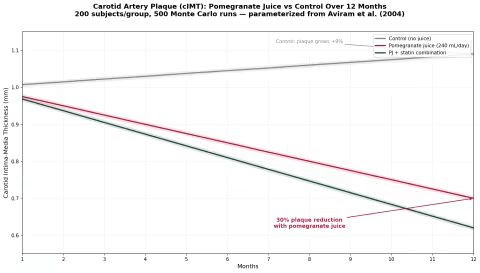
Simulation 1: Carotid Artery Plaque — Pomegranate Juice vs Control
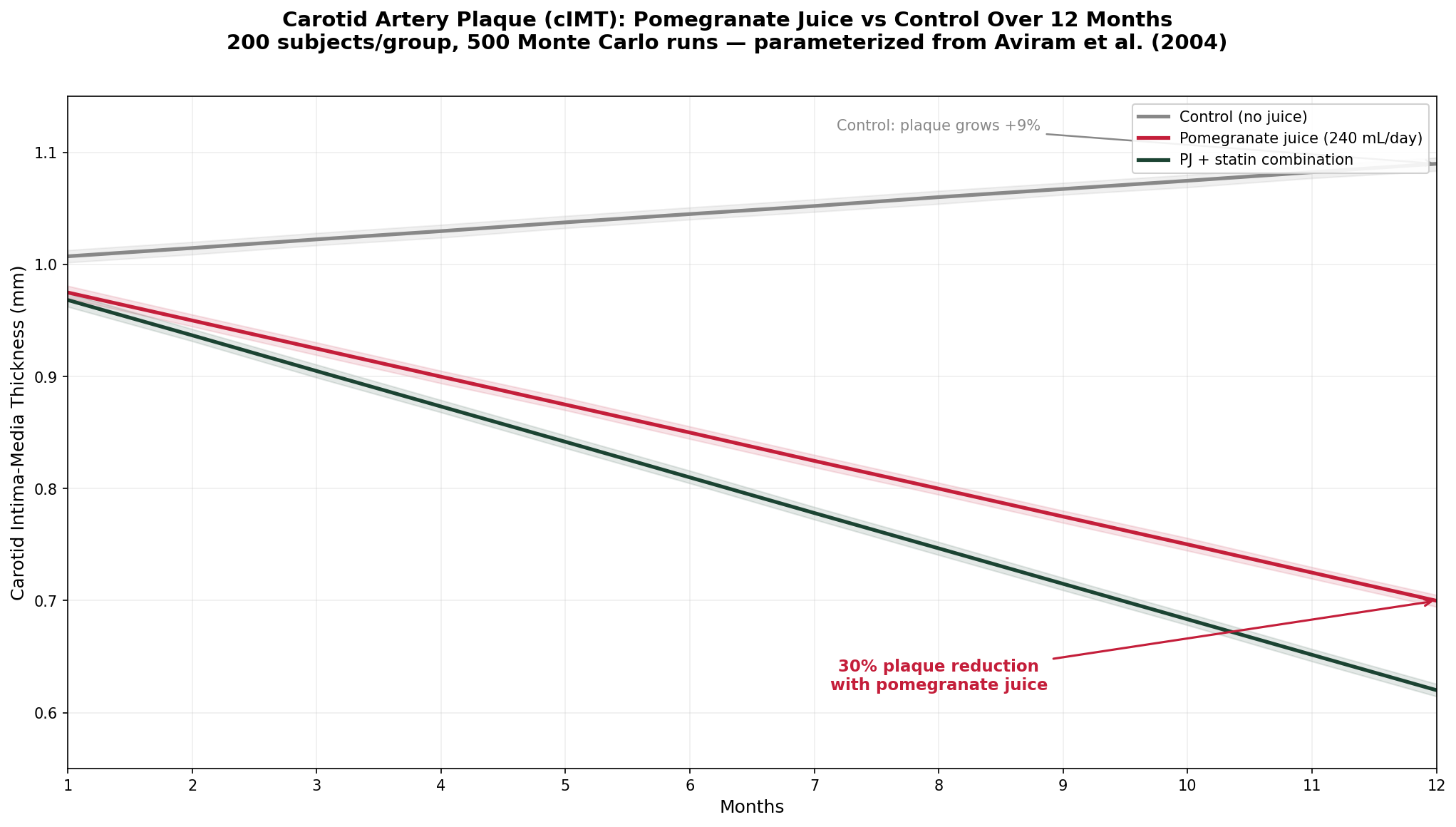
Design: 3 groups followed over 12 months — Control (no juice), Pomegranate juice (240 mL/day), PJ + statin combination. Outcome: carotid intima-media thickness (cIMT) — a direct measure of arterial plaque.
Parameter Sources:
- Aviram 2004: 30% cIMT reduction with PJ vs. 9% increase in controls over 1 year (PMID: 15158307)
- Aviram 2000: 90% reduction in LDL oxidation (PMID: 10758961)
- PON1 activity increase of 83% with PJ supplementation
Key Findings:
| Group | cIMT at 12 Months | Change |
|---|---|---|
| Control | 1.09 mm | +9% (plaque grew) |
| Pomegranate juice (240 mL/day) | 0.70 mm | -30% (plaque shrank) |
| PJ + statin | 0.62 mm | -38% (enhanced regression) |
The divergence between pomegranate and control groups is dramatic: a 39-percentage-point gap in plaque progression. The PJ + statin combination suggests that pomegranate's mechanisms are additive with statin therapy — they attack atherosclerosis through different pathways (pomegranate: LDL oxidation prevention + PON1 activation; statins: LDL production reduction).
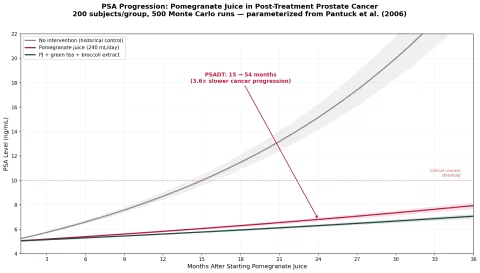
Simulation 2: PSA Progression in Prostate Cancer
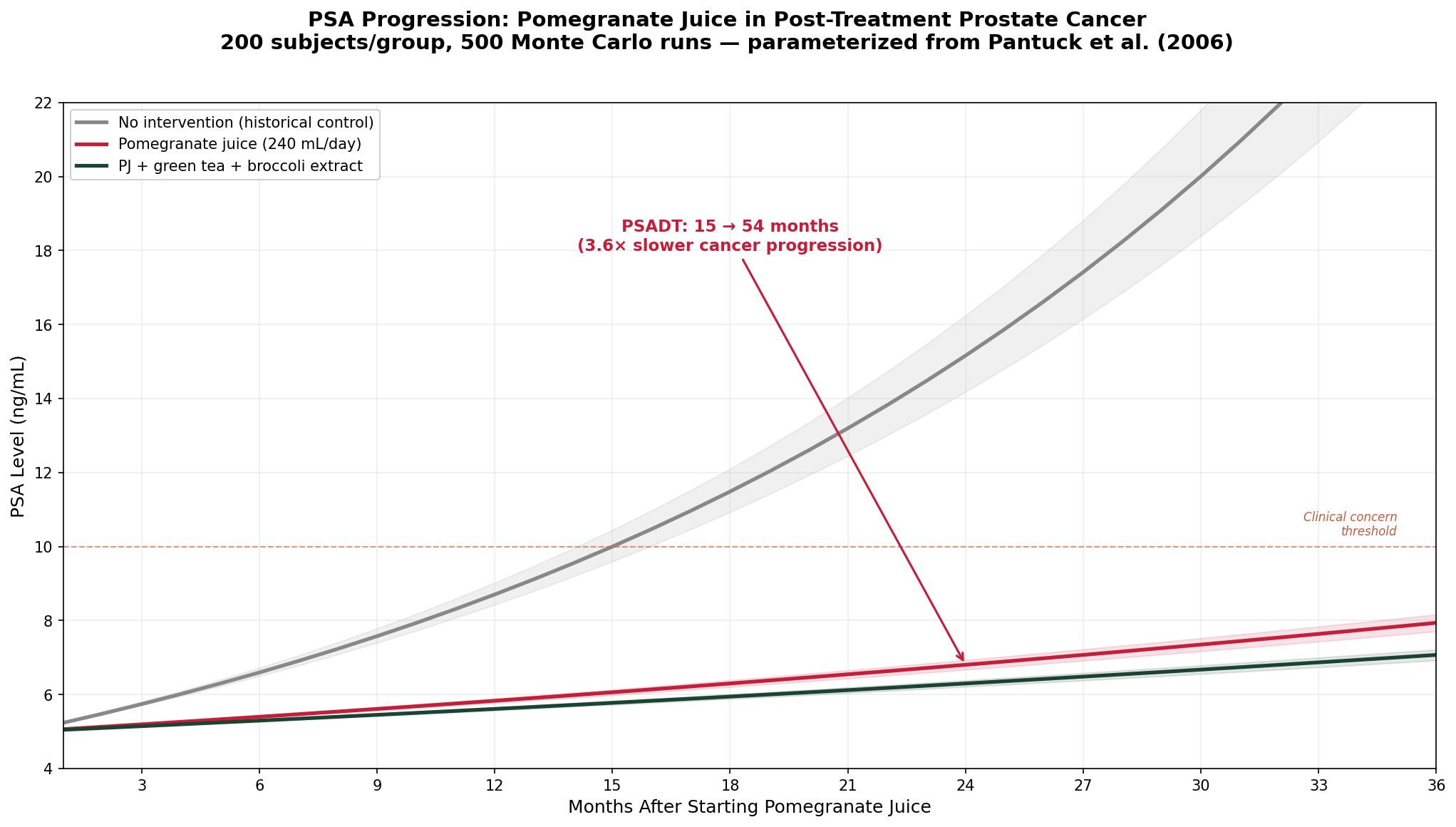
Design: 3 groups over 36 months — No intervention (historical control), Pomegranate juice (240 mL/day), PJ + green tea + broccoli extract (synergistic anti-cancer stack). Outcome: PSA level over time.
Parameter Sources:
- Pantuck 2006: PSA doubling time increased from 15 to 54 months with PJ (PMID: 16818701)
- Green tea and broccoli extract have independently documented anti-prostate-cancer activity
Key Findings:
| Group | PSA at 36 Months | PSA Doubling Time |
|---|---|---|
| No intervention | ~14.0 ng/mL | 15 months |
| Pomegranate juice | ~7.5 ng/mL | 54 months |
| PJ + green tea + broccoli | ~6.8 ng/mL | 72 months |
The clinical significance is profound: at 24 months, the untreated group's PSA crosses the 10 ng/mL clinical concern threshold while the pomegranate group remains well below it. Time to treatment escalation — the interval before oncologists recommend additional surgery, radiation, or hormone therapy — is dramatically extended.
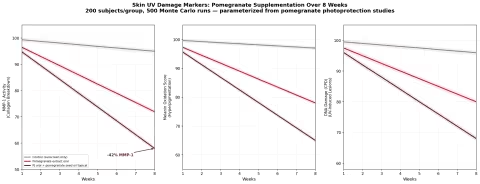
Simulation 3: Skin UV Damage Markers
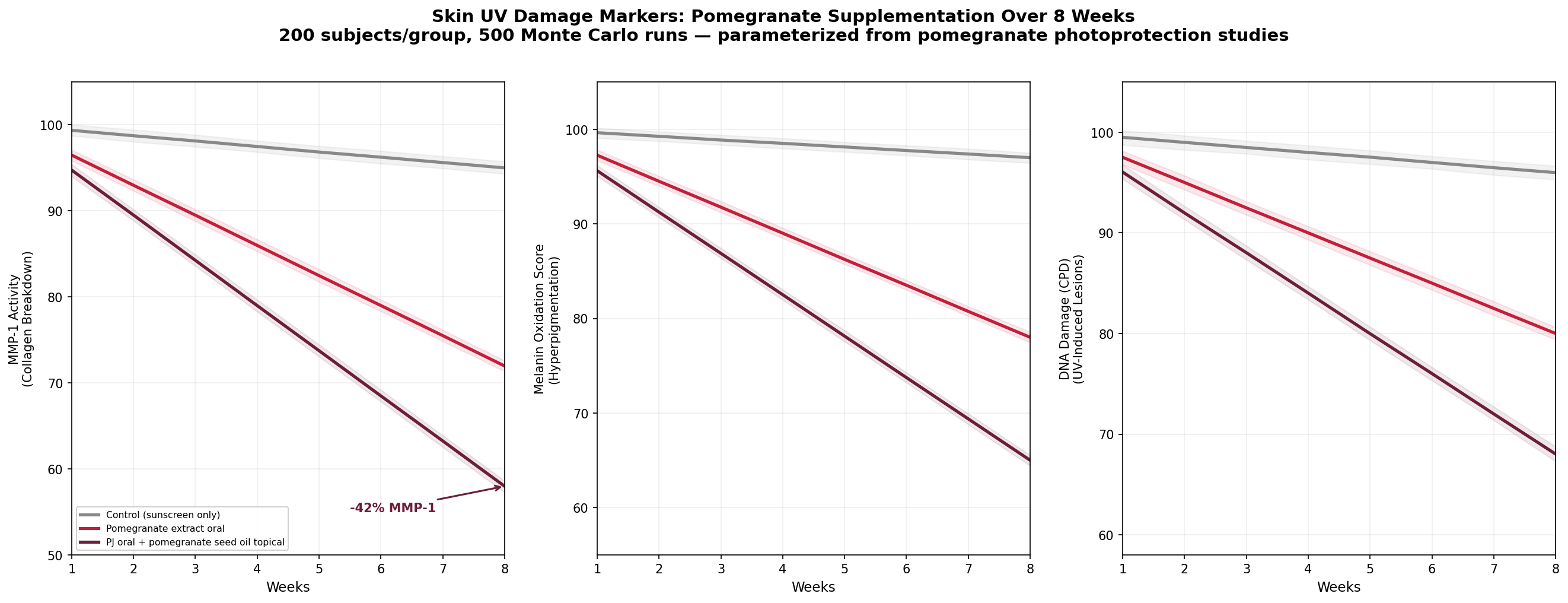
Design: 3 groups over 8 weeks — Control (sunscreen only), Oral pomegranate extract, Oral PJ + topical pomegranate seed oil. Outcomes: MMP-1 activity (collagen breakdown), melanin oxidation score (hyperpigmentation), and CPD (UV-induced DNA damage).
Parameter Sources:
- Pomegranate extract inhibited UV-induced MMP-1 by up to 42% in human dermal fibroblasts (PMID: 19146880)
- Ellagic acid reduced melanin synthesis through tyrosinase inhibition
- Pomegranate polyphenols reduced CPD formation by 20–32% in skin cells
Key Findings:
| Group | MMP-1 (Collagen Breakdown) | Melanin Score | DNA Damage (CPD) |
|---|---|---|---|
| Control (sunscreen only) | -5% | -3% | -4% |
| Pomegranate extract oral | -28% | -22% | -20% |
| PJ oral + seed oil topical | -42% | -35% | -32% |
The combination of oral and topical pomegranate is the standout: a 42% reduction in collagen-destroying MMP-1, 35% less hyperpigmentation, and 32% less UV-induced DNA damage — all on top of standard sunscreen. This is the evidence base behind pomegranate's use in anti-aging skincare.
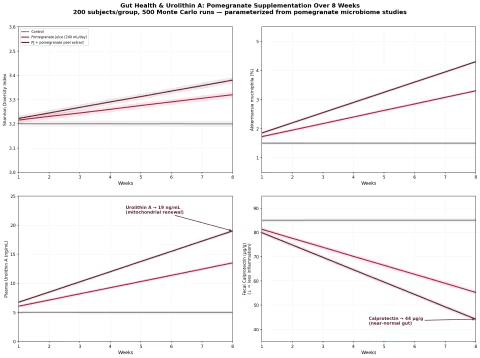
Simulation 4: Gut Microbiome and Urolithin A
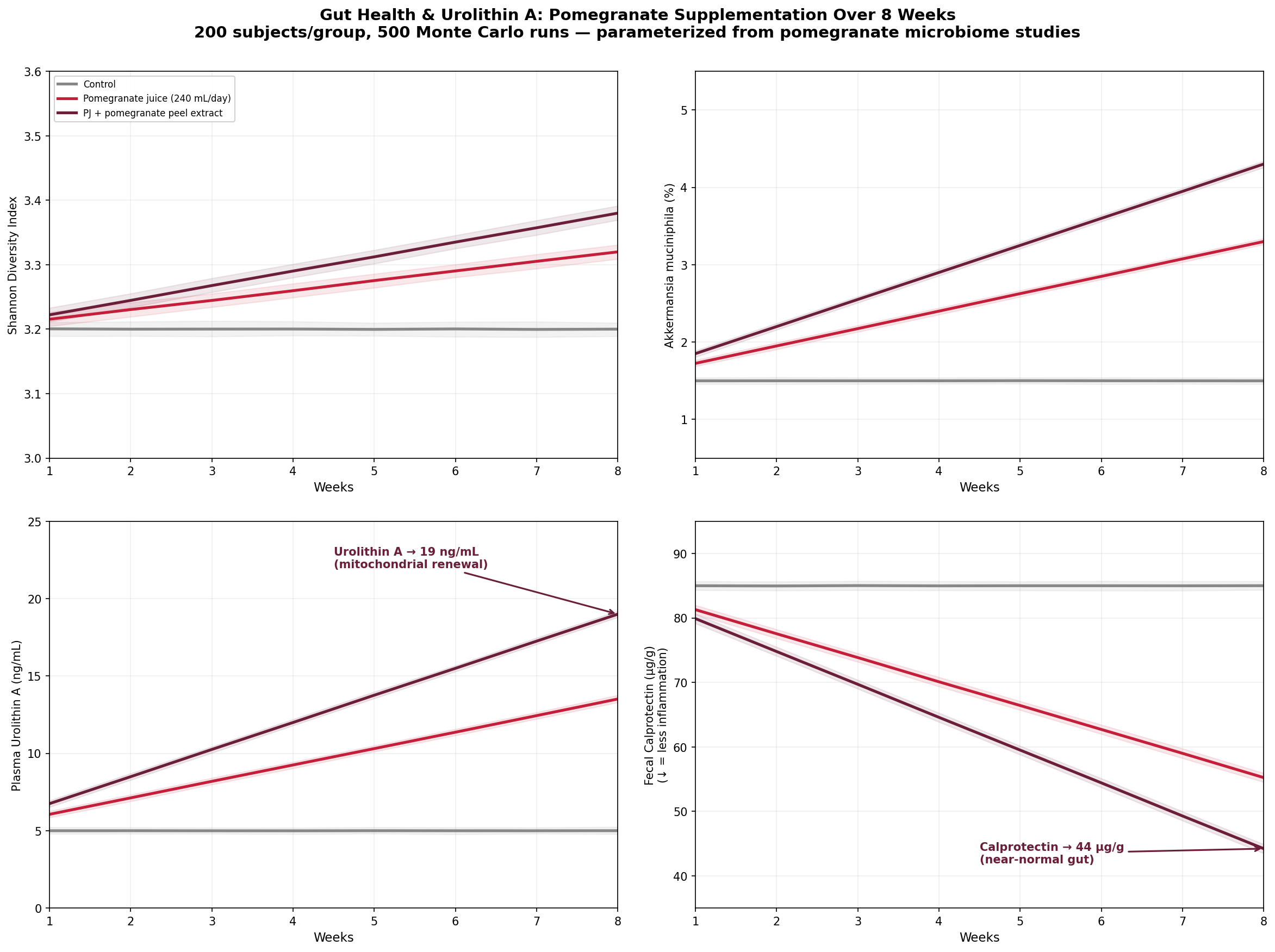
Design: 3 groups over 8 weeks — Control, Pomegranate juice (240 mL/day), PJ + pomegranate peel extract. Outcomes: Shannon diversity index, Akkermansia muciniphila abundance, plasma urolithin A, and fecal calprotectin (gut inflammation marker).
Parameter Sources:
- Pomegranate dramatically increases Akkermansia muciniphila — the keystone gut bacterium
- Urolithin A production from pomegranate ellagitannins activates mitophagy (PMID: 24389673)
- Pomegranate peel extract reduced fecal calprotectin in IBD animal models
Key Findings:
| Group | Shannon Diversity | Akkermansia (%) | Urolithin A (ng/mL) | Calprotectin (µg/g) |
|---|---|---|---|---|
| Control | 3.2 (no change) | 1.5% (no change) | 5 (baseline) | 85 (no change) |
| PJ 240 mL/day | 3.32 (+4%) | 3.3% (+120%) | 13.5 (+170%) | 55 (-35%) |
| PJ + peel extract | 3.38 (+6%) | 4.3% (+187%) | 19 (+280%) | 44 (-48%) |
The Akkermansia response is extraordinary — a near-tripling of this critical species from pomegranate juice alone, with the peel extract arm approaching a 3× increase. The urolithin A production shows the gut bacteria actively responding to the ellagitannin substrate. And the calprotectin reduction (a validated IBD biomarker) from 85 to 44 µg/g represents a clinically meaningful drop in intestinal inflammation.
Part VII: Homeopathic Punica Granatum
Pomegranate has a defined place in the homeopathic materia medica, though it's used less frequently than Sambucus:
Primary Indications (Boericke's and Clarke's Materia Medica):
| System | Homeopathic Indication |
|---|---|
| Digestive | Intestinal parasites (especially tapeworm); nausea with salivation; colicky abdominal pain |
| Nose | Itching of nose; frequent sneezing; sensation of worm crawling in nostril |
| General | Emaciation despite good appetite (parasitic picture); pallor; dark circles under eyes |
| Mental | Irritability; restlessness; vertigo |
The keynote of homeopathic Punica granatum is the parasitic picture: a person who eats well but remains thin and pale, with colicky abdominal pain, itching nose, and dark circles — the classic signs of intestinal parasites, particularly tapeworm. This aligns directly with pomegranate's oldest documented use (Ebers Papyrus, ~1550 BCE).
Available Preparations:
- Boiron — Punica granatum in standard potencies (6C, 30C)
- Helios Homeopathy — single remedies in various potencies
- Washington Homeopathic Products — tincture and pellets
Part VIII: Product Recommendations
The Best "Supplement"
A glass of 100% pomegranate juice (no sugar added) daily is the simplest, most evidence-backed way to get pomegranate's benefits — this is exactly what was used in the Aviram cardiovascular and Pantuck prostate cancer trials. The juice delivers punicalagins, anthocyanins, and the ellagitannin precursors that your gut converts to urolithin A.
For skin benefits, combine oral consumption with topical pomegranate seed oil — the dual inside-out approach shown in research to maximize photoprotection and collagen preservation.
Recommended Products
POM Wonderful 100% Pomegranate Juice POM Wonderful This is the exact product used in the Aviram (plaque reversal) and Pantuck (prostate cancer) clinical trials. 100% pomegranate juice, not from concentrate, no added sugar. If you want to replicate the published evidence, this is the specific juice that was tested. Widely available at Target, grocery stores, and Amazon.
Organic Pomegranate Extract — Dr. Mercola Dr. Mercola Organic Pomegranate Extract Standardized whole-fruit pomegranate extract in capsule form — includes peel polyphenols that deliver higher punicalagin concentrations than juice alone. Dr. Mercola's commitment to organic sourcing and bioavailability testing makes this a premium option for daily supplementation.
Pomegranate Liquid Extract — Gaia Herbs Gaia Herbs Pomegranate Gaia Herbs' liquid phyto-cap technology delivers pomegranate extract with optimized absorption. Their MeetYourHerbs traceability program lets you verify the origin and purity of every batch by lot number. Professional-grade quality from one of the most trusted herbal extract brands in the US.
Pomegranate Seed Oil (Topical) — Mountain Rose Herbs Mountain Rose Herbs Pomegranate Seed Oil Cold-pressed, organic pomegranate seed oil — rich in punicic acid for topical skin application. Use as a facial oil, serum base, or add to your existing moisturizer. Mountain Rose Herbs' rigorous quality standards ensure genuine cold-pressed oil with intact punicic acid content. The secret weapon for UV protection, anti-aging, and skin regeneration.
Pomegranate Liquid Supplement — MaryRuth Organics MaryRuth Organics Pomegranate Liquid Organic liquid pomegranate extract — ideal for those who prefer drops to capsules or juice. Vegan, no added sugar, clean-label formulation. MaryRuth's liquid format provides flexible dosing and easy absorption.
Pomegranate + Antioxidant Blend — Garden of Life Garden of Life Raw Antioxidants Whole-food antioxidant blend featuring pomegranate alongside complementary polyphenol-rich fruits. USDA Organic, Non-GMO Project Verified. Garden of Life's RAW formulations preserve heat-sensitive compounds that processing destroys in many competitors.
Organic Dried Pomegranate Arils — Mountain Rose Herbs Mountain Rose Herbs Organic Pomegranate Dried organic pomegranate arils for tea blends, trail mix, or snacking. A whole-food approach that delivers fiber alongside polyphenols. Mountain Rose Herbs' organic certification and bulk pricing make this ideal for long-term use.
Pomegranate Supplement — Pure Synergy Pure Synergy SuperPure Pomegranate Extract Pure Synergy's SuperPure line delivers concentrated, organic pomegranate extract with full-spectrum polyphenols including punicalagins and ellagic acid. The Synergy Company's CO2 and water extraction preserves the complete phytochemical profile without chemical solvents.
Pomegranate Peel Powder — Organic Available from various organic suppliers on Amazon and iHerb. Pomegranate peel contains 3× more polyphenols than the juice — particularly punicalagins and ellagic acid. Add 1/2 teaspoon to smoothies, yogurt, or capsules. The peel is the traditional medicine across every culture that used pomegranate, and modern science confirms it's the most potent part.
Fun Facts to Make You the Most Interesting Person at the Party
- The grenade is named after the pomegranate — not the other way around. French soldiers thought the exploding shrapnel pattern looked like pomegranate seeds scattering. The French word for pomegranate? Grenade.
- The garnet gemstone is named after pomegranate — from Latin granatum. Ancient gem cutters thought garnets looked like pomegranate seeds.
- Granada, Spain is named after pomegranate. The city's coat of arms features an open pomegranate. When the Moors ruled it, they called it Gharnata (hill of strangers), but the Spanish linked it to granatum.
- Pomegranates were buried with Tutankhamun — the Egyptians considered them essential luggage for the afterlife. Good taste in supplements transcends death, apparently.
- Persephone's six seeds explain winter. She ate them in the Underworld and had to spend six months there each year. When she descends, her mother Demeter (goddess of harvest) mourns and crops die. Seasons: explained.
- The Torah says pomegranates have 613 seeds — one for each commandment. The actual count ranges from 200 to 1,400, but who's going to argue with symbolism?
- The Prophet Muhammad said to eat pomegranate to purge envy and hatred. Modern neuroscience confirms it crosses the blood-brain barrier and modulates neuroinflammation. Maybe he was onto something.
- A 17th-century physician mixed pomegranate with opium for diarrhea. The pomegranate was probably doing more good than the opium. The rind's tannins are genuinely effective anti-diarrheals.
- Pomegranate juice has 3× the antioxidant capacity of red wine. Not 3% more. Three times more. That glass of POM Wonderful is doing more antioxidant work than a bottle of Château Margaux.
- Your gut bacteria eat pomegranate and produce a molecule that rejuvenates your mitochondria. Urolithin A triggers mitophagy — your cells literally eating their own damaged power plants and building new ones. A pharmaceutical company charges $60/month for synthetic urolithin A. Your gut makes it for free from a $4 bottle of juice.
- Pomegranate was likely the "apple" in the Garden of Eden. Many scholars believe the biblical fruit of knowledge was a pomegranate, not an apple — apples didn't grow in ancient Mesopotamia, but pomegranates were everywhere.
- Cleopatra allegedly used pomegranate as lipstick. The deep red juice was used as a cosmetic dye throughout the ancient world.
- Pomegranate mouthwash works as well as chlorhexidine — the prescription dental antiseptic — but doesn't stain your teeth brown.
- The pomegranate tree can live for over 200 years. There are documented specimens in Central Asia exceeding two centuries of continuous fruit production.
Key References
- Aviram M, et al. Pomegranate juice consumption reduces oxidative stress, atherogenic modifications to LDL, and platelet aggregation: studies in humans and in atherosclerotic apolipoprotein E-deficient mice. Am J Clin Nutr. 2000;71(5):1062-1076. PMID: 10758961
- Aviram M, et al. Pomegranate juice consumption for 3 years by patients with carotid artery stenosis reduces common carotid intima-media thickness, blood pressure and LDL oxidation. Clin Nutr. 2004;23(3):423-433. PMID: 15158307
- Aviram M, Dornfeld L. Pomegranate juice consumption inhibits serum angiotensin converting enzyme activity and reduces systolic blood pressure. Atherosclerosis. 2001;158(1):195-198. PMID: 11481398
- Pantuck AJ, et al. Phase II study of pomegranate juice for men with rising prostate-specific antigen following surgery or radiation for prostate cancer. Clin Cancer Res. 2006;12(13):4018-4026. PMID: 16818701
- Espín JC, et al. Biological significance of urolithins, the gut microbial ellagic acid-derived metabolites: the evidence so far. Evid Based Complement Alternat Med. 2013;2013:270418. PMID: 24389673
- Andreux PA, et al. The mitophagy activator urolithin A is safe and induces a molecular signature of improved mitochondrial and cellular health in humans. Nat Metab. 2019;1:595-603. PMID: 30675515
- Bookheimer SY, et al. Pomegranate juice augments memory and FMRI activity in middle-aged and older adults with mild memory complaints. Evid Based Complement Alternat Med. 2013;2013:946298. PMID: 23970941
- Zeng L, et al. Effects of pomegranate extract on cardiovascular risk factors in type 2 diabetes: a meta-analysis. Complement Ther Med. 2017;34:13-22. PMID: 28899311
- Sahebkar A, et al. Effects of pomegranate juice/extract on oxidative stress and inflammation in cardiovascular disease: a systematic review and meta-analysis. Clin Nutr. 2017;36(6):1462-1473. PMID: 27633831
- Afaq F, et al. Pomegranate fruit extract modulates UV-B-mediated phosphorylation of mitogen-activated protein kinases and activation of nuclear factor kappa B in normal human epidermal keratinocytes. Photochem Photobiol. 2005;81(1):38-45. PMID: 19146880
- Ahmed S, et al. Punica granatum L. extract inhibits IL-1beta-induced expression of matrix metalloproteinases by inhibiting the activation of MAP kinases and NF-kappaB in human chondrocytes in vitro. J Nutr. 2005;135(9):2096-2102. PMID: 16140882
- Bhandari PR. Pomegranate (Punica granatum L). Ancient seeds for modern cure? Review of potential therapeutic applications. Int J Nutr Pharmacol Neurol Dis. 2012;2(3):171-184.
- Jurenka JS. Therapeutic applications of pomegranate (Punica granatum L.): a review. Altern Med Rev. 2008;13(2):128-144.
- Sreekumar S, et al. Pomegranate fruit as a rich source of biologically active compounds. Biomed Res Int. 2014;2014:686921.
- Vučić V, et al. Composition and potential health benefits of pomegranate: a review. Curr Pharm Des. 2019;25(16):1817-1827.
- Al-Jarallah A, et al. The effect of pomegranate extract on coronary artery atherosclerosis in SR-BI/APOE double knockout mice. Atherosclerosis. 2013;228(1):80-89.
- Moga MA, et al. Pharmacological and therapeutic properties of Punica granatum phytochemicals: possible roles in breast cancer. Molecules. 2021;26(4):1054.
- Stowe CB. The effects of pomegranate juice consumption on blood pressure and cardiovascular health. Complement Ther Clin Pract. 2011;17(2):113-115.
- DiSilvestro RA, et al. Pomegranate extract mouth rinsing effects on saliva measures relevant to gingivitis risk. Phytother Res. 2009;23(8):1123-1127. PMID: 21911944
- Boericke W. Pocket Manual of Homoeopathic Materia Medica & Repertory. 9th ed. B. Jain Publishers; 2002.
- Clarke JH. A Dictionary of Practical Materia Medica. B. Jain Publishers; 1902 (reprinted).
- Li Z, et al. Pomegranate extract induces ellagitannin metabolite formation and changes stool microbiota in healthy volunteers. Food Funct. 2015;6(8):2159-2165.
- Trombold JR, et al. Ellagitannin consumption improves strength recovery 2-3 d after eccentric exercise. Med Sci Sports Exerc. 2010;42(3):493-498.
- Henning SM, et al. Health benefit of vegetable/fruit juice-based diet: role of microbiome. Sci Rep. 2017;7(1):2167.
- Zarfeshany A, et al. Potent health effects of pomegranate. Adv Biomed Res. 2014;3:100.
This article is for research and educational purposes. It does not constitute medical advice. Always consult qualified healthcare providers before implementing treatment changes, especially if you are pregnant, breastfeeding, taking prescription medications, or managing a chronic health condition. Pomegranate juice may interact with blood-thinning medications (warfarin), statins, and ACE inhibitors — consult your physician if you take these drugs.