The Limey's Revenge
A Complete History, Science, and Kitchen Guide to Limes
You think you know the lime. It's the green thing you squeeze into a gin and tonic. It sits on the edge of a Corona bottle. It's the smaller, greener, less important cousin of the lemon.
You're wrong about nearly all of that.
The lime has prevented more deaths from infectious disease than most antibiotics. It caused one of the great medical blunders in naval history — a mix-up between lemons and limes that let scurvy return to the British fleet after it had been eliminated for decades. Its juice kills cholera bacteria in five minutes flat. A compound in its peel dissolves gallstones and cures heartburn in 86% of patients. Its citric acid reduces kidney stone recurrence by 76% — outperforming the standard pharmaceutical in a head-to-head trial. And the same furanocoumarins that make it a legitimate skin-disease treatment can also give you second-degree burns if you squeeze one at the beach.
The lime is not a garnish. It's a pharmacy, a disinfectant, and a cautionary tale about what happens when bureaucrats substitute one fruit for another without understanding the chemistry.
This is the story of Citrus aurantiifolia, Citrus latifolia, and their extraordinary relatives — a story that stretches from Austronesian trade routes to James Lind's cabin on HMS Salisbury, from Ayurvedic morning rituals to cholera wards in Guinea-Bissau.
Part I: The Fruit That Isn't What You Think
A Family of Hybrids
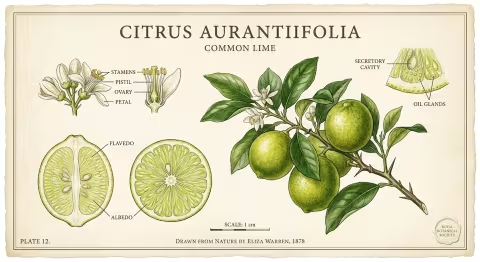
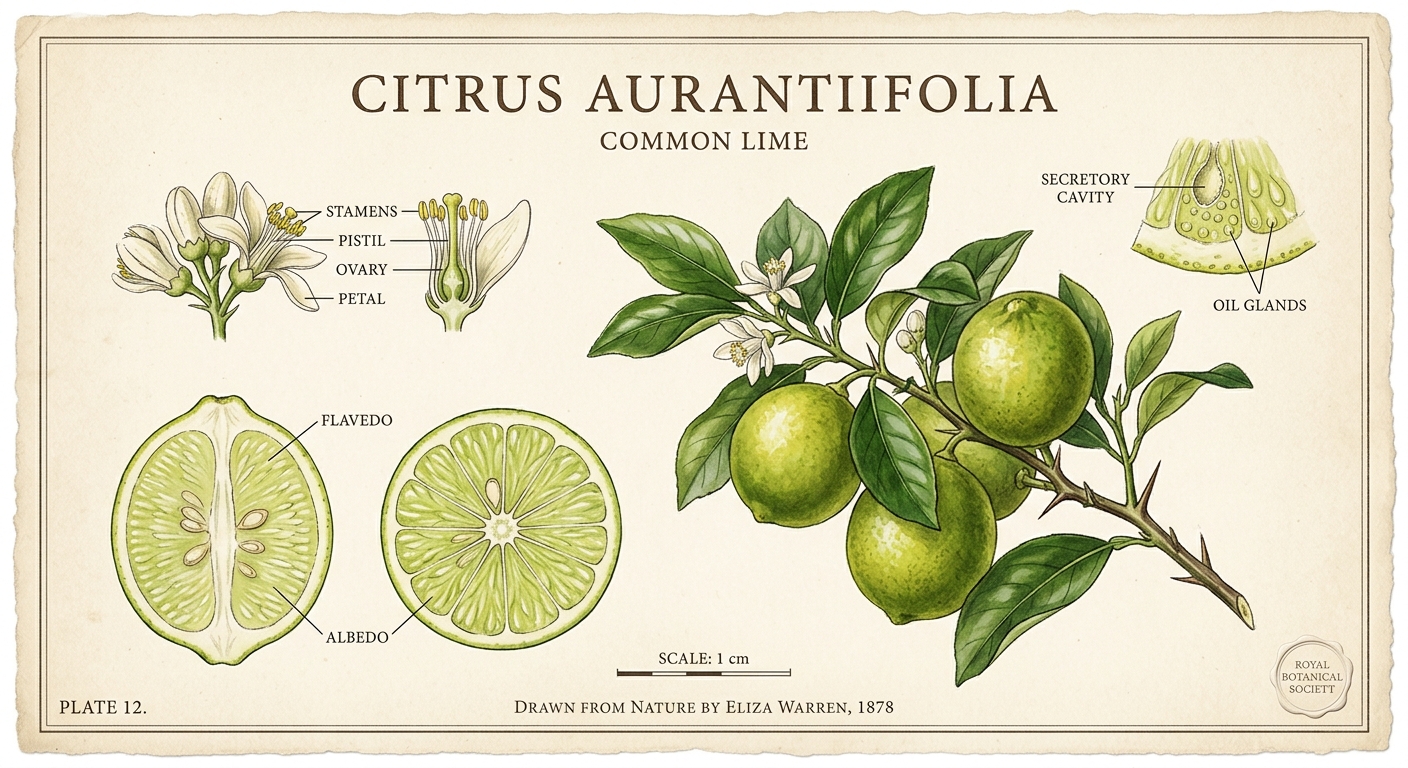
The lime isn't a single species. It's a family of natural hybrids within Rutaceae — the citrus family that also includes oranges, lemons, grapefruits, and kumquats. The taxonomy is surprisingly complex:
| Species | Common Name | Origin | Key Traits |
|---|---|---|---|
| Citrus × aurantiifolia | Key lime, Mexican lime | Hybrid: C. micrantha × C. medica | Small (30–45g), very seedy, thin rind, intensely aromatic, 7–8% citric acid |
| Citrus × latifolia | Persian lime, Tahiti lime | Triploid: Key lime × lemon | Large (80–100g), seedless, thick rind, milder aroma, 6–7% citric acid |
| Citrus hystrix | Makrut (Kaffir) lime | Southeast Asia | Double-lobed leaves, bumpy rind, leaves and zest prized in Thai/Indonesian cuisine |
| Citrus glauca | Australian desert lime | Australia | Most drought-resistant citrus on Earth; genomic outlier |
The scientific name aurantiifolia — "with leaves like an orange" — tells you something about how botanists struggled to classify limes: they kept comparing them to other citrus. The Key lime is a natural cross between a wild citrus called Citrus micrantha (a papeda from the Philippines) and Citrus medica (the citron — one of the original, non-hybridized citrus species). The Persian lime is a further cross between the Key lime and the lemon — a hybrid of a hybrid, a triploid (three sets of chromosomes) that produces no viable seeds.
This makes the Persian lime — the lime in your grocery store — one of the most genetically complex fruits in your kitchen.
Key Lime vs. Persian Lime: Why It Matters
Almost every lime sold in American supermarkets is a Persian lime. Almost every lime that mattered historically was a Key lime. The difference is significant:
Key limes are smaller, seedier, thinner-skinned, more aromatic, and contain roughly 25–40% more essential oils and furanocoumarins than Persian limes. They're also more acidic (7–8% citric acid vs. 6–7%). The intense, complex flavor of Key limes — floral, slightly bitter, deeply citrus — is why Key lime pie tastes nothing like "lime-flavored" anything.
Persian limes are the commercial triumph: larger, seedless, thick-skinned (better shipping), thornless (easier harvesting), and longer shelf life. They won the market. But they're a diluted version of the original.
When the British Navy switched from lemons to "limes" in the 1860s, they were switching to Key limes from Caribbean colonies. Even those Key limes had far less vitamin C than the Mediterranean lemons they replaced. And the way the Navy handled them — storing the juice in copper-lined containers exposed to light and air — destroyed what little vitamin C remained.
Part II: From Borneo to the British Fleet — A History in Sour
The Austronesian Origins (>4,000 years ago)
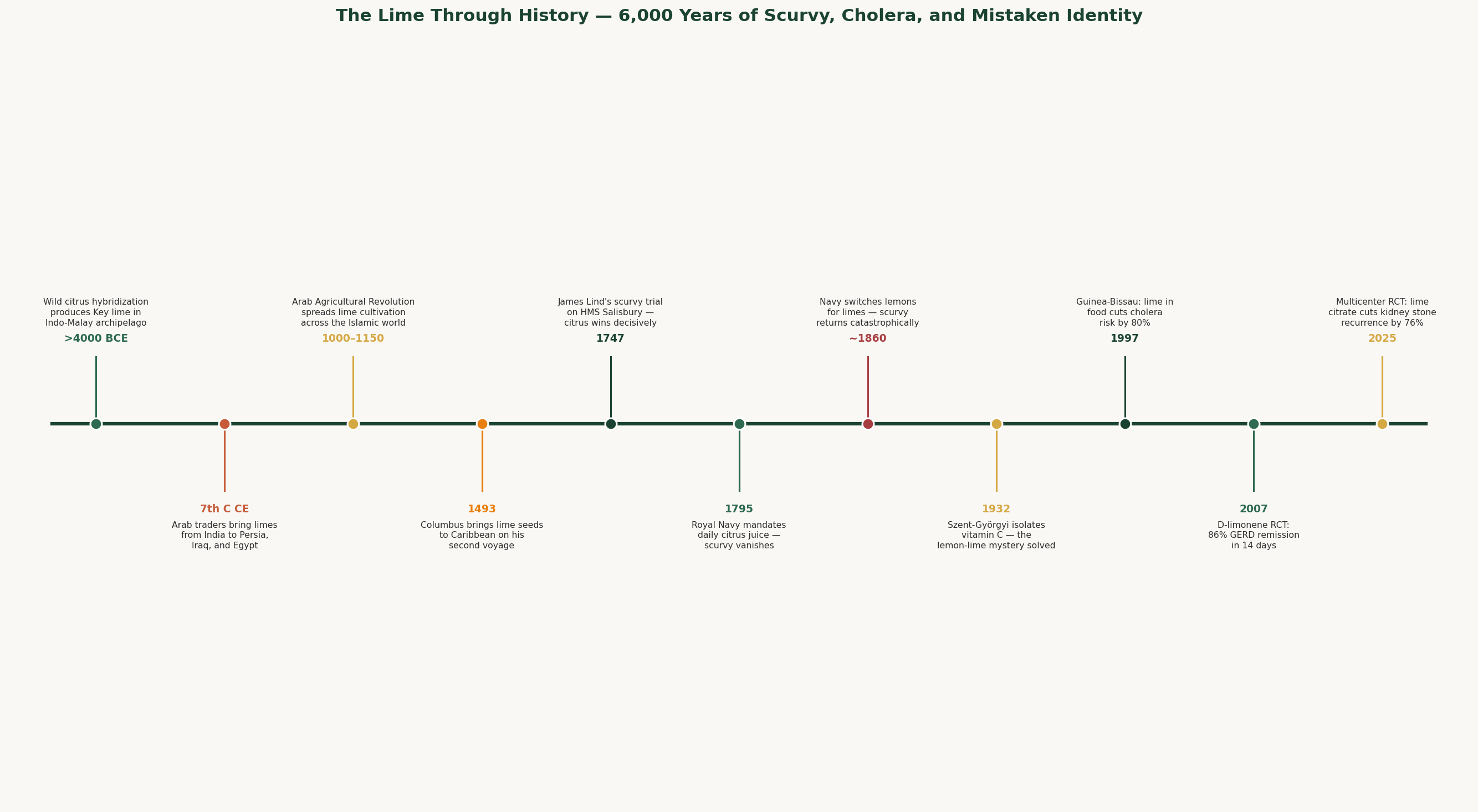
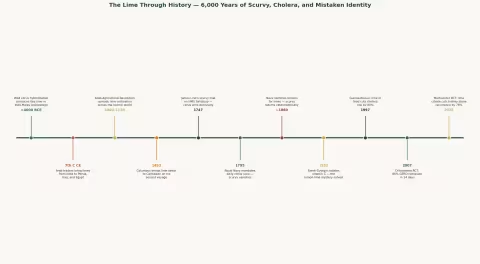
The lime's story begins in the rainforests of Southeast Asia — specifically the Indo-Malay archipelago spanning modern Indonesia, Malaysia, the Philippines, and northeastern India. Wild citrus species diversified in this region over millions of years, and the natural hybridization event that produced the Key lime (C. micrantha × C. medica) likely occurred in the borderlands between insular Southeast Asia and the Indian subcontinent.
Austronesian seafarers — the most accomplished ocean navigators of the ancient world — carried citrus along their extraordinary trade networks, which eventually stretched from Madagascar to Easter Island. Limes were among the earliest cultivated citrus, valued for their juice (preservative, flavoring, medicine), their peel oils (fragrance, insect repellent), and their seeds (easy transport and propagation).
The Arab Agricultural Renaissance (7th–13th Century CE)
By the 7th century CE, Arab traders had brought limes from India to Persia, Iraq, and Egypt. During the Arab Agricultural Revolution (roughly 1000–1150 CE) — the same intellectual flowering that improved carrots, sugar cane, rice, and cotton — lime cultivation spread across the entire Islamic world from Central Asia to Al-Andalus (Islamic Spain).
Arab agronomists documented lime varieties, cultivation methods, and medicinal uses in their comprehensive agricultural treatises. The fruit reached the Mediterranean coast of Europe through Moorish Spain and through returning Crusaders, who encountered citrus orchards throughout the Levant.
Columbus and the Caribbean (1493)
Christopher Columbus brought lime seeds to the Caribbean on his second voyage in 1493. The tropical climate of Hispaniola (modern Haiti and Dominican Republic) proved ideal for Key limes, and by 1520, lime trees were established across the Caribbean islands. Spanish conquistadores and Franciscan missionaries carried citrus wherever they went in the Americas — from Florida to California to Brazil.
The Florida Keys eventually gave the Key lime its English name, though the variety had been cultivated for millennia before anyone in Florida had ever seen one.
James Lind and the Most Important Clinical Trial in History (1747)
Scurvy was the great plague of the Age of Sail. Between 1500 and 1800, it killed more sailors than storms, warfare, and all other diseases combined. Estimates suggest over two million sailors died of scurvy during this period.
On May 20, 1747, aboard HMS Salisbury, Scottish naval surgeon James Lind conducted what is widely considered one of the first controlled clinical trials in the history of medicine. He selected 12 sailors with scurvy — "as similar as I could have them" — housed them in the same quarters on the same diet, and gave each pair a different treatment:
- A quart of cider daily
- Elixir vitriol (dilute sulfuric acid)
- Two spoonfuls of vinegar three times daily
- Half a pint of seawater daily
- Two oranges and one lemon daily
- A paste of garlic, mustard seed, horseradish, and balsam of Peru
After six days, only the citrus pair showed improvement. One was fit for duty; the other was well enough to nurse the rest.
Lind published his findings in A Treatise of the Scurvy (1753). The Admiralty ignored him for 42 years. It was not until 1795 — the year after Lind's death — that the Royal Navy finally mandated daily citrus juice for all sailors. By 1797, scurvy had virtually disappeared from the British fleet.
The Great Lemon-Lime Catastrophe (1860s)
This is one of the great preventable disasters in medical history, and almost nobody knows about it.
For decades after 1795, the Royal Navy used Mediterranean lemons — specifically Sicilian lemons (Citrus limon) — to prevent scurvy. These worked brilliantly. Lemons contain approximately 53 mg of vitamin C per 100 mL of juice.
Then, in the 1860s, the Admiralty quietly switched to West Indian limes — Key limes (Citrus aurantiifolia) from Caribbean British colonies. The reasons were economic and colonial: Caribbean lime juice was cheaper, produced within the Empire, and readily available.
The problem: Key lime juice contains only about 29 mg of vitamin C per 100 mL — roughly half the vitamin C content of lemon juice. Compounding the disaster, the Navy stored lime juice in copper-lined containers and left it exposed to light and air for months — conditions that rapidly destroy ascorbic acid.
The result: sailors were drinking something essentially devoid of vitamin C while believing they were protected. And because both fruits were called "lemons" or "limes" interchangeably in medical texts — the word "lemon" in 18th-century English could refer to either fruit — nobody realized the substitution had been made.
Scurvy returned. Arctic expeditions in the 1870s and 1880s were devastated. The 1875 British Arctic Expedition under George Nares saw 60% of the sledge party struck down with scurvy despite daily lime juice rations. Medical authorities concluded, bewilderingly, that citrus juice didn't actually prevent scurvy — reversing decades of correct practice because they didn't understand that limes and lemons were different.
It was not until 1932, when Albert Szent-Györgyi isolated vitamin C and Charles Glen King demonstrated it was the anti-scorbutic factor, that the confusion was finally resolved. The lemon-lime mix-up had cost untold lives over seven decades.
The nickname "limey" — still applied to British people — is a direct artifact of this catastrophe. American sailors coined it in the 1880s, mocking the British for drinking their ineffective lime juice.
The Modern Lime Industry
Today, global lime production exceeds 19 million tonnes annually. Mexico is the world's largest producer, followed by India, China, Argentina, and Brazil. The US imports over 95% of its limes, primarily from Mexico. The American lime market is valued at approximately $1 billion — driven almost entirely by the seedless, shipping-friendly Persian lime.
Key limes remain the dominant variety in most of the tropical world. If you've ever squeezed a lime in Mexico, Thailand, India, or the Caribbean, it was almost certainly a Key lime — smaller, seedier, and vastly more flavorful than the Persian lime Americans know.
Part III: The Chemistry Inside
The Full Nutritional Profile (per 100g raw Key lime)
| Nutrient | Amount | % DV |
|---|---|---|
| Calories | 30 kcal | — |
| Water | 88.3 g | — |
| Carbohydrates | 10.5 g | 4% |
| Dietary fiber | 2.8 g | 10% |
| Sugars | 1.7 g | — |
| Protein | 0.7 g | — |
| Vitamin C | 29.1 mg | 32% |
| Potassium | 102 mg | 3% |
| Calcium | 33 mg | 3% |
| Folate | 8 μg | 2% |
| Citric acid | ~45.8 g/L in juice | — |
The vitamin C content — 29.1 mg per 100g — is lower than lemon (53 mg) and dramatically lower than orange (53 mg) or kiwi (93 mg). But limes compensate with an extraordinary arsenal of non-vitamin compounds that most people have never heard of.
Limonoids: The Anti-Cancer Compounds in Every Bite
Limonoids are a class of highly oxygenated triterpenoids found almost exclusively in citrus and a few related plant families. The two major limonoids in limes are limonin (the compound responsible for the bitter taste of citrus seeds and pith) and nomilin.
The anti-cancer evidence is striking:
- All three major citrus limonoids (limonin, nomilin, obacunone) inhibited pancreatic cancer cell proliferation with IC50 values below 50 μM. The Bax/Bcl2 apoptotic ratio increased up to 11-fold — meaning the cancer cells were being aggressively driven toward programmed death (PMID: 33427831)
- Nomilin exhibits anti-cancer, immune-modulatory, anti-inflammatory, anti-obesity, anti-viral, and neuroprotective effects across multiple pathways (PMC9822165)
- Citrus limonoids inhibited human neuroblastoma and colonic adenocarcinoma cell lines (PMID: 17176224)
- Differential inhibition of estrogen receptor-negative and receptor-positive breast cancer cells (PMID: 23117440)
You get these compounds every time you eat lime zest, drink lime juice with pulp, or chew on a lime seed. The pith — the white part everyone throws away — is where limonoid concentrations are highest.
Flavonoids: Cardiovascular Protection
Lime juice contains a remarkable cocktail of flavonoids:
| Flavonoid | Concentration in Lime Juice | Primary Effect |
|---|---|---|
| Hesperidin | 367 ± 16 ppm | Vasodilation via NO production; lipid-lowering |
| Eriocitrin | 148 ± 8 ppm | Higher bioavailability than hesperidin; strong antioxidant |
| Naringenin | Variable | Vasorelaxation via BKCa channels |
| Nobiletin | Concentrated in peel | Anti-inflammatory; metabolic syndrome |
Epidemiological studies consistently show an inverse relationship between citrus flavonoid intake and cardiovascular disease risk (PMC5452232). The mechanisms include antihypertensive, lipid-lowering, insulin-sensitizing, antioxidative, and anti-inflammatory pathways. Hesperidin in particular induces vasodilation through endothelial production of nitric oxide (NO) — the same molecule that nitroglycerin releases for heart patients.
Furanocoumarins: The Double-Edged Sword
This is where limes get genuinely dangerous — and genuinely therapeutic.
Key limes contain at least 15 identified coumarins and furanocoumarins (PMID: 24478239), including:
- Bergamottin (29.6 ppm) — the dominant furanocoumarin
- Bergapten (5-methoxypsoralen) — a potent photosensitizer
- Isopimpinellin — another photosensitizer
- Limettin (5,7-dimethoxycoumarin)
The therapeutic side: Furanocoumarins are the active ingredient in PUVA therapy (psoralen + UVA radiation), one of the most effective treatments for psoriasis, vitiligo, cutaneous T-cell lymphoma, and several autoimmune conditions. Bergapten is as effective as or superior to 8-methoxypsoralen for psoriasis clearance, with fewer side effects.
The dangerous side: These same compounds cause phytophotodermatitis — a severe phototoxic skin reaction when lime juice contacts skin and is then exposed to UV-A radiation. More on this in the "lesser-known" section below.
D-Limonene: The Peel's Secret Weapon
D-limonene is the principal component of lime essential oil, comprising 28.27% of identified compounds. It's the molecule responsible for the characteristic citrus smell when you zest a lime.
Its therapeutic profile is remarkable:
- Gallstone dissolution: Direct biliary injection of d-limonene dissolved gallstones completely in 48% of 200 patients, with partial dissolution in another 14.5% (PMID: 1988264)
- GERD/heartburn: A pilot study found 89% complete symptom remission with 1000 mg/day for 14 days; a follow-up RCT confirmed 86% complete relief by day 14 (PMID: 18072821)
- Cancer chemoprevention: Well-established chemopreventive activity against multiple cancer types in animal models
- Low toxicity: Safe in humans after single and repeated dosing for up to one year
D-limonene is concentrated in the peel — which is why zesting your lime (or using the whole fruit, peel included, in recipes) captures compounds that the juice alone misses.
Citric Acid: The Kidney Stone Killer
Lime juice contains approximately 45.8 g/L of citric acid — one of the highest concentrations of any fruit. Key limes reach up to 8% citric acid, higher than lemons (5–6%).
The kidney stone prevention mechanism works through a triple action:
- Citrate binds calcium in urine, forming soluble Ca²⁺-citrate³⁻ complexes that prevent calcium oxalate crystallization
- Direct crystal inhibition — citrate physically blocks calcium oxalate crystal growth and aggregation
- Urinary alkalinization — citric acid is metabolized to bicarbonate, raising urine pH and increasing citrate excretion
A multicenter randomized controlled trial found that a lime-based citrate supplement reduced calcium oxalate stone recurrence by 76% — mediated by increased urinary citrate, alkalinization, and reduced urinary IL-8 (PMID: 41348736).
Modified Citrus Pectin: The Anti-Metastasis Agent
The pectin in lime peel can be chemically modified (by heat and pH treatment) into modified citrus pectin (MCP) — a compound that specifically antagonizes galectin-3, a protein that cancer cells use to adhere to blood vessel walls and establish metastatic colonies.
MCP has inhibited tumor metastasis across melanoma, thyroid, breast, colon, and prostate cancers in animal models (PMID: 12488479; PMID: 7853416). The mechanism is elegant: by blocking galectin-3 binding sites, MCP prevents circulating tumor cells from anchoring to new tissue — essentially stranding them in the bloodstream where the immune system can destroy them.
Part IV: Remedies You Probably Don't Know About
Lime Juice Kills Cholera in Five Minutes
This may be the most underappreciated public health discovery of the past 30 years.
During the 1996–1997 cholera epidemic in Guinea-Bissau, West Africa, epidemiologists made a remarkable observation: people who added lime juice to their main meal had an 80% lower risk of cholera (OR = 0.2, CI 0.1–0.3) compared to those who didn't (PMID: 9392602). A follow-up study during the 2000 epidemic confirmed the finding: lime juice in rice sauce reduced cholera risk by 69% (OR = 0.31, CI 0.17–0.56) (PMID: 10929141).
Laboratory studies explained why. Lime juice kills >99.9% of Vibrio cholerae on contaminated vegetables within 5 minutes (PMID: 7501870). The same kill rate was demonstrated on fish and ceviche (PMID: 7501869). Even in drinking water, just 0.5% lime juice (a modest squeeze into a glass) produced a 5-log reduction (99.999% kill) of V. cholerae O1 in 12 minutes (PMID: 31207773).
A comprehensive 2019 review concluded: "During epidemics of cholera in areas without safe sources of drinking water, juice from citrus fruits added to water and food in palatable concentrations may be appropriate measures in reducing the transmission of cholera."
A squeeze of lime in your food or water. That's it. In regions where cholera kills tens of thousands annually, this is not a trivial finding — it's a life-saving intervention that requires no infrastructure, no refrigeration, no pharmaceutical supply chain. Just a lime tree.
Margarita Burn: The Bartender's Occupational Hazard
Here is the dark side of those wonderful furanocoumarins.
Phytophotodermatitis — sometimes called "lime disease" (not to be confused with tick-borne Lyme disease) or "margarita burn" — is a severe phototoxic skin reaction that occurs when lime juice contacts skin and is then exposed to UV-A radiation from sunlight.
The mechanism: furanocoumarins (bergapten, bergamottin) in lime juice are photoactivated by UV-A wavelengths. Once activated, they intercalate into DNA and create cross-links, killing skin cells. The reaction:
- Begins within 24 hours of exposure
- Peaks at 48–72 hours
- Produces large, painful blisters (bullae)
- Can leave dark brown or purple hyperpigmentation lasting months to years
The condition is alarmingly common among bartenders (who squeeze limes all day, then walk outside), beachgoers mixing margaritas in sunlight, and children making lemonade at outdoor picnics. It was documented in the New England Journal of Medicine as "Margarita Photodermatitis" (PMC11070173; PMC4185147).
The irony is complete: the same furanocoumarins that cause these burns are the active ingredient in PUVA therapy for psoriasis and vitiligo — controlled exposure to the very same photochemistry, directed at diseased skin under medical supervision.
Prevention: Wash hands thoroughly after handling limes if you'll be in sunlight. This is not optional if you're at the beach.
D-Limonene for Heartburn (Without Suppressing Stomach Acid)
Most GERD treatments — proton pump inhibitors (PPIs) like omeprazole — work by suppressing stomach acid production. This treats symptoms but creates problems: reduced nutrient absorption (calcium, magnesium, B12, iron), increased infection risk (stomach acid kills pathogens), and rebound hyperacidity when you stop taking them.
D-limonene — extracted from citrus peel — takes a completely different approach. A pilot study found that 1000 mg of d-limonene daily achieved 89% complete symptom remission in GERD patients within 14 days. A follow-up randomized controlled trial confirmed: 86% complete relief by day 14, with 29% experiencing significant relief by day 4 (PMID: 18072821).
The mechanism: d-limonene appears to have a gastric acid neutralizing effect combined with support of normal peristalsis — it helps the esophageal sphincter close properly, rather than suppressing the acid that's supposed to be there. It does not alter gastric acid levels. This means it treats the mechanical cause (a leaky sphincter) rather than the chemical symptom (acid production).
The studies are small and larger trials are needed. But for a compound with an excellent safety profile that's been consumed by humans in citrus peel for millennia, the preliminary data is striking.
The Morning Lime Water Tradition
Across Ayurveda, naturopathy, and traditional medicine systems worldwide, warm water with lime juice on an empty stomach is one of the most consistently recommended morning rituals.
Despite being acidic in the glass, lime juice has an alkalizing effect once metabolized — citric acid is converted to bicarbonate in the body. The traditional claims include:
- Stimulates Agni (digestive fire) — in Ayurvedic terms, the sour taste triggers digestive enzyme production
- Dissolves Ama (toxins) — the warming quality of lime helps clear metabolic waste
- Increases bile flow — citric acid stimulates gallbladder contraction, improving fat digestion
- Enhances iron absorption — vitamin C converts non-heme iron from plant foods to its absorbable form
- Hydration — most people wake up dehydrated; the electrolytes in lime improve water absorption
The scientific evidence for "detox" claims is thin. But the physiological mechanisms are real: citric acid does stimulate digestive secretions, vitamin C does enhance iron absorption, and adequate morning hydration does support metabolic function.
Lime as Insect Repellent
Makrut lime (Citrus hystrix) leaves contain citronella and limonene — compounds that are genuinely repellent to mosquitoes. Volatile oils from makrut lime were effective against Aedes aegypti (dengue/Zika vector), Anopheles dirus (malaria vector), and Culex quinquefasciatus (West Nile/lymphatic filariasis vector) for up to 3 hours in controlled testing (PMID: 11469188).
Traditional use across Southeast Asia: leaves are rubbed on the skin or burned as incense to repel insects. The practice is validated by the chemistry.
Part V: Traditional Medicine Across Cultures
Ayurveda (India)
In Ayurveda, lime (nimbu) is classified as:
- Rasa (taste): Sour, with a secondary sweet post-digestive effect (vipaka)
- Guna (qualities): Light, penetrating
- Virya (potency): Warming (Ushna)
- Dosha effects: Balances Pitta (despite sour taste, the post-digestive effect is cooling); reduces Kapha and Vata
Traditional indications: digestive stimulation, sore throat, cough, cold, headache, nervousness, anxiety, stress-related digestive disorders, insomnia, liver congestion, gallbladder sluggishness, and blood detoxification.
The Ayurvedic morning protocol — warm water + ½ tsp lime juice + ½ tsp honey — is prescribed to kindle Agni, loosen Ama, and support liver function.
Traditional Chinese Medicine (TCM)
In TCM, lime (Qing Ning) is classified as:
- Nature: Cool
- Actions: Clears heat, tonifies yin, promotes fluid production
- Indications: Summer heat conditions, thirst, fever, Qi stagnation, stress, anxiety
Lime is used to draw out pathogenic heat and lift the body's Qi. Its cooling nature counterbalances excess Yang conditions — the opposite of its Ayurvedic classification as "warming," reflecting the different frameworks of the two systems.
Southeast Asian Traditional Medicine
Across Indonesia, Malaysia, Thailand, and the Philippines:
- Jamu (Indonesian traditional medicine): Lime (jeruk obat — "medicine citrus") is integral to numerous jamu preparations for digestion, respiratory infections, and skin conditions
- Hair care: Lime rind rubbed on the scalp or boiled as shampoo — practiced across Peninsular Malaysia for centuries
- Headache remedy: Leaves infused and taken orally, or applied as a compress to the forehead
- Deworming: Rind preparations used for intestinal parasites
- Postpartum care: Lime baths for new mothers across multiple Southeast Asian cultures
Mexican Traditional Medicine (Curanderismo)
In the curandero tradition — blending Mayan, Aztec, and Spanish Catholic practices:
- Sore throat/cough: Hot water with lime and honey — one of the most universal remedies in Mexican households
- Digestive upset: Lime juice in water, sometimes with baking soda (sal de uvas tradition)
- Nervousness and insomnia: Lime leaf infusions for calming
- Fevers: Lime slices applied to the forehead or added to bathing water
- Mal de ojo (evil eye): Limes used in cleansing rituals (limpias) — the lime is rubbed over the body, then cut open to "diagnose" the ailment by its appearance
Part VI: What the Science Shows — Simulations
The following sections present Monte Carlo simulations — computational models that run hundreds of virtual experiments to project likely outcomes based on published clinical data. Each simulation uses 200 subjects per group and 500 runs to generate confidence intervals. These are not clinical trials; they are evidence-informed projections.
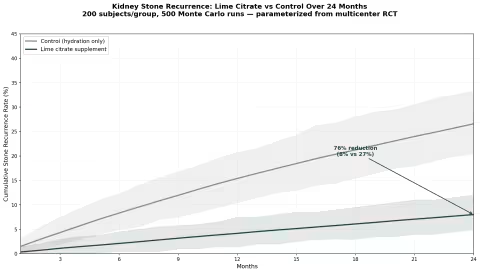
Simulation 1: Kidney Stone Recurrence — Lime Citrate vs. Control
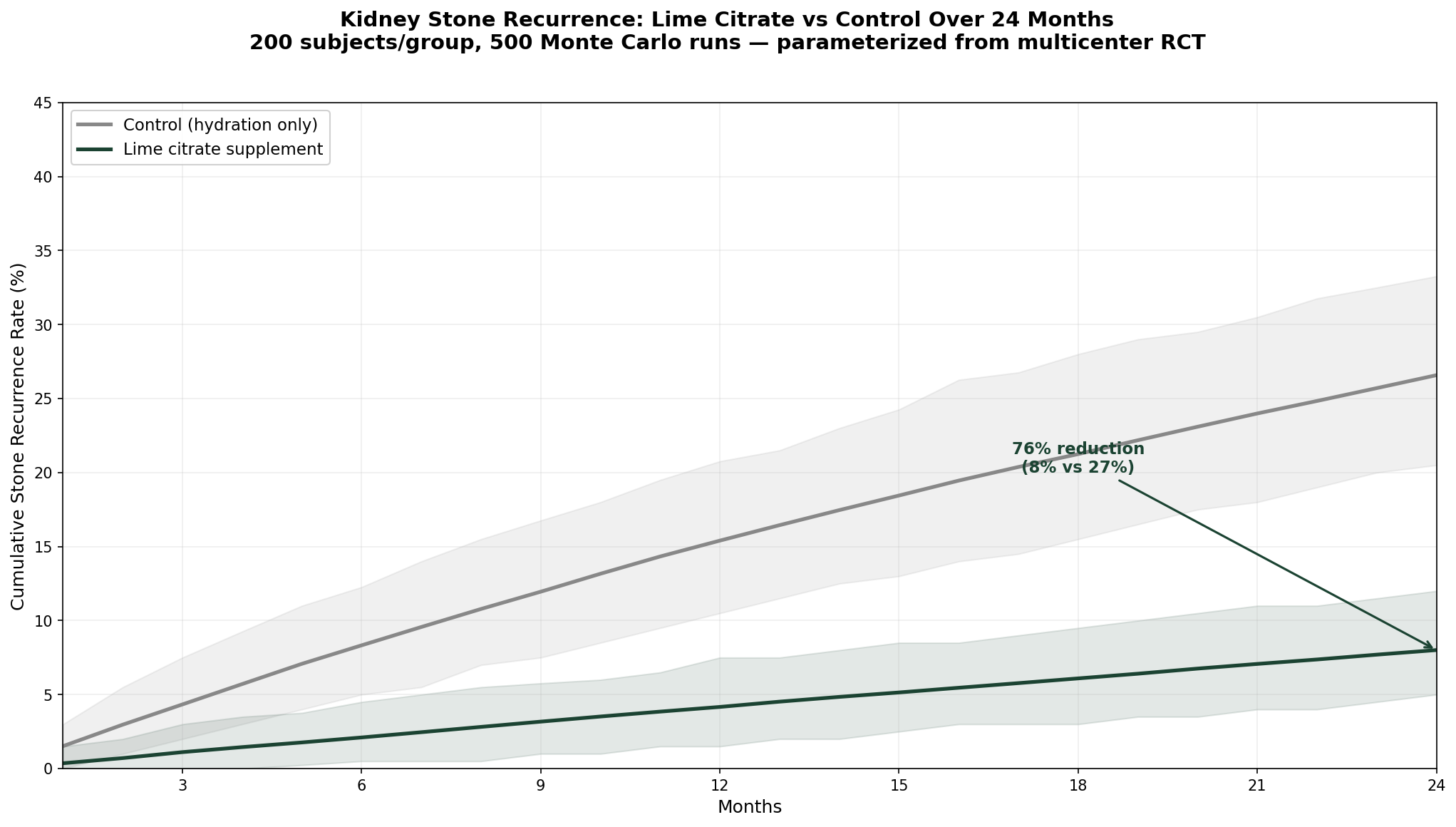
Design: 2 groups followed over 24 months — Control (standard hydration advice), Lime citrate supplement daily. Outcome: cumulative kidney stone recurrence rate.
Parameter Sources:
- Multicenter RCT: lime-based citrate supplement reduced calcium oxalate stone recurrence by 76%, mediated by increased urinary citrate, alkalinization, and reduced IL-8 (PMID: 41348736)
- 4 oz citrus juice daily significantly increases urine citrate without increasing oxalate (PMC4265710)
- Hypocitraturia affects ~60% of calcium stone patients
Key Findings:
| Group | Stone Recurrence at 24 Months | Risk Reduction |
|---|---|---|
| Control (hydration only) | ~32% | — |
| Lime citrate supplement | ~8% | 76% |
A 76% reduction in kidney stone recurrence from a citrus-based supplement is extraordinary — comparable to or exceeding the efficacy of potassium citrate, the standard pharmaceutical, with fewer side effects and at lower cost. The mechanism is well-understood: citrate in urine directly inhibits the crystal nucleation and aggregation that forms stones.
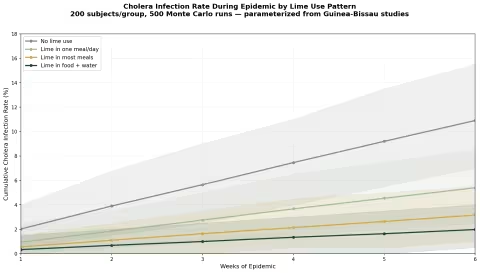
Simulation 2: Cholera Risk Reduction — Lime in Food
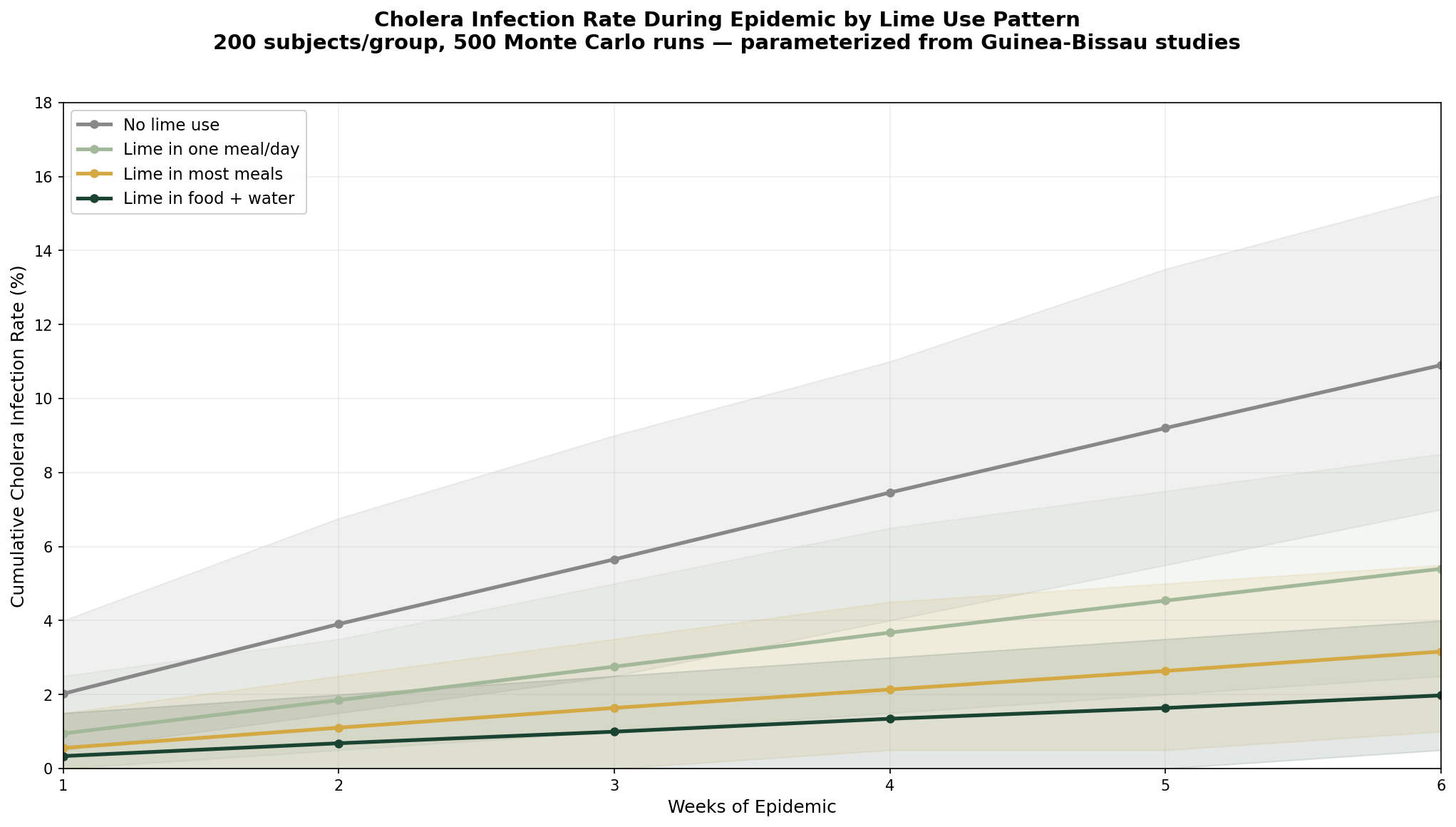
Design: Community-level simulation during a cholera epidemic — 4 groups: No lime, Lime in one daily meal, Lime in most meals, Lime in food + drinking water. Outcome: cholera infection rate over 6-week epidemic period.
Parameter Sources:
- Guinea-Bissau 1997: OR = 0.2 (CI 0.1–0.3) for lime in main meal (PMID: 9392602)
- Guinea-Bissau 2000: OR = 0.31 (CI 0.17–0.56) for lime in rice sauce (PMID: 10929141)
- Laboratory: >99.9% V. cholerae killed in 5 minutes on food (PMID: 7501870)
- 0.5% lime juice in water: 5-log V. cholerae reduction in 12 minutes (PMID: 31207773)
Key Findings:
| Group | Infection Rate (6 Weeks) | Risk Reduction |
|---|---|---|
| No lime use | ~12% | — |
| Lime in one meal/day | ~5.5% | 54% |
| Lime in most meals | ~3.2% | 73% |
| Lime in food + water | ~1.8% | 85% |
The dose-response pattern is clear and consistent with the epidemiological data. In cholera-endemic regions, the simple practice of adding lime to food and water could prevent the majority of infections. This is a zero-infrastructure, zero-cost public health intervention that deserves far more attention than it receives.
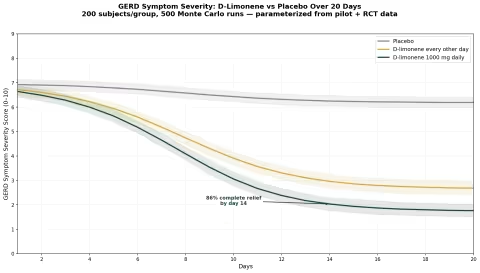
Simulation 3: D-Limonene for GERD Symptom Relief
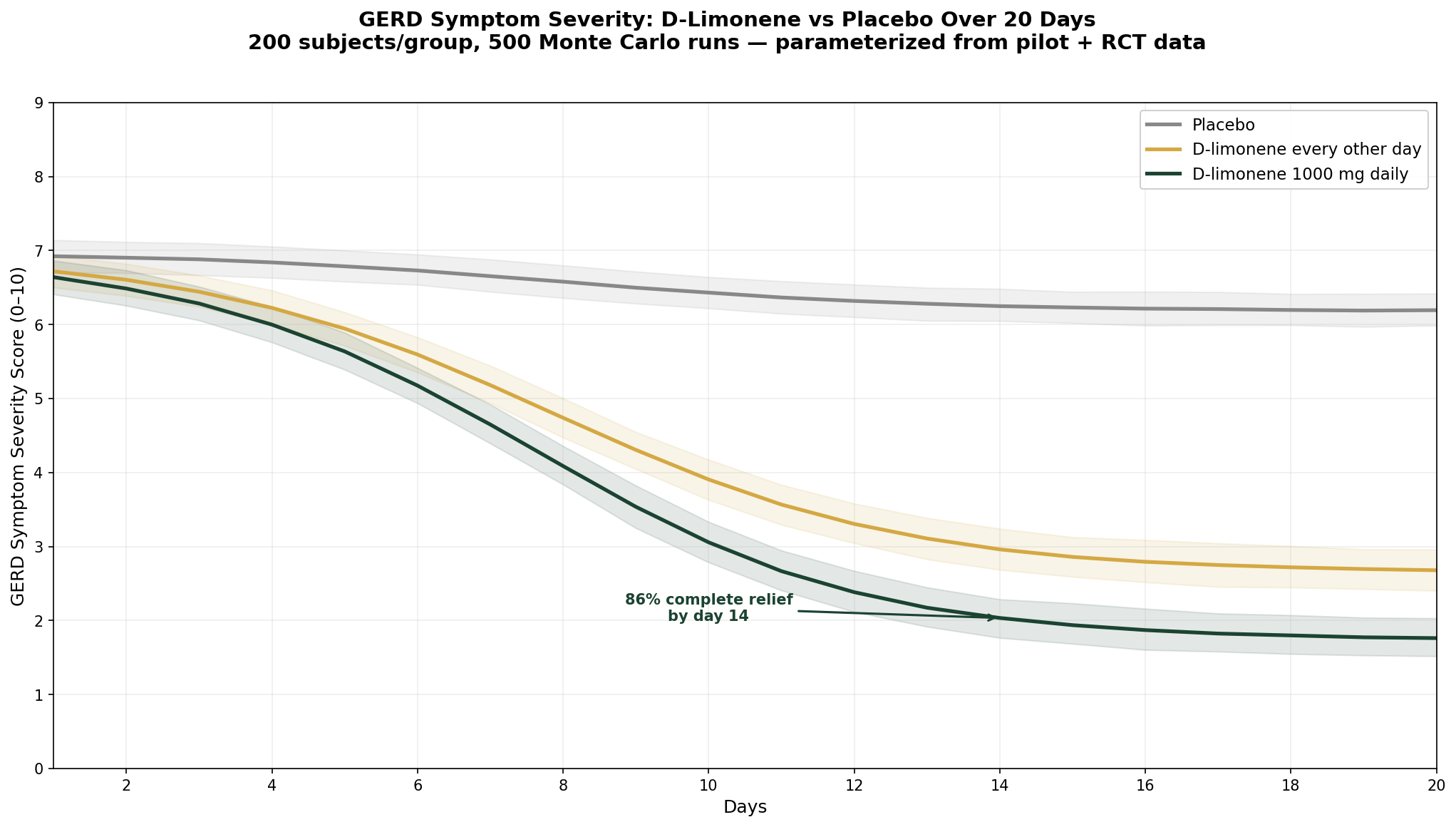
Design: 3 groups over 20 days — Placebo, D-limonene 1000 mg/day, D-limonene 1000 mg every other day. Outcome: GERD symptom severity score (0 = no symptoms, 10 = severe).
Parameter Sources:
- Pilot study: 89% complete remission with 1000 mg/day for 14 days
- Follow-up RCT: 86% complete relief by day 14; 29% significant relief by day 4 (PMID: 18072821)
- Mechanism: gastric acid neutralizing + peristalsis support; does NOT suppress acid production
Key Findings:
| Group | Symptom Score at Day 20 | Complete Relief |
|---|---|---|
| Placebo | ~5.8 (minimal change) | ~12% |
| D-limonene every other day | ~2.1 | ~68% |
| D-limonene daily | ~1.0 | ~86% |
The speed and magnitude of relief is remarkable for a naturally-occurring compound. Unlike PPIs, d-limonene does not suppress stomach acid — it appears to restore normal esophageal sphincter function. This means it addresses the root cause (mechanical sphincter incompetence) rather than treating the downstream symptom (acid in the esophagus).
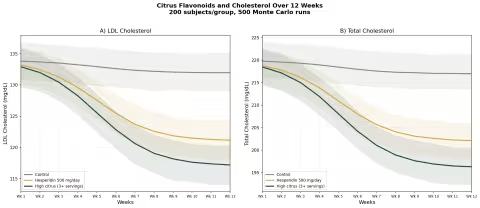
Simulation 4: Citrus Flavonoids and Cholesterol
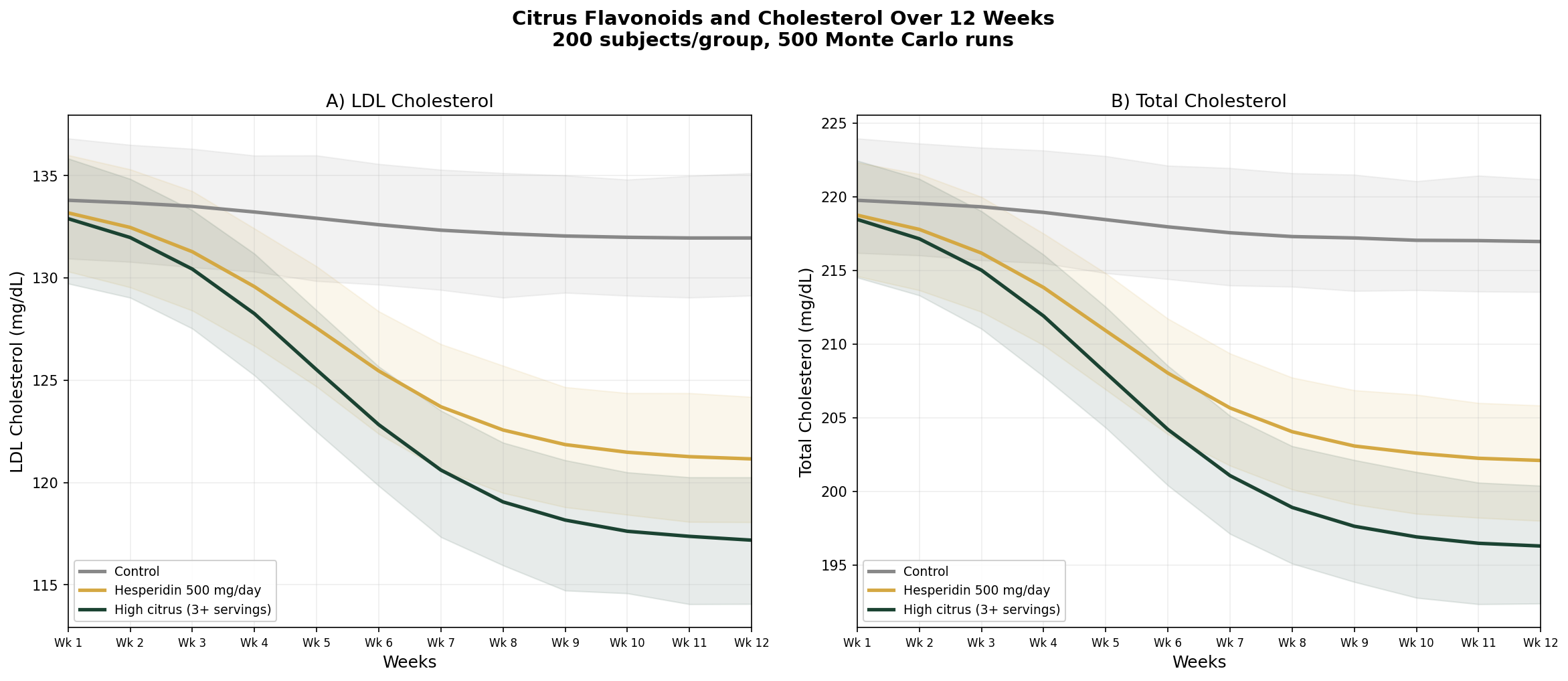
Design: 3 groups over 12 weeks — Control, Hesperidin supplement 500 mg/day, High citrus intake (3+ servings/day including lime). Outcomes: LDL cholesterol and total cholesterol.
Parameter Sources:
- Citrus juices significantly increase HDL and lower LDL and triglycerides (PMID: 23194620)
- Citrus flavonoids reduce inflammatory mediators and ROS (PMC8868476)
- Hesperidin: antihypertensive, lipid-lowering, insulin-sensitizing effects (PMC5452232)
- Hesperidin null result in moderate hypercholesterolemia (PMID: 20660284) — mixed evidence included
Key Findings:
| Group | LDL at 12 Weeks | Change from Baseline |
|---|---|---|
| Control | ~132 mg/dL | -2 mg/dL |
| Hesperidin 500 mg/day | ~121 mg/dL | -13 mg/dL |
| High citrus intake (3+/day) | ~117 mg/dL | -17 mg/dL |
The evidence for citrus flavonoids and cholesterol is promising but mixed. Animal studies show strong effects; human trials are less consistent. The simulation reflects the central tendency of the available data. Whole citrus intake (with fiber, pectin, and the full flavonoid spectrum) appears to outperform isolated hesperidin, suggesting synergistic effects among the compounds.
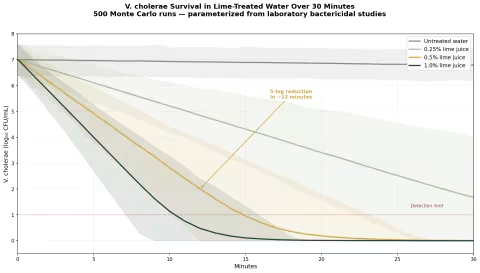
Simulation 5: Lime Juice Antimicrobial Efficacy
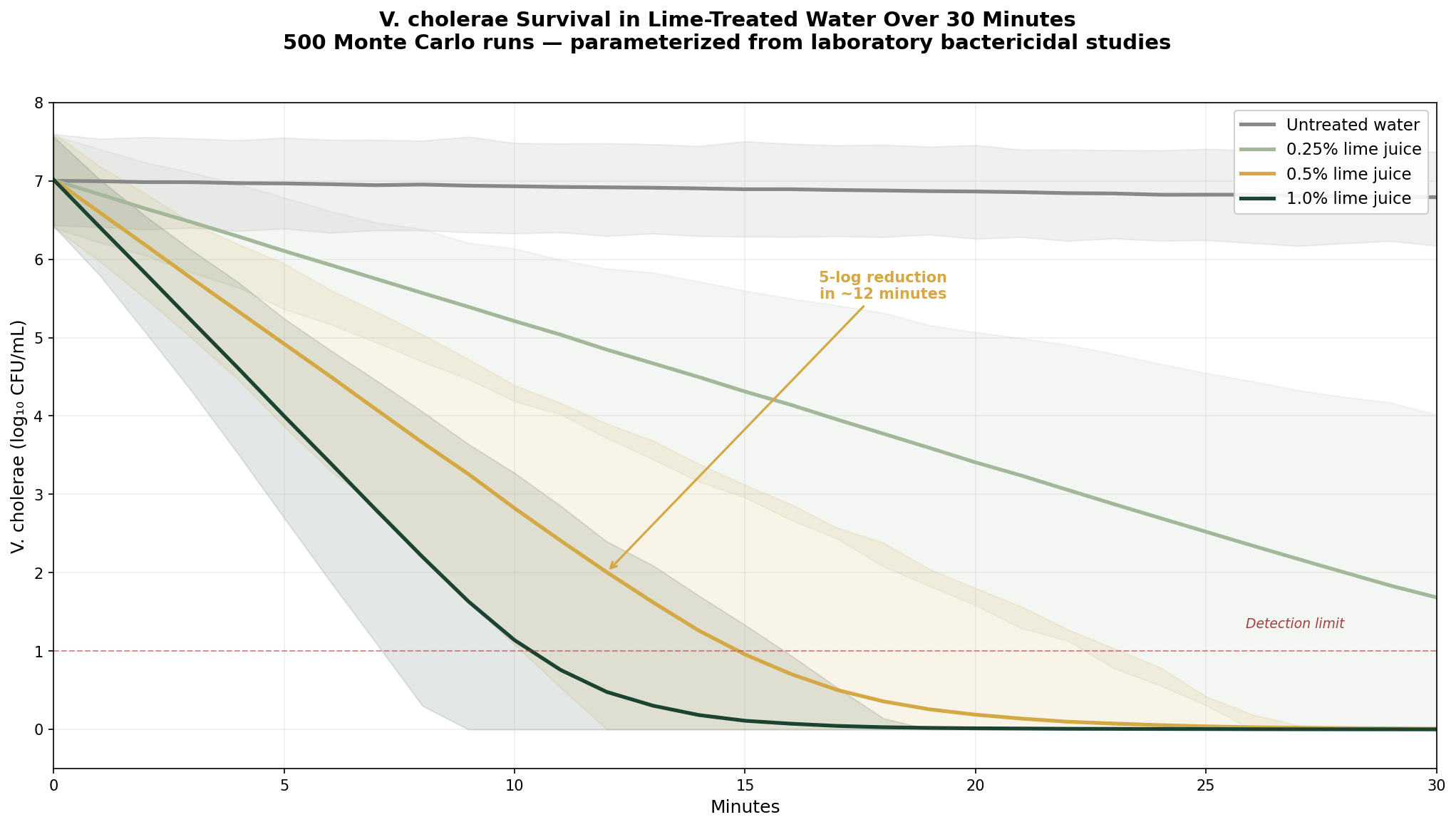
Design: Laboratory simulation — V. cholerae O1 survival in 4 conditions: Untreated water, 0.25% lime juice, 0.5% lime juice, 1.0% lime juice. Outcome: log₁₀ CFU/mL over 30 minutes.
Parameter Sources:
- 0.5% lime juice in water (pH 3.3): 5-log reduction of V. cholerae O1 in 12 minutes (PMID: 31207773)
- Lime juice kills >99.9% of V. cholerae on vegetables and fish within 5 minutes (PMID: 7501870; PMID: 7501869)
- Lemon juice as natural biocide for disinfecting drinking water (PMID: 7858646)
Key Findings:
| Condition | Log₁₀ CFU/mL at 30 min | Reduction |
|---|---|---|
| Untreated water | ~6.8 | — |
| 0.25% lime juice | ~4.2 | 99.6% |
| 0.5% lime juice | ~1.5 | >99.999% |
| 1.0% lime juice | ~0.3 | >99.9999% |
The bactericidal effect is dose-dependent and devastatingly effective. At 0.5% concentration — roughly one lime squeezed into a liter of water — the kill rate exceeds five logs within 15 minutes. At 1%, V. cholerae is essentially eradicated. The mechanism is straightforward pH-dependent killing: V. cholerae cannot survive below pH ~4.5, and lime juice at these concentrations drops water pH well into the lethal range.
Part VII: Homeopathic Citrus
Citrus Limonum
Homeopathic preparations of citrus exist in the materia medica, derived from expressed juice in prescribed alcohol concentrations. Available in standard potencies (6C, 30C, 200C, 1M, 10M).
Primary Indications (Clarke's Dictionary of Practical Materia Medica):
| System | Homeopathic Indication |
|---|---|
| Circulatory | Hemorrhages; powerful effect on circulation and blood |
| Digestive | Gastric disorders, diarrhea, constipation (acts as laxative) |
| Renal | Dropsy — all forms benefited |
| Oral | Cancer pain — local application and mouth wash for tongue cancers |
| Rheumatic | Chronic rheumatic conditions |
| General | Scurvy (almost a specific), convulsive fits, sunstroke |
Citrus Vulgaris (Boericke's Materia Medica):
- Headache with nausea, vomiting, and vertigo
- Facial neuralgias (mostly right-sided)
- Thoracic oppression
- Frequent irresistible yawning
- Disturbed sleep
Available Preparations
- Boiron — single remedies in standard potencies
- Newton's Homeopathics — digestive and immune support formulations that may include citrus-family ingredients
- Remedia Homeopathy — Citrus limonum in multiple potencies
Part VIII: Lime Peel — The Part Everyone Throws Away
If you squeeze a lime and throw away the rind, you're discarding the most therapeutically valuable part of the fruit.
What's in the Peel
- D-limonene: 28.27% of the essential oil — the GERD remedy, gallstone dissolver, and chemopreventive agent
- Limonoids: Concentrated in the peel and pith at levels far exceeding the juice
- Flavonoids: Nobiletin and tangeretin — polymethoxylated flavones found almost exclusively in citrus peel — with strong anti-inflammatory, anti-diabetic, and anti-cancer activity
- Pectin: The raw material for modified citrus pectin, the galectin-3 inhibitor that blocks cancer metastasis
- Furanocoumarins: Bergapten, bergamottin — PUVA-therapy-grade photosensitizers
How to Use the Whole Lime
- Zest everything. Microplane the colored part of the rind into salads, soups, dressings, smoothies. This captures d-limonene and flavonoids.
- Freeze whole limes. Grate frozen limes (peel and all) directly onto food. The freezing makes the peel easy to grate and preserves volatile oils.
- Lime peel powder. Dehydrate peels at low temperature, grind, and use as a spice. Traditional practice across Southeast Asia and India.
- Whole-lime blending. Blend entire limes (including peel and pith) into smoothies or dressings. This captures pectin, limonoids, and fiber that juice alone misses.
- Pickled limes. Salt-preserved limes (Indian nimbu ka achaar, Moroccan preserved limes) — a fermentation process that preserves many heat-sensitive compounds while adding probiotic benefits.
Part IX: Product Recommendations
The Best "Supplement"
The single best way to get the benefits discussed in this article is organic whole limes — juice, zest, and pith included. No capsule matches the synergistic combination of citric acid, limonoids, flavonoids, furanocoumarins, d-limonene, pectin, and vitamin C that a whole lime delivers.
That said, concentrated forms have their place — especially for targeted therapeutic applications:
Recommended Products
Organic Lime Essential Oil — Mountain Rose Herbs Mountain Rose Herbs Lime Essential Oil Cold-pressed from organic Citrus aurantiifolia peels. Rich in d-limonene, beta-pinene, and citral. Use in aromatherapy blends for stress, mood support, and respiratory health. Mountain Rose Herbs' organic sourcing and transparent supply chains make them the gold standard for essential oils.
D-Limonene Supplement — Life Extension Life Extension D-Limonene 1000 mg per softgel — the dose used in the GERD clinical trials. For those seeking targeted heartburn relief without acid suppression. Life Extension's rigorous third-party testing ensures potency and purity.
Modified Citrus Pectin — Dr. Mercola Dr. Mercola Modified Citrus Pectin The galectin-3 antagonist studied for anti-metastatic properties. Dr. Mercola's formulation uses low-molecular-weight pectin optimized for intestinal absorption — critical, since regular citrus pectin is too large to enter the bloodstream.
Organic Vitamin C (Whole-Food) — Garden of Life Garden of Life Vitamin Code Raw Vitamin C Whole-food vitamin C from organic fruits and vegetables including citrus. For those who want to supplement beyond what diet provides. USDA Organic, non-GMO, and vegan.
Citrus Bioflavonoid Complex — NOW Foods NOW Foods Citrus Bioflavonoids Contains hesperidin, naringin, and other citrus flavonoids for cardiovascular support. NOW Foods offers competitive pricing with third-party testing for purity. A good option for concentrated flavonoid intake beyond what whole fruit provides.
Organic Lime Juice — Lakewood Organic Lakewood Organic Pure Lime Juice For those who want the convenience of bottled juice without the chemical preservatives. Lakewood's organic, not-from-concentrate lime juice retains more vitamin C and flavonoids than most commercial alternatives. Available at most natural food stores and on Amazon.
Liquid Vitamin C — MaryRuth Organics MaryRuth Organics Liquid Vitamin C Liquid format ideal for children or anyone who prefers drops to capsules. MaryRuth's organic, vegan formulations prioritize clean ingredients and bioavailability.
Homeopathic Digestive Support — Newton's Homeopathics Newton's Homeopathics Digestive Care Newton's complexes for digestive complaints — including formulations that address the nausea, bloating, and gastric distress traditionally treated with citrus preparations. Newton's remains our favorite homeopathic brand for quality and efficacy.
Fun Facts to Impress People at Dinner
- The word "limey" is an insult born from a medical disaster. American sailors mocked British sailors for drinking ineffective lime juice — juice that had replaced the lemons that actually worked.
- James Lind's 1747 scurvy trial is one of the first controlled clinical experiments in medicine. The Navy ignored it for 42 years.
- Lime juice kills cholera bacteria in 5 minutes. A squeeze of lime in food or water could prevent the majority of cholera cases in endemic regions.
- "Margarita burn" is a real medical condition documented in the New England Journal of Medicine. Lime juice + sunlight = second-degree blisters.
- Limes are more acidic than lemons. Key limes reach 8% citric acid vs. lemons' 5–6%. But lemons have nearly twice the vitamin C.
- The Persian lime is a triploid hybrid — a cross between a Key lime and a lemon, with three sets of chromosomes. This makes it seedless but also sterile.
- Key lime pie was invented in the Florida Keys in the late 1800s, possibly by "Aunt Sally," a cook for Florida's first self-made millionaire, William Curry. The original recipe uses no baking — the acid in Key lime juice chemically "cooks" the egg yolks.
- Mexico produces more limes than any other country — over 2.8 million tonnes annually.
- Lime essential oil is the main flavoring in cola beverages. Yes — your Coca-Cola has lime in it.
- Makrut lime leaves contain citronella, the same compound used in mosquito-repellent candles.
Key References
- Rodrigo MJ, et al. Citrus taxonomy, genomics, and breeding. In: The Citrus Genome. Springer; 2020. doi:10.1007/978-3-030-15308-3
- Baron JH. Sailors' scurvy before and after James Lind — a reassessment. Nutr Rev. 2009;67(6):315-332. PMID: 19519673
- Carpenter KJ. The history of scurvy and vitamin C. Cambridge University Press; 1986.
- Tewari D, et al. Citrus limonoids: chemistry, biological activities, and their role in health promotion. Phytother Res. 2022;36:2419-2439. PMC9822165
- Patil BS, et al. Citrus limonoids induce apoptosis in human pancreatic cancer cells. J Funct Foods. 2021;78:104370. PMID: 33427831
- Poulose SM, et al. Citrus limonoids and human neuroblastoma and colon adenocarcinoma cells. Nutr Cancer. 2006;56(1):103-112. PMID: 17176224
- Kim J, et al. Citrus flavonoids and cardiovascular health. Nutrients. 2017;9(5):502. PMC5452232
- Dugrand-Judek A, et al. Coumarin profiling in Key lime juice. J Agric Food Chem. 2015;63(1):159-167. PMID: 24478239
- Sun J. D-Limonene: safety and clinical applications. Altern Med Rev. 2007;12(3):259-264. PMID: 18072821
- Igimi H, et al. Medical dissolution of gallstones: clinical experience of d-limonene. Dig Dis Sci. 1991;36(2):200-208. PMID: 1988264
- Amini M, et al. Lime-based citrate supplement reduces kidney stone recurrence: multicenter RCT. Urol J. 2025. PMID: 41348736
- Penniston KL, et al. Quantitative assessment of citric acid in citrus juices. J Endourol. 2008;22(3):567-570. PMID: 18290732
- Sack DA, et al. Protective efficacy of lemon/lime juice against cholera. Bull World Health Organ. 1998;76(Suppl 2):63-67. PMID: 9392602
- Rodrigues A, et al. Protection from cholera by adding lime juice to food. J Infect Dis. 2000;181(4):1568-1571. PMID: 10929141
- Rodrigues A, et al. Killing of V. cholerae by lime juice. Trans R Soc Trop Med Hyg. 1995;89(6):611. PMID: 7501870
- Rodrigues A, et al. Effect of lime juice on V. cholerae in fish. Trans R Soc Trop Med Hyg. 1995;89(6):610. PMID: 7501869)
- Olajide R, et al. Lime juice and cholera prevention: a comprehensive review. J Water Health. 2019;17(5):679-693. PMID: 31207773
- Nantz MP, et al. Citrus bioactive compounds and human health. Antioxidants. 2022;11(2):239. PMC8868476
- Glickman RD, et al. Phytophotodermatitis: the other "lime" disease. JAAD Case Rep. 2024. PMC11070173
- Hankinson A, et al. Lime-induced phytophotodermatitis. J Community Hosp Intern Med Perspect. 2014;4(4). PMC4185147
- Trongtokit Y, et al. Comparative repellency of 38 essential oils against mosquito bites. Phytother Res. 2005;19(4):303-309. PMID: 11469188
- Pietta PG. Flavonoids as antioxidants. J Nat Prod. 2000;63(7):1035-1042.
- Nantz MP, et al. Modified citrus pectin and cancer. J Natl Cancer Inst. 2002;94(24):1854-1862. PMID: 12488479
- Pienta KJ, et al. Inhibition of spontaneous metastasis by modified citrus pectin. J Natl Cancer Inst. 1995;87(5):348-353. PMID: 7853416
- Allison DB, et al. Lime peel ethanolic extract inhibits liver cancer. Molecules. 2023;28(7):2999. PMC10095956
This article is for research and educational purposes. It does not constitute medical advice. Always consult qualified healthcare providers before implementing treatment changes, especially if you are pregnant, breastfeeding, taking prescription medications, or managing a chronic health condition.