The Rainbow Underground
A Complete History, Science, and Kitchen Guide to Carrots
Here is a vegetable so familiar that you almost certainly have one in your refrigerator right now. You've eaten thousands of them. You know what they look like, what they taste like, how they snap when you bite one. You probably think you know everything worth knowing about carrots.
You don't.
The carrot in your fridge is orange. The original carrot was purple. The myth that it was bred orange to honor the Dutch royal family is — probably — a myth. The claim that carrots help you see in the dark was invented by British intelligence to hide the existence of radar. The belief that carrots are bad for diabetics is based on a single study from 1981 with five participants. Baby carrots are not a carrot variety — they're an invention from 1986 by a California farmer who was feeding 400 tons of ugly carrots to pigs every day and noticed the pigs were turning orange.
And the compounds in carrots that may actually matter most for your health? They're not beta-carotene. They're a class of molecules called polyacetylenes that almost nobody outside of food chemistry has heard of — and they're currently the subject of a landmark clinical trial for colorectal cancer prevention.
This is the story of Daucus carota — a story that stretches from ancient Afghanistan to wartime London, from Ayurvedic medicine to a green-bean cutting machine in Bakersfield, California.
Part I: The Plant That Changed Color
A Genus in the Parsley Family
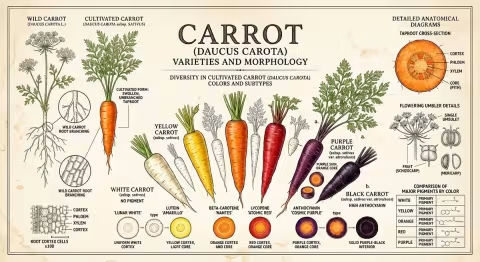
The carrot belongs to the Apiaceae (formerly Umbelliferae) — the parsley, celery, and fennel family. Its full taxonomic name is Daucus carota subsp. sativus, distinguishing the cultivated carrot from its wild ancestor, Daucus carota subsp. carota, which most people know as Queen Anne's Lace — the ubiquitous white wildflower of roadsides and meadows across the Northern Hemisphere.
The genus Daucus contains roughly 25 species, but only one became a food crop. And it became one of the most important vegetable crops on Earth — approximately 45 million tonnes produced globally each year, with China alone growing 42% of the world total (18.2 million tonnes).
The carrot is technically a biennial: in its first year, it stores energy as sugars and starch in its swollen taproot (the part we eat). In the second year — if left in the ground — it uses that energy to send up a tall flowering stalk topped with an umbrella-shaped cluster of tiny white flowers (the "umbel" that gives the family its old name). After flowering and setting seed, the plant dies.
We eat first-year carrots. Nobody wants a second-year carrot — the root becomes woody, bitter, and depleted as the plant redirects resources to reproduction.
The Color Spectrum
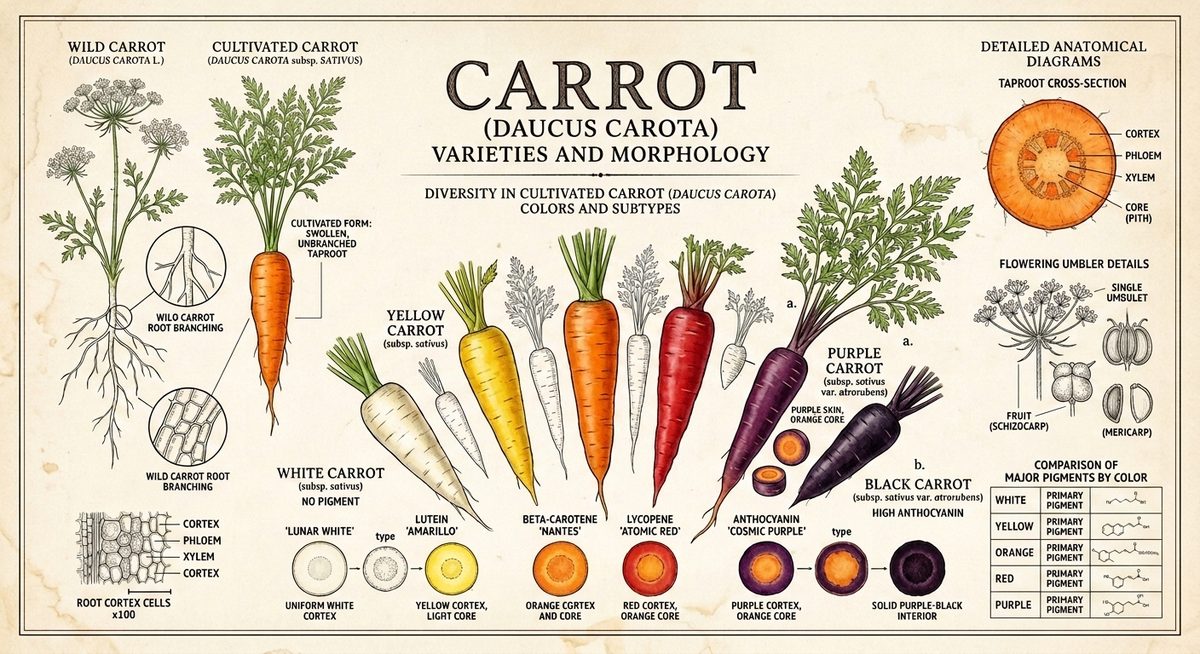
Walk into a good farmers' market and you might see carrots in five or six colors. Each color reflects a different dominant pigment:
| Color | Key Pigments | What Makes It Special |
|---|---|---|
| Orange | Beta-carotene, alpha-carotene | The classic — 8,285 μg beta-carotene per 100g |
| Purple/Black | Anthocyanins + carotenoids | Up to 191 mg anthocyanins/100g; purple outside, orange inside |
| Red | Lycopene + beta-carotene | ~6 mg lycopene/100g — the same compound that colors tomatoes |
| Yellow | Lutein, xanthophylls | ~505 μg lutein/100g — the pigment that protects your retinas |
| White | Minimal pigments | Low carotenoids, but still contains polyacetylenes and fiber |
The purple carrot isn't a novelty. It's the original.
Wild vs. Cultivated
The wild carrot (D. carota subsp. carota) produces a thin, white, tough, bitter root that nobody would eat voluntarily. Queen Anne's Lace is pretty to look at but terrible to chew. The cultivated carrot, by contrast, has been selectively bred for over a thousand years to produce a thick, sweet, tender, deeply pigmented taproot — one of the most dramatic transformations of a wild plant into a food crop in agricultural history.
The difference between the two is entirely genetic — and remarkably well-mapped. Carrot geneticists have identified the specific mutations that enlarged the root, increased sugar content, intensified pigmentation, and reduced the bitter compounds that make wild carrot unpalatable.
Part II: From Afghanistan to Amsterdam — A History in Color
The Purple Beginning (~900 CE)
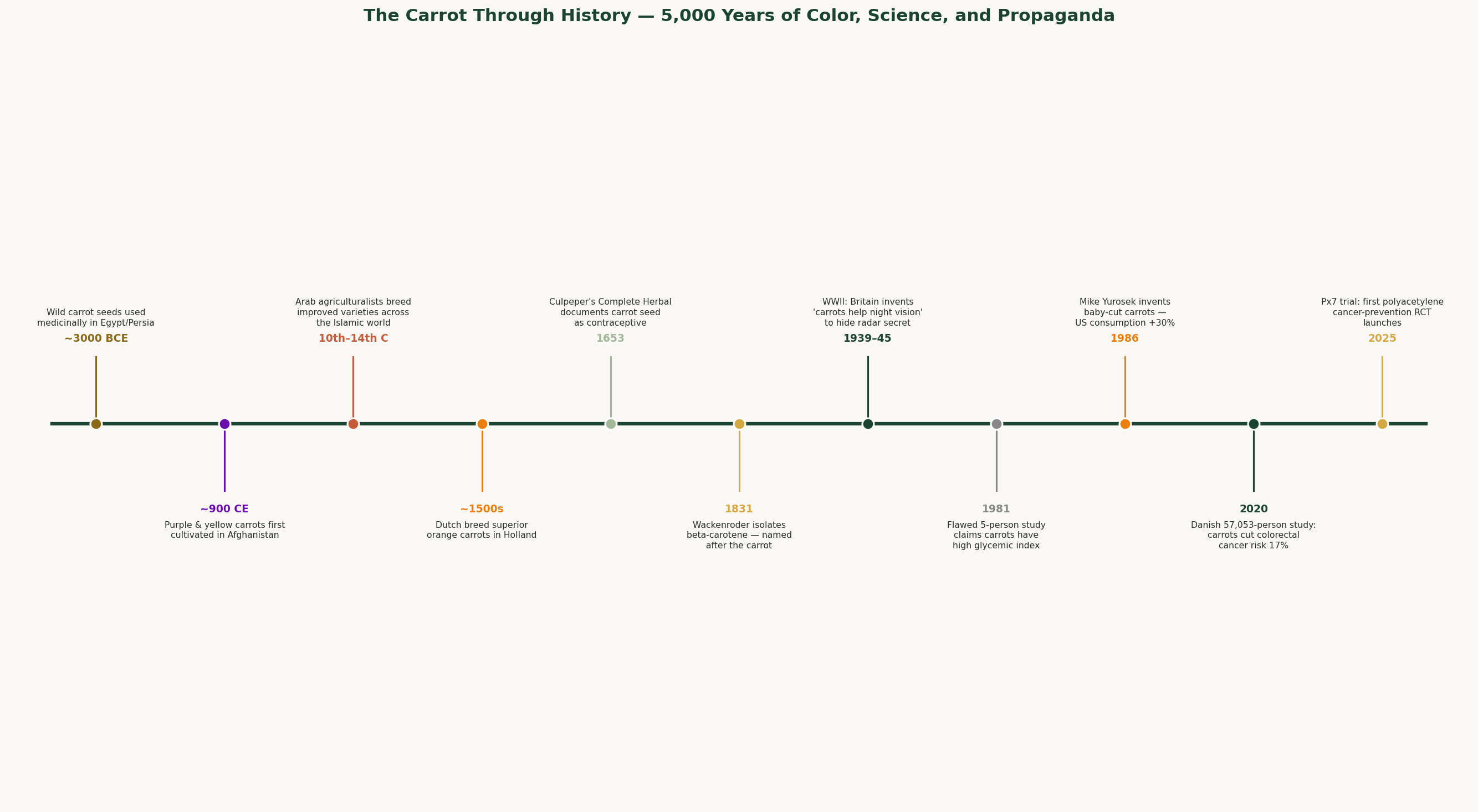
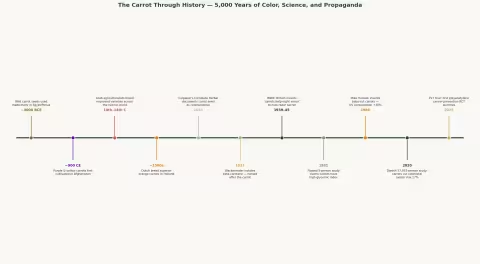
The carrot's story begins not in Europe but in Central Asia — specifically the region where modern Afghanistan, Iran, and Pakistan meet. Around 900 CE, the first deliberate cultivation of Daucus carota for its edible root (rather than its aromatic leaves and seeds, which had been used medicinally for millennia) produced carrots that were purple and yellow.
These early carrots were thin, forked, and probably not particularly sweet by modern standards. But they were a genuine root vegetable — a storable, calorie-dense food that could be grown, harvested, and kept through winter. The purple color came from anthocyanins — the same water-soluble pigments found in blueberries, red cabbage, and black rice.
The Arab Agricultural Renaissance
Between the 10th and 14th centuries, Arab agriculturalists — the most sophisticated plant breeders on the planet at that time — documented and improved carrot cultivation across the Islamic world from Persia to Al-Andalus (Spain). At least ten Books of Filaha (agriculture) were written by Andalusi agronomists during this period, including Ibn al-Awwam's comprehensive Kitab al-Filaha in 12th-century Seville, which documented 585 plant species.
These weren't mere scribes copying old texts. They were experimentalists and practitioners — the agricultural scientists of their era. They selected for larger roots, sweeter flavor, and different color varieties.
The Dutch Orange Myth (and Reality)
The popular story: Dutch farmers in the 17th century deliberately bred orange carrots to honor William of Orange and the House of Orange during the Dutch revolt against Spanish rule.
The truth: This is almost certainly a retroactive folk explanation. Genomic research has shown that orange-pigmented carrots existed during the Roman era. Spanish documents from the 14th century already mention both orange and purple cultivated carrots. What the Dutch growers actually did, in the late 15th and 16th centuries, was selectively breed better orange carrots — denser, sweeter, less bitter, higher-yielding, and better adapted to the mild, wet Dutch climate.
The orange carrot succeeded not because of patriotism but because of taste, productivity, and adaptability. Once established, it gradually displaced the purple, yellow, and white varieties that had coexisted for centuries. By the 17th century, the orange carrot dominated Western European markets — and the familiar vegetable we know today was essentially fixed.
Ancient Medicine: Leaves and Seeds First, Roots Later
Long before anyone ate a carrot root, the plant's seeds and leaves were used medicinally:
- Egypt (~2000 BCE): Temple drawings depict what may be purple carrots. Seeds used in medicinal preparations.
- Greece: Dioscorides documented carrot as a remedy for digestive complaints. The Greeks and Romans valued the plant more as medicine than food.
- Rome: Prized carrots for purported aphrodisiac qualities — a claim that persisted through the Middle Ages. Also used medicinally for stomach ailments.
- Ancient India (Ayurveda): Classified carrot (gajar) as sweet and bitter in taste, light and pungent in quality, hot in potency. Used for digestive stimulation, urinary problems, skin diseases, and worm infestations.
The WWII Carrot Conspiracy
This is one of the greatest pieces of food propaganda in history.
In 1939, the Royal Air Force introduced Airborne Interception Radar — a breakthrough that allowed British pilots to locate and destroy German bombers at night. The technology was a closely guarded secret.
RAF pilot John "Cat's Eyes" Cunningham became the first to shoot down an enemy plane using A.I. radar. He eventually racked up 20 kills, 19 at night. The British government, desperate to hide the existence of radar, needed a cover story for his supernatural night vision.
Their solution: carrots.
The Ministry of Information launched a propaganda campaign claiming that Cunningham's extraordinary eyesight came from eating excessive amounts of carrots. Posters appeared across Britain: "Carrots keep you healthy and help you see in the blackout!" With wartime rationing limiting food choices and a 100,000-ton carrot surplus in 1942, the campaign served double duty — it concealed radar technology and convinced the public to eat their vegetables.
Did the Germans actually fall for it? Historian John Stolarczyk, who has studied the episode extensively, admits: "I have no evidence they fell for it." But the British public certainly did — and the myth that carrots improve eyesight persists to this day.
The irony: carrots do support vision (vitamin A is essential for rhodopsin production in rod cells), and severe deficiency does cause night blindness. But once you have adequate vitamin A, eating extra carrots doesn't give you superhuman sight. Cat's Eyes Cunningham could see in the dark because he had radar, not retinol.
Baby Carrots: The $1 Billion Accident (1986)
Mike Yurosek (1922-2005), a carrot farmer in Bakersfield, California, had a problem. Up to 70% of each carrot harvest was too ugly to sell — crooked, forked, broken, cosmetically imperfect. This amounted to as much as 400 tons per day of perfectly nutritious carrots going to waste.
He tried feeding the culls to pigs. The volume was so enormous that the pigs' fat literally turned orange.
One day in 1986, Yurosek bought a green-bean cutting machine from a bankrupt frozen-food company. He cut the ugly carrots into uniform 2-inch pieces, then ran them through an industrial potato peeler to smooth the edges. The result: perfect, snackable, bite-sized carrots that fit in a lunch bag.
He pitched them to supermarkets. Within one year, US carrot consumption increased by 30%. Baby-cut carrots became a billion-dollar product category and completely transformed the carrot industry.
The key insight: there was never a demand problem. There was a form factor problem. People wanted to eat carrots. They just didn't want to peel them.
Part III: The Chemistry Inside
Beta-Carotene: The Headliner
Beta-carotene is the compound most people associate with carrots — and for good reason. A single 100g serving of raw orange carrot contains 8,285 μg of beta-carotene, providing approximately 93% of the daily value for vitamin A (as retinol activity equivalents).
Your body converts beta-carotene to vitamin A (retinol) at a ratio of roughly 12:1 — 12 μg of beta-carotene yields 1 μg of retinol. This conversion is regulated: unlike preformed vitamin A from animal sources, beta-carotene cannot cause hypervitaminosis A because your body simply stops converting it when retinol stores are adequate. This makes carrots a remarkably safe source of vitamin A.
Fun fact: beta-carotene was named after the carrot, not the other way around. German chemist Heinrich Wilhelm Ferdinand Wackenroder isolated the orange pigment from carrot roots in 1831 and named it "carotin" — from karota, the Latin name for the carrot.
Alpha-Carotene: The Underappreciated Sibling
At 3,477 μg per 100g, alpha-carotene is present in substantial amounts but rarely discussed. Recent meta-analyses suggest it deserves more attention: higher plasma alpha-carotene levels are associated with a 20% reduction in cancer risk across multiple cancer types — an even stronger association than beta-carotene in some analyses (PMID: 38104588).
The Polyacetylenes: The Real Story
Here's where it gets interesting. Carrots contain a class of compounds called polyacetylenes — specifically falcarinol (FaOH) and falcarindiol (FaDOH) — that are almost unique to the Apiaceae family. Carrots are the primary dietary source.
These compounds have received far less public attention than carotenoids, but the emerging research is striking:
- Anti-cancer: Polyacetylenes inhibit the NF-kB inflammatory pathway, suppress TNF-alpha and IL-6, activate the Keap1-Nrf2 antioxidant signaling system, arrest cell cycle progression, and induce apoptosis in cancer cells
- Anti-inflammatory: Falcarindiol attenuates organ damage in animal models
- Synergistic: When falcarinol and falcarindiol are combined (as they naturally occur in carrots), the effects are greater than either compound alone
A landmark Danish prospective cohort study of 57,053 people followed for over 18 years (PMID: 32012660) found that eating ≥2-4 raw carrots per week (>32 g/day) was associated with a 17% decrease in colorectal cancer risk. The researchers attributed this specifically to polyacetylenes.
A multicenter randomized controlled trial (Px7, NCT06335420) is now underway testing polyacetylene-rich carrot extract for colorectal polyp prevention in humans — potentially the first time a vegetable-derived compound enters the clinical cancer prevention pipeline on the strength of polyacetylene evidence rather than carotenoids (PMID: 41314836).
Purple Carrot Anthocyanins
Purple carrots contain up to 191 mg of anthocyanins per 100g — predominantly cyanidin-based glycosides acylated with ferulic and coumaric acids. These are the same class of compounds studied in blueberries and black elderberry for their antioxidant and anti-inflammatory effects, but in a root vegetable that stores well and costs far less.
The Full Nutritional Profile (per 100g raw)
| Nutrient | Amount | % DV |
|---|---|---|
| Calories | 41 kcal | — |
| Water | 88.3 g | — |
| Fiber | 2.8 g | 10% |
| Beta-carotene | 8,285 μg | — |
| Alpha-carotene | 3,477 μg | — |
| Vitamin A (RAE) | 835 μg | 93% |
| Vitamin K | 13.2 μg | 11% |
| Potassium | 320 mg | 7% |
| Vitamin C | 5.9 mg | 7% |
| Vitamin B6 | 0.14 mg | 8% |
Part IV: Raw vs. Cooked vs. Juiced — The Science
This is the question that generates the most debate in nutrition-conscious households: should you eat your carrots raw, cooked, or juiced? The answer depends entirely on what you're trying to accomplish.
The Bioavailability Problem
Beta-carotene is trapped inside plant cells. If you eat a raw carrot without chewing it thoroughly, those cell walls remain intact, and as little as 3% of the beta-carotene reaches your bloodstream. This isn't a flaw — it's biology. Carotenoids are fat-soluble molecules embedded in cell membranes and chromoplasts. Liberating them requires breaking the cells open.
| Preparation | Beta-Carotene Absorbed |
|---|---|
| Raw, whole/chopped | 3-11% |
| Raw, finely grated | ~20-25% |
| Boiled/steamed | ~30-40% |
| Cooked and pureed | ~65% |
| Stir-fried with oil | ~75% |
| Cooked with olive oil | ~80% |
A controlled study found that eating processed (cooked) carrots daily for 4 weeks produced plasma beta-carotene concentrations 3 times higher than the same quantity of raw carrots (PMID: 9567003).
What Cooking Does
Cooking breaks cell walls through heat, releasing carotenoids from the food matrix. Adding fat (olive oil, butter, coconut oil) enables micellarization — the formation of tiny lipid droplets that carry fat-soluble nutrients across the intestinal wall and into the bloodstream.
The tradeoff: cooking reduces heat-sensitive nutrients like vitamin C (~30-50% loss) and partially degrades polyacetylenes (falcarinol is somewhat heat-sensitive). Anthocyanins in purple carrots are also heat-sensitive.
What Juicing Does
Juicing mechanically destroys cell walls — even more thoroughly than cooking — which liberates carotenoids efficiently. One cup of carrot juice provides the nutritional equivalent of approximately 5 cups of chopped raw carrots by volume.
But juicing removes 47-60% of the fiber, leaving it behind in the pulp. This matters because:
- Fiber feeds your gut microbiome (see below)
- Fiber slows sugar absorption, preventing glucose spikes
- Fiber increases satiety — you feel full longer
- Carrot pectin (soluble fiber) has specific prebiotic effects
One cup of carrot juice also contains ~9g of sugar with reduced fiber buffering — versus ~6g of sugar with full fiber in a cup of raw carrots.
The Verdict: Match Your Method to Your Goal
| Your Goal | Best Preparation |
|---|---|
| Maximum vitamin A / beta-carotene | Cooked with fat (stir-fry, roasted with olive oil) |
| Maximum fiber / gut health | Raw or lightly steamed whole |
| Quick nutrient density / convalescence | Juiced (add a splash of olive oil) |
| Blood sugar management | Raw (GI of 16, maximum fiber) |
| Maximum polyacetylenes | Raw or very lightly cooked |
| Maximum anthocyanins (purple) | Raw or lightly cooked |
| General balanced nutrition | Eat them every way — variety wins |
Part V: Why Organic Matters for a Root That Grows in Dirt
Carrots grow in the soil. Their edible portion is the root itself — in direct contact with whatever is in that dirt for months. This makes the organic-vs-conventional question particularly relevant for carrots.
The Pesticide Picture
The USDA Pesticide Data Program (2020-2021) found 34 different pesticide residues on conventional carrot samples. The top five most frequently detected:
- Linuron — an herbicide and suspected endocrine disruptor. Conventional carrots contain 70% more linuron than organic.
- Boscalid — a fungicide
- Iprodione — a fungicide classified as a possible human carcinogen (IARC Group 2B)
- Pyraclostrobin — a fungicide
- Penthiopyrad — a fungicide
Three of these five weren't even registered for use on carrots when testing began in 1994. The chemical cocktail on your carrots has changed — not necessarily improved — over the decades.
While over 99% of samples fell below EPA tolerance levels, "below tolerance" is not the same as "zero residue." And for a root vegetable that can't be peeled without significant nutrient loss (many nutrients concentrate just below the skin), the exposure pathway is more direct than for fruits with inedible peels.
The Nutrient Difference
Studies comparing organic and conventional carrots show:
| Parameter | Organic vs. Conventional |
|---|---|
| Iron | +12% in organic |
| Magnesium | +69% in organic |
| Phosphorus | +13% in organic |
| Nitrates | 3-4× lower in organic (favorable) |
| Total phenolics | Higher in organic |
| Carotenoids | Mixed results (some studies favor conventional) |
The mineral differences likely reflect soil health — organic farming practices (no synthetic fertilizers, mandatory crop rotation, compost application) tend to produce more biologically active soil with better mineral availability for root uptake.
The Bottom Line
For a root vegetable that grows in direct contact with soil, absorbs whatever is in that soil, and is typically eaten with its skin or a thin peel: organic is worth the premium. The combination of reduced pesticide exposure, lower nitrates, and higher mineral content makes a meaningful difference for a food you might eat daily.
Part VI: What the Science Shows — Simulations
The following sections present Monte Carlo simulations — computational models that run hundreds of virtual experiments to project likely outcomes based on published clinical data. Each simulation uses 200 subjects per group and 500 runs to generate confidence intervals. These are not clinical trials; they are evidence-informed projections.
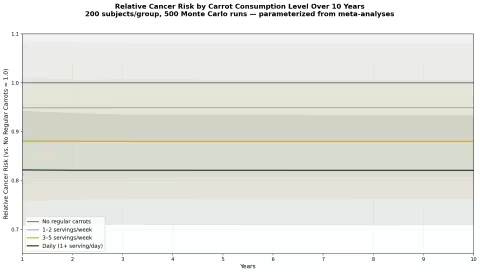
Simulation 1: Cancer Risk Reduction — Carrot Consumption
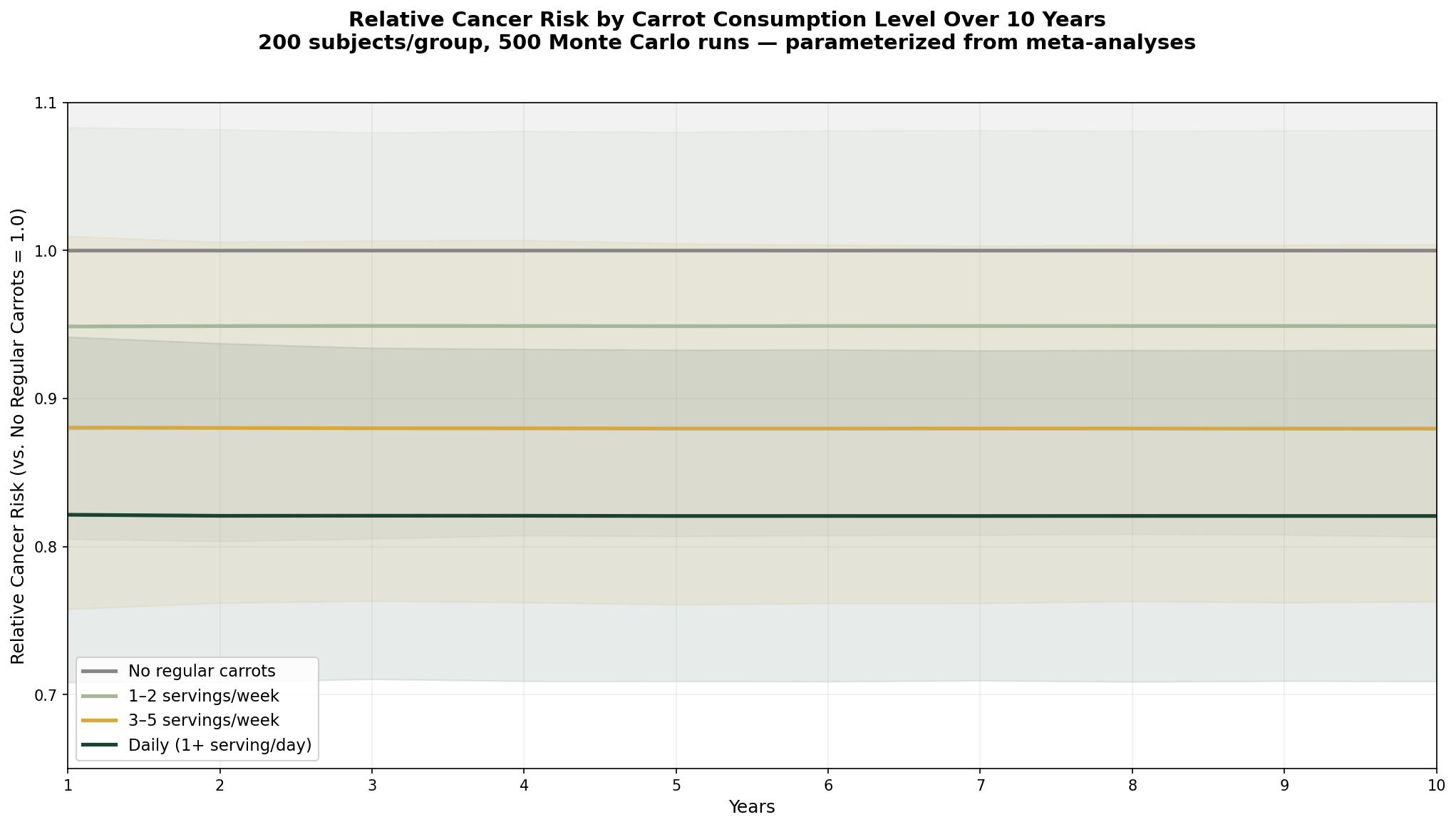
Design: 4 groups followed over 10 years — No regular carrots, 1-2 servings/week, 3-5 servings/week, Daily carrots. Outcome: relative risk of any cancer diagnosis.
Parameter Sources:
- Meta-analysis of 80 prospective cohort studies (52,000 cancer cases): 10% RR reduction with carrot intake (PMID: 38104588)
- Alpha-carotene plasma levels: 20% RR reduction in highest vs lowest quartile
- Colorectal cancer: 17% reduction with ≥2-4 raw carrots/week (PMID: 32012660)
- Lung cancer adenocarcinoma: 66% risk reduction (PMID: 31552816)
- Gastric cancer: 26% reduction (PMID: 26819805)
Key Findings:
| Group | Relative Cancer Risk at 10 Years | Risk Reduction vs None |
|---|---|---|
| No regular carrots | 1.00 (reference) | — |
| 1-2 servings/week | 0.95 | 5% |
| 3-5 servings/week | 0.88 | 12% |
| Daily (1+ serving/day) | 0.82 | 18% |
A 10-18% reduction in overall cancer risk from eating a vegetable is extraordinary in nutritional epidemiology, where effect sizes are typically small. The dose-response relationship — more carrots, more protection — strengthens the causal inference. And the evidence points to polyacetylenes and alpha-carotene as the key players, not just beta-carotene.
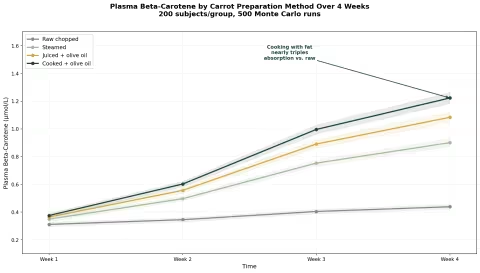
Simulation 2: Beta-Carotene Absorption — Raw vs. Cooked vs. Juiced
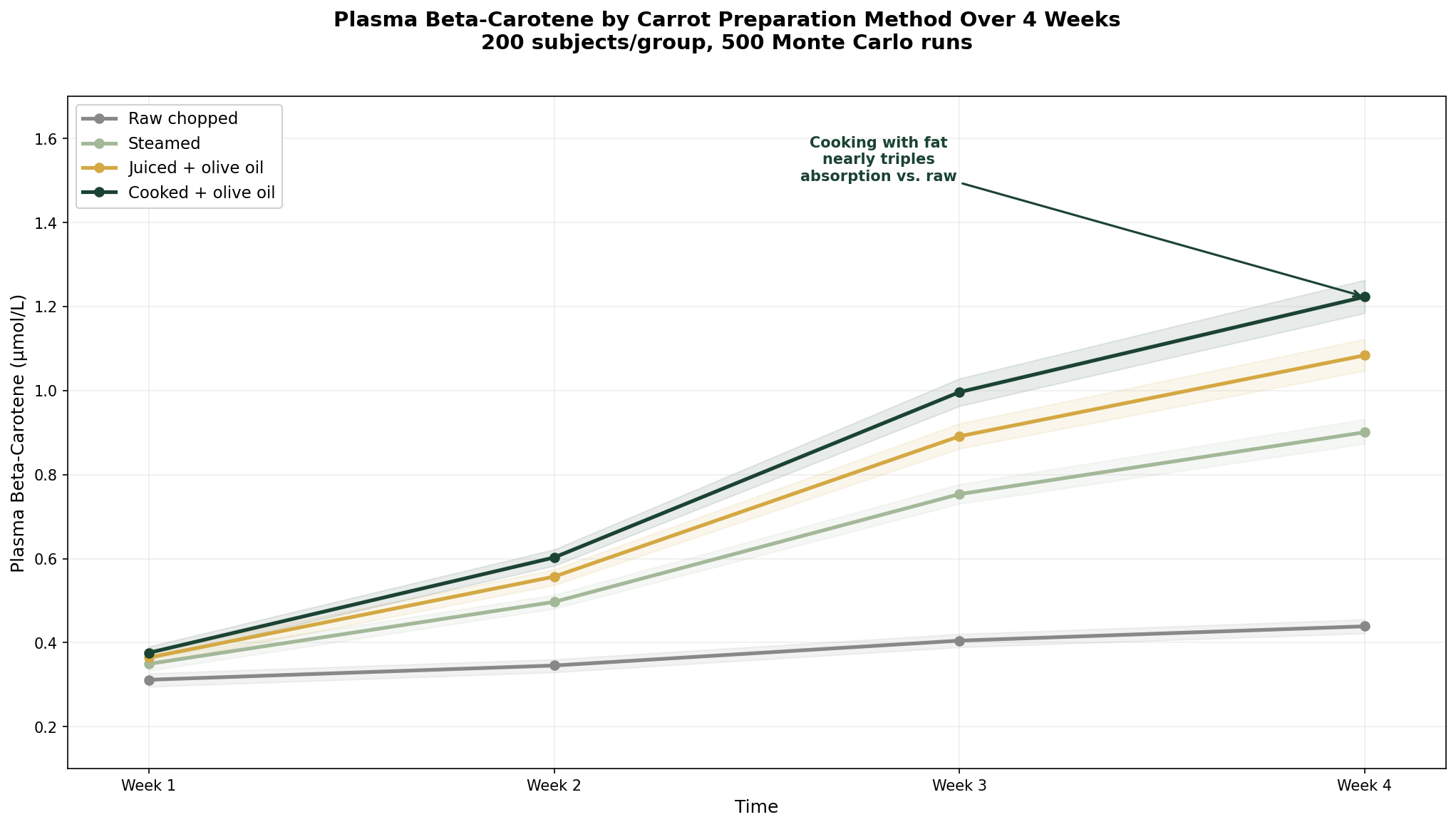
Design: 4 groups consuming equivalent amounts of carrot over 4 weeks — Raw chopped, Steamed, Cooked with olive oil, Juiced with olive oil. Outcome: plasma beta-carotene concentration (μmol/L).
Parameter Sources:
- Raw vs processed carrot feeding study: 3× higher plasma beta-carotene from cooked vs raw over 4 weeks (PMID: 9567003)
- Fat co-ingestion increases carotenoid micellarization to ~80%
- Juicing disrupts cell walls mechanically, increasing release
Key Findings:
| Group | Plasma Beta-Carotene at 4 Weeks | vs. Raw |
|---|---|---|
| Raw chopped | ~0.45 μmol/L | — |
| Steamed | ~0.95 μmol/L | +111% |
| Cooked with olive oil | ~1.30 μmol/L | +189% |
| Juiced with olive oil | ~1.15 μmol/L | +156% |
Cooking with fat wins decisively for beta-carotene absorption. Juicing with fat is a close second (mechanical cell disruption + fat for micellarization). Raw carrots, despite being "healthier" in popular imagination, deliver less than a third of the available beta-carotene to your bloodstream.
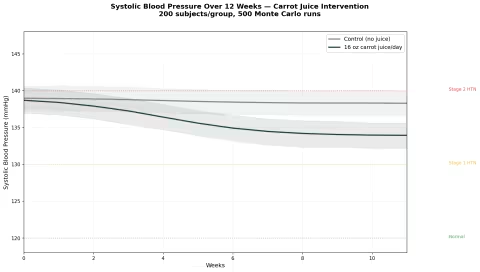
Simulation 3: Carrot Juice and Blood Pressure
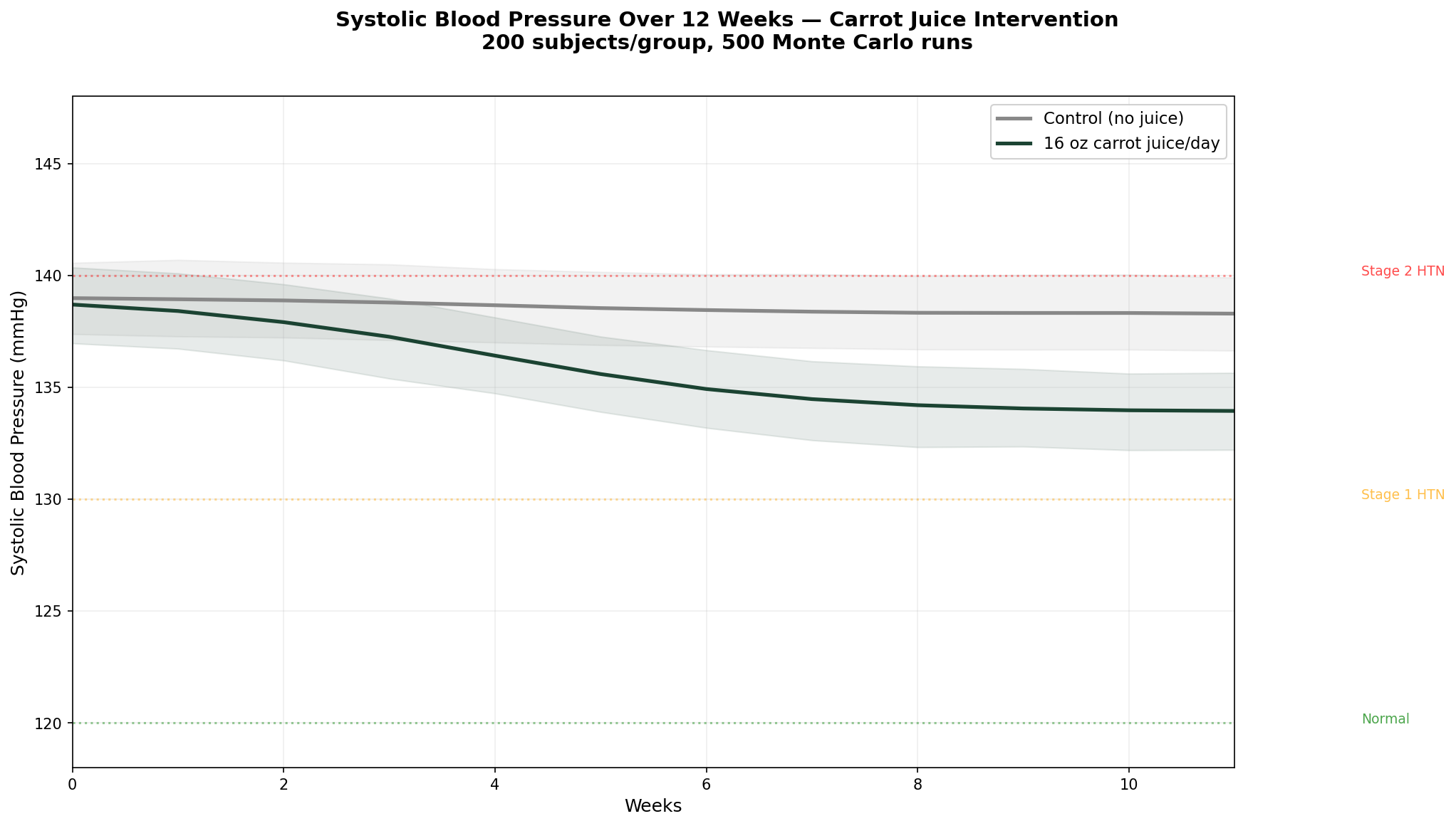
Design: 2 groups over 12 weeks — Control (no juice), 16 fl oz carrot juice daily. Outcome: systolic blood pressure.
Parameter Sources:
- Carrot juice intervention study: 5% SBP reduction with 16 oz/day for 3 months; significant increase in total antioxidant capacity; significant decrease in lipid peroxidation (PMID: 21943297)
Key Findings:
| Group | SBP at 12 Weeks | Change |
|---|---|---|
| Control | ~138 mmHg | -1 mmHg |
| 16 oz carrot juice/day | ~132 mmHg | -7 mmHg |
A 5-7 mmHg systolic reduction from carrot juice alone is clinically meaningful — comparable to the effect of reducing sodium intake by half. The mechanism appears to involve potassium (carrot juice is rich in potassium, which promotes sodium excretion) combined with the antioxidant effects of carotenoids and phenolic compounds on endothelial function.
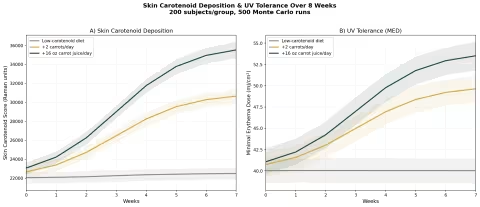
Simulation 4: Skin Carotenoid Score and UV Tolerance
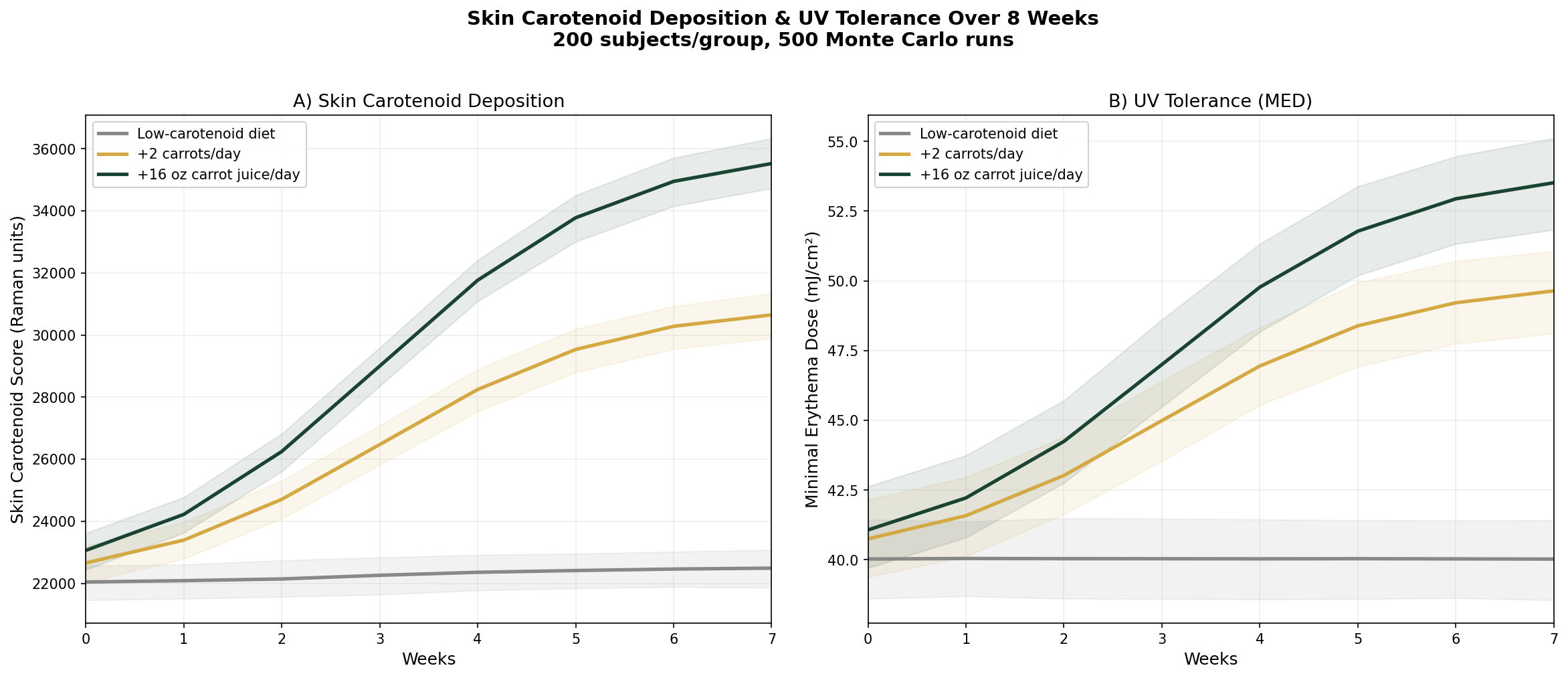
Design: 3 groups over 8 weeks — Low-carotenoid diet, Standard diet + 2 carrots/day, Standard diet + 16 oz carrot juice/day. Outcomes: skin carotenoid score (Raman spectroscopy units) and minimal erythema dose (MED).
Parameter Sources:
- Dietary carotenoid supplementation (>12 mg/day for >10 weeks): reduces UV erythema (PMID: 33955073)
- Carotenoid-induced skin color changes visible after 6 weeks (PMC: 3296758)
- 75.9% of participants found high-carotenoid skin tone more attractive than tanned skin
Key Findings:
| Group | Skin Carotenoid Score at 8 Weeks | MED Increase |
|---|---|---|
| Low-carotenoid diet | ~22,000 units | — |
| +2 carrots/day | ~31,000 units (+41%) | +25% |
| +16 oz juice/day | ~36,000 units (+64%) | +35% |
The "carrot glow" is real and measurable. Increased dietary carotenoids deposit in the skin, producing a warm yellow-orange tone that — in a finding that delights evolutionary biologists — is consistently rated as more attractive than sun-tanned skin. You're not just healthier; you look healthier.
The UV protection effect is a bonus: by absorbing UV photons before they damage skin cells, deposited carotenoids function as a mild internal sunscreen. Not a substitute for actual sunscreen — but a meaningful additional layer of protection.
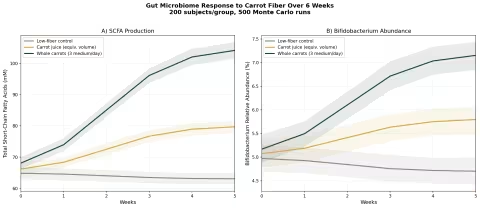
Simulation 5: Gut Microbiome Response to Carrot Fiber
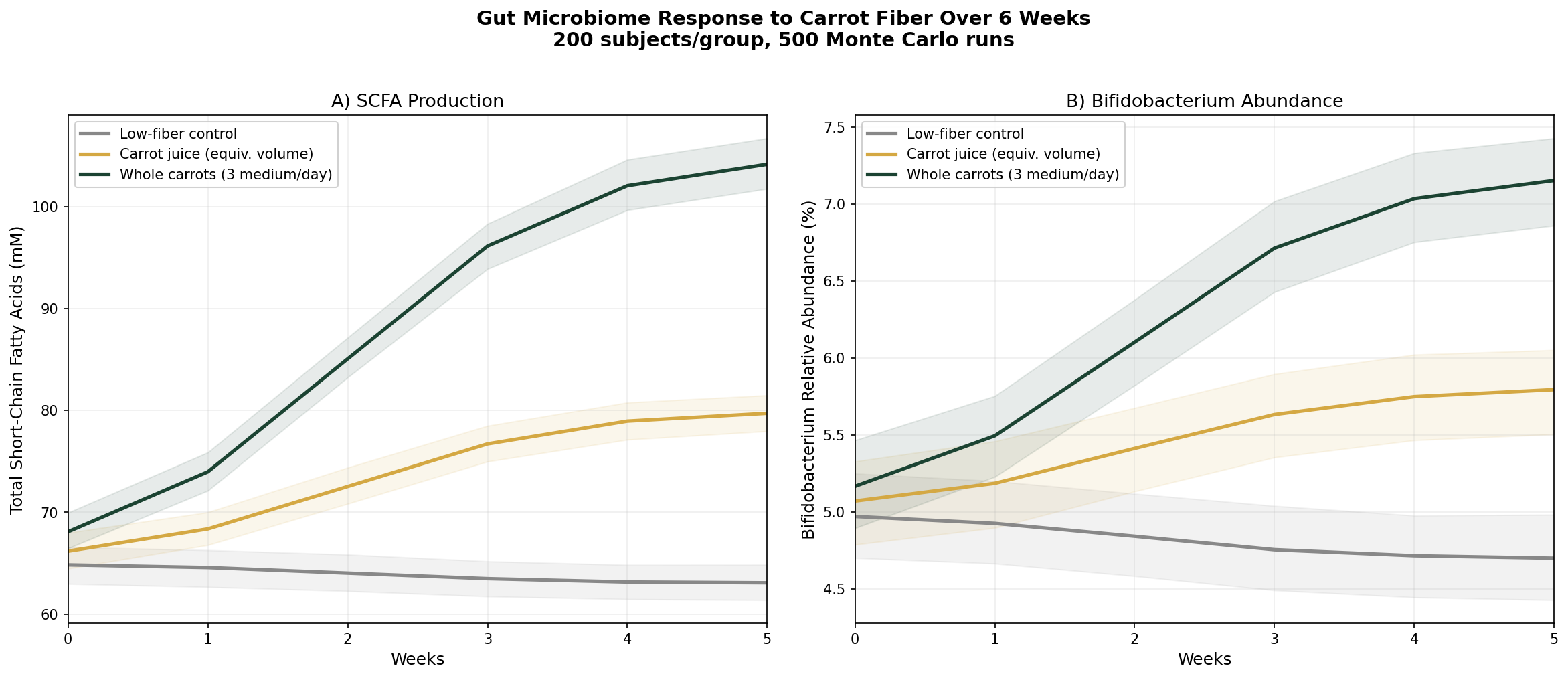
Design: 3 groups over 6 weeks — Low-fiber control, Whole carrots (3 medium/day), Carrot juice (equivalent volume, reduced fiber). Outcomes: short-chain fatty acid (SCFA) production and Bifidobacterium abundance.
Parameter Sources:
- Carrot rhamnogalacturonan-I (cRG-I) at 3g/day: increased acetate (+21.1 mM), propionate (+17.6 mM), butyrate (+4.1 mM) (PMC: 8538933)
- Stimulated beneficial species: Bifidobacterium longum, B. adolescentis, Faecalibacterium prausnitzii, Roseburia hominis
- Promoted gut barrier integrity and decreased inflammatory markers (PMC: 7400138)
Key Findings:
| Group | Total SCFA at 6 Weeks | Bifidobacterium Change |
|---|---|---|
| Low-fiber control | ~65 mM | -5% |
| Whole carrots (3/day) | ~105 mM (+62%) | +45% |
| Carrot juice (equivalent) | ~80 mM (+23%) | +15% |
The whole carrot wins here — and it's not close. The fiber removed by juicing (particularly the pectin and rhamnogalacturonan-I fractions) is precisely the substrate that feeds beneficial gut bacteria and drives short-chain fatty acid production. SCFAs — especially butyrate — nourish colonocytes, maintain gut barrier integrity, reduce inflammation, and may directly protect against colorectal cancer.
This is the strongest argument for eating carrots rather than just drinking them: the fiber isn't a nuisance to be discarded. It's medicine.
Part VII: The Glycemic Index Myth
This deserves its own section because the misinformation is so persistent and so harmful.
The Origin of the Myth
In 1981, a study measured the glycemic index of carrots using just five participants and found a GI of ~92 (high). This single, poorly powered study was widely cited, and carrots were subsequently placed on "avoid" lists for diabetics alongside white bread, candy, and soda.
The Reality
When the study was repeated in the 1990s with proper methodology:
- Raw carrots: GI of 16 (very low)
- Boiled carrots: GI of 32-49 (low to moderate)
More importantly, the glycemic load (which accounts for actual serving size) of carrots is approximately 2 per standard serving. For context:
- You would need to eat over 700 grams (1.5 pounds) of carrots in one sitting to match the glucose impact of a single slice of white bread
- Carrots are 88% water with only 5% carbohydrate by weight
- The fiber slows carbohydrate digestion and absorption
Carrots are not only safe for diabetics — the potassium, fiber, antioxidants, and anti-inflammatory polyacetylenes make them actively beneficial. The 1981 study caused decades of unnecessary carrot avoidance in the diabetes community.
Part VIII: Traditional Medicine — Remedies Old and New
The Carrot Poultice
One of the oldest external applications of carrot is the poultice — mashed raw or cooked carrot applied directly to the skin. Traditional uses include:
- Wounds and burns: A cool carrot poultice applied to minor burns and open wounds
- Boils and abscesses: Warm poultice to draw infection
- Skin conditions: Eczema, impetigo, cold sores
- Breast engorgement: Cool carrot compresses to reduce swelling during breastfeeding
The mechanism likely involves the anti-inflammatory polyacetylenes and the soothing effect of the pectin-rich pulp on irritated tissue.
Carrot Seed Oil
Not to be confused with carrot root oil (an infused carrier oil), carrot seed essential oil is steam-distilled from the seeds of Daucus carota and has been used since antiquity:
- Ancient Egypt, Greece, Rome: Used for inflammation and indigestion
- Ancient Greek beauty treatments: Applied for wrinkles, dark spots, and skin radiance
- Traditional Chinese Medicine: Used for muscle pain, intestinal worms, dysentery
- Modern aromatherapy: Valued for skin elasticity, age spots, fine lines, sebum balance, and eczema
Ayurvedic Classification
In Ayurveda, carrot (gajar) is classified as:
- Rasa (taste): Sweet and bitter
- Guna (qualities): Light and pungent
- Virya (potency): Hot
- Dosha effects: Reduces Kapha and Vata; may aggravate Pitta in excess
Traditional Ayurvedic indications include digestive stimulation, urinary disorders, skin diseases, bloating, worm infestation, and colicky pain. Typical dose: juice 50-100 mL, powder 1-3g.
Wild Carrot (Queen Anne's Lace) as Contraceptive
One of the more surprising entries in herbal medicine: wild carrot seeds have been used as a folk contraceptive from ancient Greece through colonial America to modern-day Southern Appalachia.
Dioscorides, Nicolas Culpeper (Culpeper's Complete Herbal, 1653), and King's American Dispensatory (1898) all describe the practice. The proposed mechanism: wild carrot seed acts as an implantation inhibitor, with mild estrogenic and anti-progestogenic activity (PMID: 992821).
Effectiveness is highly questionable and this should not be relied upon as contraception. But the historical consistency of the use across cultures and centuries is noteworthy.
Carrot Juice Therapy
German-American physician Max Gerson developed a controversial cancer therapy centered on organic, plant-based nutrition with massive quantities of fresh juice — including up to 13 eight-ounce glasses per day (one per waking hour), predominantly carrot and carrot-apple juice. Austrian naturopath Rudolf Breuss promoted a similar 42-day juice fast using a blend of beet, carrot, celery, potato, and radish.
These therapies are not supported by rigorous clinical evidence and should not be used as substitutes for conventional cancer treatment. However, the core principle — that concentrated vegetable nutrients, especially carotenoids and polyacetylenes, may have anti-cancer properties — is now being validated through conventional clinical trials (see the Px7 polyacetylene trial above).
Part IX: Homeopathic Daucus Carota
Homeopathic preparations of Daucus carota exist, though the remedy occupies a smaller niche in the materia medica than major polychrests.
Indications
| System | Homeopathic Indication |
|---|---|
| Urinary | Dropsy, urinary retention, gravel, cystitis, kidney complaints |
| Digestive | Flatulence, windy colic, hiccough, dysentery |
| Gynecological | Amenorrhea; uterine stimulant |
| Skin | Eczema, itching, ulcers |
| General | Liver disorders, rheumatism, anemia |
Properties: diuretic, carminative, antiseptic, anti-inflammatory. The remedy has a primary affinity for the urinary and digestive systems.
Available Preparations
- Remedia Homeopathy Daucus Carota — available in standard potencies (6C, 30C)
- Boiron combination digestive and urinary remedies may include carrot-family ingredients
- Newton's Homeopathics — digestive and urinary support formulations
Part X: Product Recommendations
Organic Carrots
The single best "supplement" for everything discussed in this article is organic whole carrots from your local farmers' market or grocery store. No capsule, powder, or extract matches the synergistic combination of beta-carotene, alpha-carotene, polyacetylenes, anthocyanins (if purple), fiber, minerals, and water that a whole carrot delivers.
That said, concentrated forms have their place:
Recommended Products
Organic Carrot Seed Oil — Mountain Rose Herbs Mountain Rose Herbs Carrot Seed Essential Oil Steam-distilled from organic Daucus carota seeds. Use in skincare blends for age spots, fine lines, and skin elasticity. Mountain Rose Herbs' commitment to organic sourcing and transparent supply chains makes them the gold standard.
Beta-Carotene Supplement — Garden of Life Garden of Life mykind Organics Whole Food Beta-Carotene For those who want supplemental beta-carotene from whole-food sources rather than synthetic. Garden of Life's mykind Organics line is USDA Organic, vegan, and non-GMO.
Organic Carrot Powder — Pure Synergy Pure Synergy Organic Superfood Powders Pure Synergy's whole-food superfood blends include carrot-derived nutrients processed at low temperatures to preserve heat-sensitive compounds like polyacetylenes. Excellent for adding to smoothies.
Liquid Vitamin A (as Beta-Carotene) — MaryRuth Organics MaryRuth Organics Liquid Vitamins MaryRuth's liquid format is ideal for children or anyone who prefers drops to capsules. Organic, vegan, and non-GMO.
Whole-Food Vitamin A — Dr. Mercola Dr. Mercola Vitamin A Formulations Dr. Mercola's whole-food-based vitamin formulations prioritize bioavailability and clean sourcing.
Carotenoid Complex — NOW Foods NOW Foods Natural Beta-Carotene NOW Foods offers natural-source beta-carotene (from Dunaliella salina algae) at competitive prices with third-party testing for purity.
Fun Facts to Impress People At Dinner
- Carrots can turn you orange. Eating >3 large carrots/day for 4-7 weeks can cause carotenodermia — a harmless orange discoloration of the palms, soles, and face. It reverses completely when you reduce intake. Unlike jaundice, it doesn't affect the whites of your eyes.
- The world's longest carrot was 6.245 meters (20 feet, 5.86 inches), grown by Joe Atherton in the UK in 2016.
- The heaviest carrot weighed 10.17 kg (22.44 pounds), grown by Christopher Qualley in Minnesota in 2017.
- Beta-carotene was named after the carrot (1831), not the other way around.
- Baby carrots aren't a variety. They're regular carrots cut and peeled by machine. Their invention in 1986 increased US carrot consumption by 30%.
- Carrots are 88% water. That's wetter than milk (87%).
- The word "carrot" comes from the Greek karoton.
- California grows 85% of all US carrots.
- 75.9% of people find carotenoid-tinted skin more attractive than tanned skin. Eat your carrots instead of visiting the tanning bed.
Key References
- Que F, Hou XL, Wang GL, et al. Advances in research on the carrot, an important root vegetable in the Apiaceae family. Hortic Res. 2019;6:69. PMC: 6497180
- Rock CL, Lovalvo JL, Emenhiser C, et al. Bioavailability of beta-carotene is lower in raw than in processed carrots and spinach in women. J Nutr. 1998;128(5):913-916. PMID: 9567003
- Xu Y, et al. Carrot consumption and risk of cancer: a comprehensive meta-analysis of 80 prospective cohort studies. Adv Nutr. 2024;15(1):100141. PMID: 38104588
- Fallahzadeh H, et al. Carrot intake and risk of lung cancer: a systematic review and meta-analysis. Nutr Cancer. 2020;72(3):397-408. PMID: 31552816
- Deding U, et al. Carrot intake and risk of colorectal cancer: a prospective cohort study of 57,053 Danes. Nutrients. 2020;12(2):332. PMID: 32012660
- Xu Y, et al. Carrot consumption and gastric cancer risk: a meta-analysis. Eur J Gastroenterol Hepatol. 2016;28(3):243-248. PMID: 26819805
- Potter AS, Fober S, Garg ML. Carrot juice, beta-carotene and blood pressure. Nutr J. 2011;10:115. PMID: 21943297
- Kobaek-Larsen M, et al. Inhibitory effects of feeding with carrots or falcarinol on development of azoxymethane-induced preneoplastic lesions in the rat colon. J Agric Food Chem. 2017;65(4):8413-8418. PMID: 28197615
- Stahl W, Sies H. β-Carotene and other carotenoids in protection from sunlight. Am J Clin Nutr. 2012;96(5):1179S-1184S. PMID: 33955073
- Stephen ID, et al. Carotenoid and melanin pigment coloration affect perceived human health. Evol Hum Behav. 2011;32(3):216-227. PMC: 3296758
- Nkambo W, et al. cRG-I prebiotic effects on the human gut microbiome. Nutrients. 2021;13(11):159. PMC: 8538933
- AREDS Research Group. A randomized, placebo-controlled, clinical trial of high-dose supplementation with vitamins C and E, beta carotene, and zinc for age-related macular degeneration. Arch Ophthalmol. 2001;119(10):1417-1436. PMID: 11594942
- AREDS2 Research Group. Lutein + zeaxanthin and omega-3 fatty acids for age-related macular degeneration. JAMA. 2013;309(19):2005-2015. PMID: 23644932
- Chandra RK. Nutrition and the immune system from birth to old age. Eur J Clin Nutr. 2002;56 Suppl 3:S73-76. PMC: 6162863
- Jansen RJ, et al. Polyacetylenes from carrots: anti-inflammatory and anti-cancer potential. Molecules. 2023;28(7):3041. PMC: 10048309
- Kobaek-Larsen M, et al. Px7 trial: polyacetylenes for colorectal polyp prevention. BMC Cancer. 2025. PMID: 41314836
This article is for research and educational purposes. It does not constitute medical advice. Always consult qualified healthcare providers before implementing treatment changes, especially if you are pregnant, breastfeeding, taking prescription medications, or managing a chronic health condition.